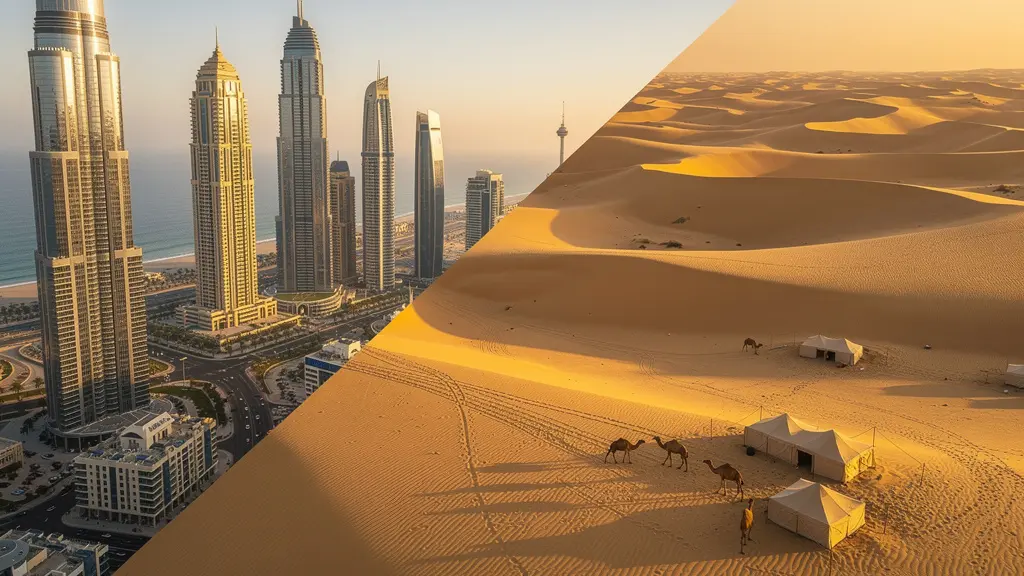
The secret to a rewarding UAE trip isn’t just seeing the sights; it’s understanding the unspoken rhythm of the country.
- Effective travel here means mastering “thermal navigation”—planning your day around the heat, not just locations.
- Each of the seven Emirates has a distinct “personality” and set of rules that go far beyond the globalized facade of Dubai.
Recommendation: Instead of a checklist of attractions, build your itinerary around the flow of local life—early mornings outdoors, midday indoors, and evenings enjoying the pleasant air. This approach will unlock a more authentic experience.
The United Arab Emirates often conjures a very specific image: record-breaking skyscrapers piercing a desert sky, sprawling luxury malls, and an endless parade of supercars. For the first-time visitor, planning a 10-day trip can feel like a tug-of-war between this dazzling modernity and a whispered promise of ancient traditions, souks, and authentic culture. The fear of missing out on the “real” UAE while being hypnotized by the glamour of cities like Dubai is a common source of travel anxiety. Many guides offer packed itineraries, listing the Burj Khalifa, desert safaris, and beach clubs as non-negotiable stops.
But this checklist approach often misses the point. It treats the UAE as a theme park of attractions rather than a complex, living society. The most common advice—”dress modestly,” “stay hydrated,” “use taxis”—is true, but it’s superficial. It’s the ‘what’ without the ‘why’. What if the key to unlocking a truly memorable trip wasn’t about seeing more, but about understanding better? What if the secret lay in decoding the subtle, invisible systems that govern daily life, from the ebb and flow of people avoiding the midday sun to the distinct social codes that vary from one Emirate to the next?
This guide is built on that premise. As a journalist living here, I’ve learned that the most rewarding experiences come from moving in sync with the country’s unique rhythm. We will explore how to structure your days for optimal comfort, navigate with efficiency, and understand the cultural nuances that transform a simple tourist trip into a journey of genuine connection. It’s about trading choice paralysis for confident, insightful exploration.
This article will guide you through the essential strategies for a balanced and insightful 10-day journey. We’ll delve into the practicalities of dress codes, daily scheduling, transportation, and budgeting, while also exploring the cultural heart of the nation to help you choose the Emirates that best match your travel style.
Contents : A Guide to Navigating the UAE’s Cultural and Modern Landscapes
- Why Do 70% of First-Time Tourists Misunderstand the Dress Code in Public Malls?
- How to Structure Your Day in UAE Cities to Avoid the 2 PM Heatwave?
- Rental Car or Metro: What Is the Most Efficient Way to Move Around for a Week?
- The Budget Error That Costs Winter Travelers an Extra $500 per Person
- Packing for the UAE: Which Fabrics Are Essential for 40-Degree Weather?
- Dates or Chocolate: What Is the Appropriate Gift When Visiting an Emirati Home?
- Why Is Alcohol Regulation Completely Different in Sharjah Compared to Dubai?
- Which of the Seven Emirates Should You Visit Based on Your Travel Personality?
Why Do 70% of First-Time Tourists Misunderstand the Dress Code in Public Malls?
The generic advice to “dress modestly” is the primary source of confusion for visitors. The reality is that the UAE operates on what can be called micro-climates of etiquette. The rules are not uniform; they shift dramatically depending on your precise location. A bikini is standard at a private hotel pool, but wearing the same swimwear to the adjacent public beach might attract unwanted attention. Similarly, the dress code inside Dubai Mall, a global tourist hub, is vastly different from that of a community mall in Sharjah, just a 20-minute drive away.
This discrepancy arises because Dubai has positioned itself as an international crossroads where tourist comfort is a high priority. Malls like Dubai Mall, which welcome over 80 million visitors a year, adopt a relaxed enforcement policy. While the official guidance suggests covering shoulders and knees, you will see visitors in shorts and tank tops. In contrast, Sharjah consciously cultivates a more conservative, family-oriented identity. There, mall security may actively and politely ask visitors to cover up if they are deemed to be dressed inappropriately. The misunderstanding doesn’t come from a lack of respect, but from the false assumption that one rule applies everywhere.
The savvy traveler doesn’t just pack a pashmina; they understand when to use it. The key is to see modest attire not as a restriction, but as a tool for navigating different social environments smoothly. Carrying a light cardigan or scarf allows you to transition seamlessly from a relaxed beach club to a more conservative public space, showing respect and avoiding any potential awkwardness. Here’s a quick guide to navigating these nuances:
- Dubai Mall & Major Tourist Areas: Smart casual is the norm. While covering shoulders and knees is appreciated, enforcement is lax for tourists.
- Sharjah & Community Malls: Conservative dress is a firm expectation. Shoulders, chest, and knees must be covered at a minimum.
- Beach-to-Mall Transition: The most common faux pas. Always have a ‘cover-up’ layer in your bag, like a cardigan or oversized shirt.
- Emergency Coverage: If you find yourself underdressed, most malls have affordable scarf and clothing shops right near the entrances.
Ultimately, thinking of your outfits in layers is the most practical strategy. It allows you to adapt instantly, ensuring you are comfortable and respectful in every situation you encounter.
How to Structure Your Day in UAE Cities to Avoid the 2 PM Heatwave?
The most significant mistake first-time visitors make is planning their days around attractions instead of the climate. In the UAE, the sun dictates the rhythm of life. Trying to explore an outdoor heritage site at 2 PM in July is not just uncomfortable; it’s unsustainable. Locals have perfected the art of “thermal navigation,” a daily strategy of moving between outdoor and indoor environments to escape the intense midday heat. From May to September, a 40°C average temperature between 11 AM and 4 PM is standard, making indoor activities a necessity, not just an option.
Adopting a “split day” strategy is the key to enjoying your time. This means embracing early mornings and late evenings for outdoor exploration, while dedicating the hottest part of the day to the UAE’s world-class indoor attractions. This isn’t a compromise; it’s how you experience the country like someone who lives here. The hours between 11 AM and 4 PM are an opportunity to explore architectural marvels like the Louvre Abu Dhabi, dive into futuristic concepts at the Museum of the Future, or browse the contemporary art galleries of Alserkal Avenue in Dubai.
This approach maximizes both comfort and discovery. You get to see landmarks like the Old Dubai souks or the beachfront at JBR in the beautiful, soft light of the morning, and then retreat into the blissful, powerful air conditioning of a mall or museum when the sun is at its most punishing. Hydration is also part of this strategy; supplementing water with local yogurt drinks (Laban) or fresh juices helps with thermoregulation. A typical, heat-optimized day might look like this:
- 6 AM – 10 AM: Outdoor activities. Think beach walks, photography at heritage sites, or exploring the alleyways of Al Fahidi Historical Neighbourhood.
- 11 AM – 4 PM: Indoor immersion. This is your time for museums, galleries, indoor theme parks, or indulging in a long, leisurely lunch.
- 4 PM – 7 PM: Transition period. As the heat begins to subside, this is a great time for mall exploration or a classic afternoon tea experience.
- 7 PM onwards: The city comes alive again. Enjoy marina walks, outdoor dining, fountain shows, and rooftop lounges as the evening air cools.
This isn’t about hiding from the heat; it’s about intelligently engaging with it, ensuring you have the energy to enjoy the magical evenings that are a hallmark of life in the Emirates.
Rental Car or Metro: What Is the Most Efficient Way to Move Around for a Week?
The question of mobility in the UAE is a strategic one, with no single correct answer. The best choice depends entirely on your itinerary, budget, and travel style. Many tourists default to ride-sharing apps, which are convenient but can become expensive with surge pricing. The two main contenders for a week-long trip are a rental car and the public transport system, particularly the Dubai Metro. Each has distinct advantages and hidden complexities.
A rental car offers unparalleled freedom, especially if you plan to explore multiple Emirates. It’s the most practical option for families or those wanting to visit more remote destinations like the mountains of Ras Al Khaimah or the serene beaches of Fujairah. However, the convenience comes with its own set of challenges: navigating the multi-lane highways can be intimidating, parking in popular areas is often scarce and costly, and the “Salik” road toll system can quickly add up. Forgetting to pay your tolls or incurring a speeding fine can lead to unpleasant surprises at the end of your trip.
This is where the Dubai Metro shines. It is a marvel of modern infrastructure—clean, efficient, and incredibly affordable. For a solo traveler or a couple focused primarily on exploring Dubai, it’s often the most logical choice. It connects the airport, major malls, Dubai Marina, and Old Dubai with seamless efficiency.

The architectural beauty of the stations themselves makes traveling by metro an experience. However, its primary limitation is its coverage. The metro lines trace the city’s main artery, Sheikh Zayed Road, but reaching destinations further afield, like a specific beach or boutique restaurant, will often require a short taxi or bus ride from the nearest station. This “hybrid” approach—using the metro for long distances and a rideshare for the “last mile”—is often the most cost-effective and efficient strategy for city explorers. A comparative analysis of travel costs shows this hybrid model offers a great balance.
| Option | 7-Day Cost | Best For | Hidden Costs |
|---|---|---|---|
| Dubai Metro + Walking | $40-60 | Solo Budget Travelers | Limited coverage outside main areas |
| Weekly Car Rental | $250-400 | Families, Multi-Emirate Tours | Salik tolls ($30+), Parking ($50+), Fines risk |
| Uber/Careem Mix | $200-300 | Couples, Flexible Itineraries | Surge pricing during events |
| Hybrid Metro + Rideshare | $100-150 | Smart City Explorers | None significant |
Ultimately, the best decision is an informed one. Assess your itinerary realistically: if you’re staying within Dubai, embrace the metro. If you’re venturing beyond, a car is your key to freedom.
The Budget Error That Costs Winter Travelers an Extra $500 per Person
The UAE’s peak tourist season, from October to April, offers idyllic weather. However, this perfect climate comes with a hidden financial trap for the unprepared traveler: dynamic pricing. While flight and hotel costs are expected to rise, the most significant and often overlooked budget-buster is the dramatic inflation of on-the-ground activities and dining. Relying on walk-in bookings for popular attractions during winter can easily add over $500 to a couple’s weekly expenses.
The classic desert safari is a prime example. Tour operators know that demand is high and many tourists decide on activities spontaneously. As a result, travel data from Dubai tourism operators shows that a 40-60% increase for walk-in bookings is common compared to pre-booking online. A safari that costs $50 when booked two weeks in advance might be sold for $80 or more by a hotel concierge for a next-day trip. This premium applies to almost every popular experience, from Friday brunches and beach club day passes to tickets for the Burj Khalifa’s observation deck.
Avoiding this “tourist tax” requires a shift in mindset: plan your spending with the same diligence you plan your sightseeing. The UAE’s service economy is highly digitized, and deals are almost always found online and in advance. Popular brunch spots offer 20-30% discounts for online reservations made a few days ahead. Beach clubs, which may have a hefty $100+ minimum spend for walk-ins, often sell a limited number of fixed-price day passes online. Even currency exchange can be a source of savings; using modern fintech cards like Revolut or Wise instead of airport exchange kiosks can save you 5-8% on every transaction.
Your Action Plan: Pre-Booking Checklist to Save $500+
- Download ‘The Entertainer’ app before arrival for 2-for-1 deals on dining and attractions; it often pays for itself after just two uses.
- Pre-book all popular brunches online at least 48 hours in advance to secure early-bird discounts of 20-30%.
- Reserve desert safaris and major tours through official operator websites at least two weeks ahead to avoid peak-season markups.
- Set up and use a Revolut or Wise card for payments to bypass poor airport exchange rates, saving an average of 5-8%.
- Book day passes for popular beach clubs online to lock in a price and avoid high minimum spend requirements at the door.
It ensures you can enjoy the best of the UAE’s high season without the sting of overpaying, turning what could be a budget-draining trip into a surprisingly affordable luxury experience.
Packing for the UAE: Which Fabrics Are Essential for 40-Degree Weather?
Packing for the UAE’s heat seems straightforward: light clothes in light colors. Yet, many travelers find themselves uncomfortable, not because of the outdoor heat, but because of the extreme temperature shifts. The most significant environmental factor isn’t the 40°C outside; it’s the powerful 18°C air conditioning inside. This constant transition between two climates is known as the “AC shock,” and preparing for it is the true secret to comfortable dressing.
Case Study: The AC Shock Phenomenon
Research on tourist comfort in Dubai reveals that the biggest challenge isn’t the outdoor heat but the staggering 22°C temperature differential between outdoor (40°C) and indoor (18°C) environments. Travelers consistently report that a quality pashmina, unstructured blazer, or light cardigan becomes the most-used item in their luggage—even more so than sunglasses or sun hats—purely to manage the transition into frigid indoor spaces like malls, cinemas, and restaurants.
This means your fabric choice is critical. While linen is a classic choice for hot weather due to its excellent breathability, it performs poorly in aggressive AC, feeling thin and providing little insulation. It also wrinkles heavily, which can be impractical for travel. The ideal fabrics are those that can both breathe in the heat and offer a layer of warmth in the cold. This is where modern and natural performance fabrics excel. Lightweight merino wool, for example, is a powerhouse for travel; it’s naturally temperature-regulating, meaning it helps you stay cool in the heat and warm in the cold. It’s also odor-resistant and requires minimal care. Tencel and Modal are other excellent choices, known for their soft feel, moisture-wicking properties, and resistance to wrinkling.
Your packing strategy should be built around layering with these smart fabrics. Think of your outfits as a system: a base layer of a Tencel t-shirt or a cotton-blend top, paired with an easily packable “transition layer” like a merino cardigan or a silk-blend scarf. This allows you to adapt instantly when moving from a sun-drenched street into a chilly mall.
| Fabric Type | Heat Performance | AC Transition | Care/Maintenance |
|---|---|---|---|
| Linen | Excellent breathability | Poor – too thin for cold AC | Wrinkles heavily |
| Tencel/Modal | Good moisture-wicking | Good – adapts well | Wrinkle-resistant |
| Merino Wool (lightweight) | Temperature regulating | Excellent – best for transitions | Easy care, odor-resistant |
| Cotton Blends | Moderate breathability | Fair – depends on weight | Low maintenance |
Focus on versatility and performance over sheer quantity. A few well-chosen pieces made from the right materials will serve you far better than a suitcase full of simple cotton and linen.
Dates or Chocolate: What Is the Appropriate Gift When Visiting an Emirati Home?
Being invited into an Emirati home is a rare privilege and a sign of genuine hospitality. If this opportunity arises, arriving with a thoughtful gift is not just a polite gesture; it’s a crucial expression of respect and cultural appreciation. The choice of gift speaks volumes. While a generic box of chocolates is acceptable, selecting something with local or personal significance demonstrates a higher level of awareness—a concept of “intentional gifting” that is deeply valued.
The quintessential, can’t-go-wrong gift is a box of high-quality dates. Dates are central to Arabian hospitality and Islamic tradition. Gifting premium, hand-stuffed Majhool dates from a luxury purveyor like Bateel shows that you understand and honor local culture. It’s a classic, elegant choice that will always be well-received. For a more contemporary but equally thoughtful option, consider locally made, single-origin chocolate from an artisan brand like Dubai’s Mirzam. This supports local craftsmanship and bridges the gap between international taste and regional production.
Beyond food items, a beautifully produced coffee table book showcasing the art, landscapes, or architecture of your home country is another excellent choice. It creates a point of connection and invites conversation. Regardless of the gift itself, two aspects of protocol are non-negotiable. First, presentation is paramount. The gift should be beautifully wrapped; most high-end malls offer professional gift-wrapping services. Second, the gift must always be presented with your right hand, or with both hands—never with the left hand alone, as it is considered unclean in traditional Islamic culture.
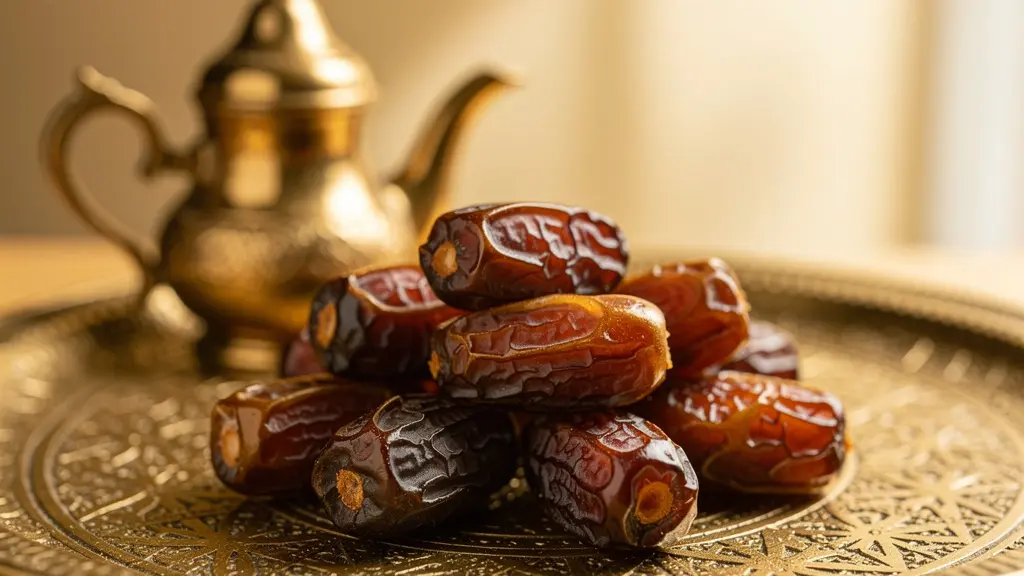
The gesture of giving is as important as the gift itself. It is a moment of connection that transcends language. A thoughtful gift, presented with respect for local customs, transforms you from a mere visitor into an honored guest. It acknowledges the generosity of your host and enriches the cultural exchange.
Whether you choose traditional dates or artisanal chocolate, the intention and respect behind the gift are what truly matter and will be warmly remembered.
Why Is Alcohol Regulation Completely Different in Sharjah Compared to Dubai?
For many first-time visitors, the UAE’s laws on alcohol are a source of confusion. It’s widely available in Dubai’s hotels and restaurants, yet completely prohibited in the neighboring Emirate of Sharjah. This stark difference isn’t an arbitrary rule; it’s a direct reflection of the UAE’s fundamental political structure and the individual philosophies of its rulers. The country is not a single entity but a federation of seven independent monarchies, each with significant autonomy over its local social laws.
This core principle is eloquently summarized in travel expertise. As one analysis of the federal system explains:
It’s a union of seven distinct monarchies, each with its own ruler who sets local social laws. Dubai’s ruler prioritizes a tourism- and expat-driven economy, while Sharjah’s ruler chooses a more conservative, family-focused identity.
– UAE Federal System Analysis, Goway Travel UAE Guide
This quote perfectly captures the dynamic. Dubai’s leadership has made a strategic economic decision to cater to a global audience of tourists and expatriates, for whom access to alcohol is a normal part of leisure and business. This has fueled its growth as a global hub. In contrast, the ruler of Sharjah has chosen to position the Emirate as the nation’s cultural and family-centric heartland. The complete prohibition of alcohol is a cornerstone of this identity, attracting residents and tourists who value a more conservative and traditionally Islamic environment.
The result is two vastly different social ecosystems existing side-by-side. Dubai’s nightlife is driven by a vibrant international bar and club scene. Sharjah’s social life, in the absence of alcohol, has flourished in other ways. Its “nightlife” centers around specialty coffee shops that are bustling until the early hours of the morning, elaborate dessert parlors, and traditional shisha lounges. This has created a unique, family-friendly atmosphere that fosters a different kind of tourism—one focused on cultural immersion, art, and heritage rather than partying. Understanding this distinction is key to appreciating the diversity within the UAE itself.
It reveals that the UAE is not a monolith, but a mosaic of emirates, each with the power to shape its own character and destiny, offering visitors a spectrum of experiences to choose from.
Key Takeaways
- Plan your days around the heat by scheduling outdoor activities for early mornings/evenings and indoor attractions for midday.
- Dress in layers using smart fabrics like Tencel or lightweight merino wool to handle the extreme shift between outdoor heat and indoor AC.
- Pre-book all major activities and brunches online to avoid peak-season price hikes that can significantly inflate your budget.
–
Which of the Seven Emirates Should You Visit Based on Your Travel Personality?
While the glittering skylines of Dubai and Abu Dhabi dominate the global perception of the UAE, they represent only a fraction of what the country has to offer. In fact, official 85% of UAE tourism is concentrated in these two emirates, leaving five other unique destinations largely unexplored by the average tourist. For the savvy traveler, looking beyond the two giants is the key to finding an experience that truly aligns with their personality. Each Emirate has its own distinct character, shaped by its geography, history, and the vision of its ruler.
Think of the seven Emirates not as a to-do list, but as a cast of characters. Dubai is the Globalist: ambitious, glamorous, and always “on.” It’s for the traveler who seeks world-class dining, shopping, and entertainment. Abu Dhabi is the Grand Statesman: more measured, cultural, and monumental. It appeals to those who appreciate art (the Louvre), spiritual architecture (the Sheikh Zayed Grand Mosque), and a slightly more relaxed pace than its neighbor. Sharjah is the Cultural Custodian: traditional, artistic, and intellectual. It’s the perfect destination for museum lovers, families, and those seeking a more authentic, alcohol-free taste of modern Arabian life.
The northern Emirates offer a dramatic change of scenery and pace. Ras Al Khaimah is the Adventurer, with its rugged Hajar mountains offering hiking, zip-lining (Jebel Jais), and a focus on eco-tourism. Fujairah is the Coastal Retreat, the only Emirate on the east coast, offering a laid-back vibe with excellent diving, snorkeling, and quiet beaches. Finally, the smaller Emirates of Ajman and Umm Al Quwain are the Quiet Observers, offering a glimpse into the UAE of the past with a focus on mangroves, traditional dhow building, and an unhurried coastal lifestyle. A 10-day trip allows for a “two-Emirate” itinerary: start with the energy of Dubai, then escape to the mountains of RAK or the museums of Sharjah for a balanced experience.
The ultimate luxury in the UAE is not found in a five-star hotel, but in the freedom to choose the experience that’s right for you. By looking beyond the obvious, you can craft a journey that is not just a vacation, but a genuine discovery.