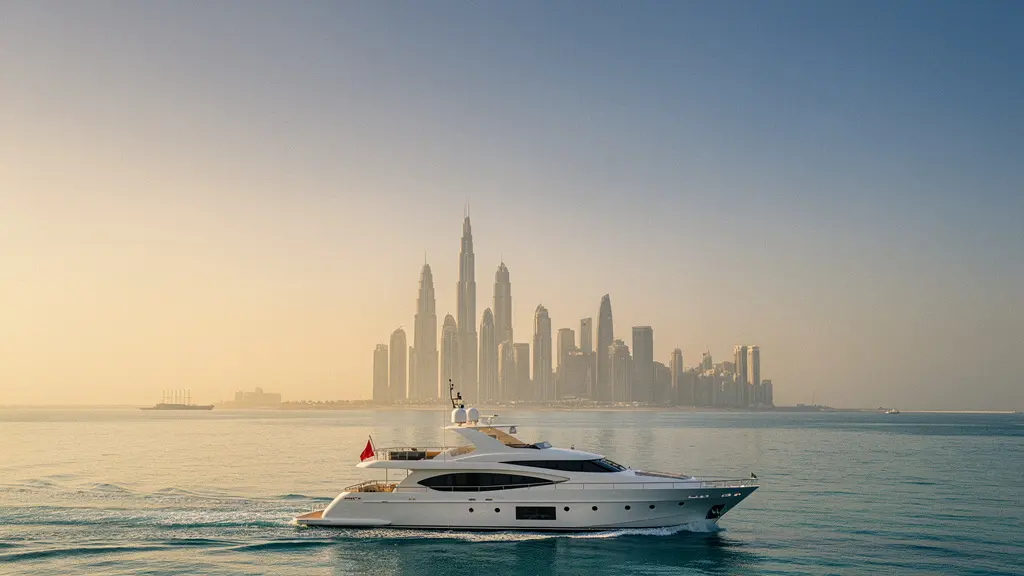
Renting a yacht without a captain—a “bareboat charter”—in the Arabian Gulf means you are not just a guest; you become the legal commander of the vessel. This guide clarifies the significant responsibilities you inherit, from regulatory compliance and navigational due diligence to full liability for the yacht and its passengers. Understanding this assumption of command is the key to a safe and legally sound maritime experience.
The allure of the Arabian Gulf’s turquoise waters is undeniable. For many residents and tourists, the idea of captaining their own private yacht for a day is the ultimate expression of freedom. This type of rental, known as a “bareboat charter,” allows you to take control of the vessel without a hired crew. However, this freedom comes with a significant and often underestimated level of responsibility. The moment you take the helm, you cease to be a simple renter and legally assume the full operational command and liability of a captain.
Many guides focus on choosing the right boat or the best spots for a photo, but they often gloss over the critical regulatory framework you are stepping into. From a legal standpoint, a bareboat charter is a temporary transfer of command. This means you are personally accountable for navigating restricted zones, adhering to environmental laws, ensuring passenger safety, and returning the vessel in its original condition. The core mistake is viewing the rental as a simple transaction rather than what it truly is: an assumption of liability.
This guide adopts a different perspective. It is designed to walk you through the key areas of a captain’s responsibility in the Gulf, not as a checklist of rules, but as a framework for exercising sound judgment and navigational due diligence. By understanding the “why” behind the regulations—from national security concerns to the physics of tidal flows—you can move beyond simply following instructions to making informed decisions as the vessel’s temporary commander.
The following sections break down the essential duties and potential pitfalls you will face. We will explore the complex web of regulations that govern these waters, providing the clarity needed to ensure your day on the Gulf is memorable for all the right reasons.
Summary: Assume Command: A Legal Guide to Renting a Yacht Without a Captain in the Arabian Gulf
- Why Are Certain Areas of the Gulf Off-Limits to Civilian Boats?
- How to Obtain a Recreational Fishing License for a Weekend Trip?
- Morning Calm or Afternoon Chop: When Is the Best Time for Family Boating?
- The Plastic Pollution Mistake That Can Disable Your Jet Boat Engine
- Palm Jumeirah Loop: How to Navigate the Outer Crescent Safely?
- The Seasonal Risk of Tar Balls on East Coast Beaches You Must Check
- The Tide Mistake That Can Block Your Access to Remote Coastal Areas
- Dhow Cruise Dinner: How to Spot a Touristrap vs a Quality Experience?
Why Are Certain Areas of the Gulf Off-Limits to Civilian Boats?
One of the most critical aspects of assuming operational command in the Arabian Gulf is understanding and respecting its restricted zones. These areas are not marked arbitrarily; they exist for reasons of national security, critical infrastructure protection, and environmental preservation. From a legal perspective, encroaching on a restricted zone is not a minor navigational error but a serious breach that can result in intervention by coast guard authorities, significant fines, and the immediate termination of your charter.
These off-limits areas typically include:
- Military Installations and Naval Bases: These are strictly prohibited zones, and maintaining a wide berth is non-negotiable.
- Oil and Gas Platforms: For safety and security, civilian vessels must keep a mandated distance from all offshore energy infrastructure.
- Desalination Plants: Water intake and outfall areas for these vital facilities are protected to prevent disruption or contamination.
- Royal Palaces and Private Islands: These areas are private property with significant security perimeters that extend into the water.
Your responsibility as captain includes proactive navigational due diligence. This means you cannot claim ignorance. Before leaving the marina, you must have a clear and updated understanding of the day’s valid navigational chart. Relying on visual navigation alone is insufficient and professionally negligent. Modern electronic charts and GPS systems are your primary tools for ensuring compliance, and their proper use is a core duty of any commander.
Your Action Plan: Navigating Restricted Zones Safely
- Download and update marine navigation apps with official Gulf charts before departure.
- Check with marina staff for daily military exercise schedules and temporary restrictions.
- Set GPS proximity alarms for sensitive areas like desalination plants and royal properties.
- Monitor VHF Channel 16 for Coast Guard announcements about restricted zones.
- Keep a 2-nautical-mile buffer from any unmarked installations or platforms.
Adherence to these zones is a clear measure of your competence as a captain. It demonstrates respect for local law and an understanding of the serious nature of maritime security in the region.
How to Obtain a Recreational Fishing License for a Weekend Trip?
Assuming command of a vessel also means ensuring all activities conducted on board are legally compliant. If your plans include fishing, even for a short weekend trip, you must understand that boating rights and fishing rights are separate legal matters. A recreational fishing license is a mandatory requirement in the UAE and other Gulf states, and fishing without one can lead to fines and confiscation of equipment. This falls squarely under your responsibility for regulatory compliance.
The process for obtaining a license is typically managed by municipal or environmental agencies and has been streamlined significantly. Most jurisdictions now offer online portals or dedicated mobile applications where residents and tourists can apply. You will generally need to provide identification (like an Emirates ID or passport), details of your trip, and pay a nominal fee. The license is often issued digitally and is valid for a specific period, such as a week or a year. It’s crucial to apply in advance, as processing times can vary.
For a bareboat charter, you are solely responsible for ensuring every person who plans to fish on your vessel is properly licensed. A reputable charter company may provide guidance, but the legal accountability rests with you, the captain. This includes adhering to specific regulations outlined in the license, such as catch limits, size restrictions, and prohibitions on fishing for certain endangered species. These rules are in place to ensure the sustainability of the Gulf’s marine ecosystem.
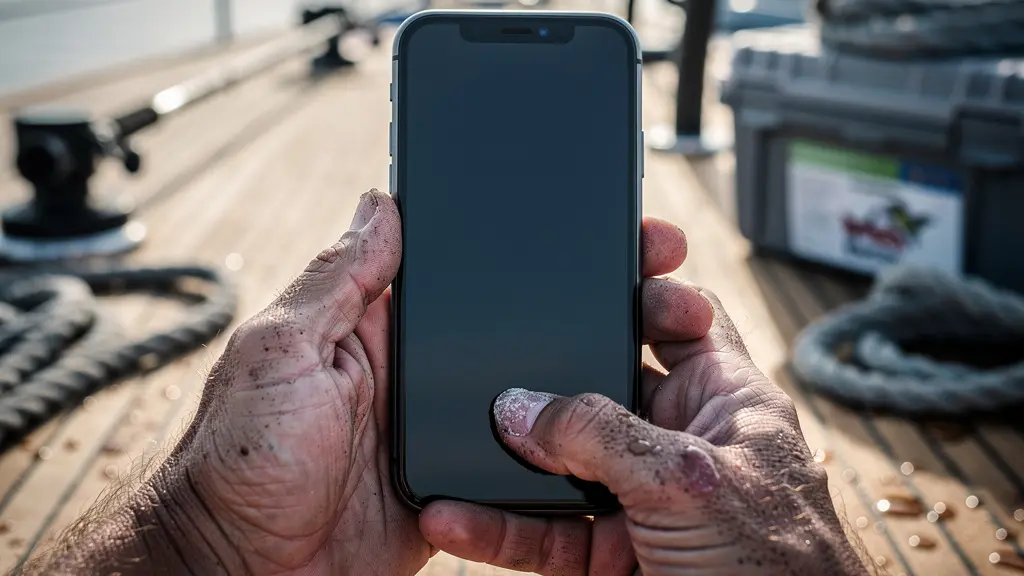
As the image illustrates, managing compliance is often as simple as using your smartphone. However, this simple action represents a critical legal step. Neglecting it exposes you and your guests to legal penalties and demonstrates a failure in your duty of regulatory oversight as the vessel’s commander.
Morning Calm or Afternoon Chop: When Is the Best Time for Family Boating?
A key element of operational command is risk assessment, particularly when passengers, especially children, are on board. Choosing when to go boating in the Arabian Gulf is not just a matter of convenience; it is a critical safety decision. While the prime boating season runs roughly from November through April due to milder temperatures, the conditions within a single day can vary dramatically. As captain, you are legally responsible for evaluating these conditions and making the safest choice for everyone on your vessel.
Generally, the early morning hours offer the calmest and most pleasant conditions. The water is often glass-like, the sun is less intense, and marina traffic is lighter. This is the ideal window for trips involving young children or those prone to seasickness. As the day progresses, the combination of rising heat and wind typically creates “afternoon chop”—shorter, more frequent waves that can make the ride uncomfortable and even hazardous for smaller boats. The strong midday glare can also impair visibility, another risk factor you must manage.
While sunset cruises are popular, be aware that this is a peak traffic time. You will be navigating alongside many other vessels, from private yachts to large tour boats, increasing the need for vigilance. Your duty of care requires you to match the timing of your trip to the experience and comfort level of your passengers, not just the desired photo opportunities.
The following table, based on common local knowledge, provides a clear framework for your decision-making. As this data from a local charter expert suggests, a captain’s judgment must be based on objective conditions.
| Time Period | Water Conditions | Temperature | Family Suitability |
|---|---|---|---|
| Early Morning (6-9 AM) | Calmest waters | Coolest | Excellent for young children |
| Late Morning (9-11 AM) | Still calm | Warming up | Good visibility |
| Midday (11 AM-2 PM) | Choppy, glare issues | Hottest | Avoid with small children |
| Late Afternoon (2-5 PM) | Increasing chop | Hot, strong sun | Challenging conditions |
| Sunset (5-7 PM) | Calming down | Cooling | Popular but crowded |
Ultimately, making the right call on timing is a non-delegable duty. It is a direct reflection of your competence in exercising operational command and prioritizing passenger safety above all else.
The Plastic Pollution Mistake That Can Disable Your Jet Boat Engine
Vessel accountability extends beyond navigation and into the mechanical integrity of the yacht itself. A common and entirely preventable issue that can disable a jet boat or cripple a traditional yacht’s cooling system is plastic pollution. A single plastic bag sucked into a water intake can cause an engine to rapidly overheat, leaving you stranded. As captain, you are responsible for both preventing pollution and responding to such mechanical emergencies.
The legal and ethical duty is twofold. First, you must enforce a strict zero-tolerance policy for any waste going overboard. Any plastic bags, wrappers, or other debris that are not properly secured can easily be blown into the water, posing a threat to your vessel and the marine environment. This is a core part of your command responsibility. Ensuring all garbage is stowed securely is not a minor housekeeping task; it’s a critical preventative measure.
Second, you must be prepared to handle the consequences should your engine’s intake become blocked. The first sign is usually a warning alarm or a sudden loss of power. Your immediate reaction is critical. Continuing to run an overheating engine can cause catastrophic and expensive damage, for which you will be held financially liable. You must know the emergency shutdown procedure and how to safely inspect the water intakes. In many cases, the blockage is visible and can be cleared from the swim platform, but this should only be attempted if conditions are safe.
If you encounter this issue, follow a clear protocol:
- Immediately shut down the engine at the first sign of overheating or power loss.
- If the sea is calm and it is safe to do so, visually inspect the water intake grate, typically located under the hull or on the transom.
- Use a boat hook to carefully attempt to clear any visible debris. Never put your hands near the intake while the engine is on.
- After clearing the debris, start the engine for no more than 5 seconds in neutral to check if water flow has been restored (e.g., from the exhaust port).
- If the problem persists, do not risk further damage. Your duty is to radio for assistance and await professional help.
This scenario highlights how environmental responsibility and mechanical preparedness are intertwined. A moment of carelessness with a plastic bag can lead directly to a serious safety incident, making pollution prevention a top priority for any responsible captain.
Palm Jumeirah Loop: How to Navigate the Outer Crescent Safely?
Navigating around iconic landmarks like the Palm Jumeirah is a highlight of any Gulf charter, but it requires precise navigational due diligence. The route around the outer crescent is a busy waterway, bordered by luxury hotels, private residences, and breakwaters. As captain, your responsibility is to navigate this route safely, respecting both marked channels and the privacy of waterfront properties. This is not a joyride; it’s a controlled transit through a sensitive area.
The primary challenges when navigating the Palm’s crescent are maintaining a safe speed, staying within the designated deep-water channels, and keeping a respectful distance from the shore. The waters immediately surrounding the crescent can be deceptively shallow outside the marked buoys. A navigational error here could lead to running aground, causing significant damage to the yacht’s hull or propulsion system—damage for which you are liable.
Furthermore, the high concentration of luxury resorts and private villas means that noise levels and proximity are serious concerns. Creating a large wake or anchoring too close to a property is considered poor seamanship and a public nuisance. Professional crews have perfected routes that provide excellent views while adhering to these unwritten rules of conduct. Your duty as a temporary captain is to emulate that same level of professionalism.
Case Study: A Professional Navigation Route
Charter companies like Xclusive Yachts have standardized a safe and respectful route for this exact trip. Their vessels typically sail around the Palm Jumeirah, offering clear views of landmarks like the Atlantis Hotel and Burj Al Arab from a safe, legal distance. A key part of their protocol is anchoring in designated, sheltered waters that do not impede traffic or infringe on private property, allowing guests to take photos without creating a hazard or a nuisance. This approach balances guest experience with navigational responsibility.
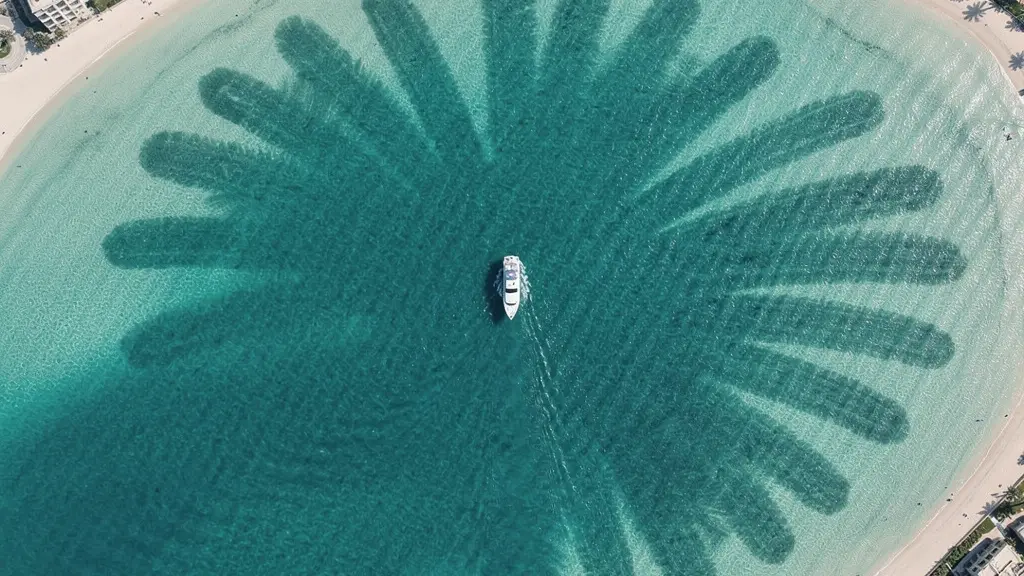
The aerial view above demonstrates the challenge: you must guide your vessel along a specific path, with little room for error. This requires constant attention to your charts, your depth sounder, and the traffic around you. It is a clear test of your ability to exercise navigational due diligence in a congested and high-stakes environment.
The Seasonal Risk of Tar Balls on East Coast Beaches You Must Check
Your vessel accountability includes returning the yacht in the same condition you received it. One of the most overlooked financial risks, particularly when boating on the UAE’s East Coast (e.g., Fujairah), is damage from tar balls. These clumps of weathered oil can wash ashore or float in the water, especially during certain seasons. If your yacht’s hull becomes stained with tar, the charter company will charge you for the specialized cleaning required to remove it, and these costs can be deducted directly from your security deposit.
This is a clear example of the assumption of liability. The presence of tar in the water is not your fault, but the damage it causes to the vessel under your command becomes your financial responsibility. Security damage deposits typically range from $500 to $2,000, depending on the yacht’s size, and a significant tar stain can easily result in the forfeiture of a large portion of that deposit. Therefore, preventative inspection is a crucial part of your duties.
Before you even leave the marina, you must conduct a thorough pre-departure inspection of the hull. Document the vessel’s condition with time-stamped photographs, paying close attention to the waterline. This creates a legal baseline. If there are existing stains, bring them to the charter company’s attention immediately and have them acknowledged in writing. This diligence protects you from being blamed for pre-existing damage. You should also check local online forums or social media groups for recent reports of tar balls in the areas you plan to visit.
Your Checklist: Pre-Departure Hull Condition Audit
- Photograph the yacht’s hull from all angles before departure, focusing on the waterline.
- Check local fishing or boating groups on social media for recent tar ball reports in your planned area.
- Inspect the anchor and chain for any existing tar residue before leaving the marina.
- Request a written acknowledgment of the hull’s current condition from the charter company representative.
- Keep all photos time-stamped and securely backed up to cloud storage in case of a dispute.
This protocol is not about mistrust; it is about professional diligence. By documenting the vessel’s condition, you are acting as a responsible commander, protecting yourself from unwarranted financial liability through meticulous record-keeping.
The Tide Mistake That Can Block Your Access to Remote Coastal Areas
Effective navigational due diligence goes beyond reading a map; it requires a deep understanding of the dynamic marine environment, especially tides. In the Arabian Gulf, many beautiful, remote coves and beaches are only accessible during high tide. A common and costly mistake is entering a shallow area on a rising tide, only to find yourself trapped as the water recedes. Running aground can cause severe damage and necessitate an expensive and embarrassing rescue, all of which falls under your liability.
As captain, you are required to know three critical pieces of information before entering any shallow coastal area:
- The Tidal Schedule: You must have a tide chart for the specific day and location, knowing the exact times of high and low tide.
- Your Vessel’s Draft: The “draft” is the depth of water your yacht needs to float freely. This figure, provided by the charter company, is non-negotiable.
- The Area’s Charted Depth: Your nautical chart will indicate the water depth at mean low tide.
The calculation is simple but critical: the current water depth is the charted depth plus the current tide height. There must always be a sufficient safety margin between this depth and your vessel’s draft. Miscalculating this, or failing to plan your exit well before low tide, is a sign of negligence. A responsible commander plans their entry and their exit simultaneously.
The following table, based on general principles and data from maritime experts like Sky Walker Yachts, offers a conservative guide for planning. Your safety window depends directly on how deep your vessel sits in the water.
| Boat Draft | Minimum Safe Depth | Leave Before Low Tide | Safe Return Window |
|---|---|---|---|
| 2-3 feet | 5 feet | 2 hours | 4 hours after low |
| 3-4 feet | 6 feet | 2.5 hours | 5 hours after low |
| 4-5 feet | 7 feet | 3 hours | 6 hours after low |
| 5+ feet | 8+ feet | Avoid shallow coves | Deep water only |
Ignoring the tide is like driving a car without checking how much fuel you have. It’s a fundamental failure of a captain’s duty of care, transforming a scenic detour into a potential disaster. Proper tide planning is the hallmark of a competent and responsible mariner.
Key Takeaways
- Assuming command of a bareboat charter makes you the legal captain, fully liable for the vessel, passengers, and regulatory compliance.
- Navigational due diligence is mandatory; it requires proactive use of updated charts to avoid restricted zones, shallow waters, and other hazards.
- Vessel accountability includes pre-departure inspections to avoid liability for pre-existing damage and managing on-board activities to prevent mechanical failures.
Dhow Cruise Dinner: How to Spot a Tourist Trap vs a Quality Experience?
To fully appreciate the responsibility of a bareboat charter, it is useful to contrast it with the most common alternative: a dhow dinner cruise. While the title of this section asks how to spot a “tourist trap,” the more relevant legal and operational question is understanding the profound difference in liability. On a dhow cruise, you are a passenger. Your responsibility is minimal. On a private, self-captained yacht, you are the commander, and your responsibility is total.
A dhow cruise is a packaged experience. A professional crew manages navigation, safety, and compliance. The route is fixed, the menu is set, and your role is simply to enjoy the view. While quality can vary, the fundamental model absolves you of any operational liability. If the engine fails or a navigational error occurs, the dhow’s captain and operating company are accountable.
A bareboat charter is the complete opposite. It offers unparalleled freedom and privacy but places all accountability on your shoulders. You choose the route, you select the food and drinks, you decide when and where to anchor, and you manage the safety of everyone on board. This model replaces the passive experience of a dhow cruise with the active role of a commander. It is an upgrade in experience but also a significant escalation in responsibility.
Case Study: Crafting a Superior Private Experience
Companies specializing in private charters, like Dubai Yacht Booking, demonstrate this distinction clearly. By chartering your own vessel, you can create a bespoke dinner cruise that far surpasses a crowded dhow. You can anchor in a quiet, secluded bay to watch the sunset, choose a gourmet menu, and engage in water activities—all on your own schedule. This elite experience is the reward for accepting the full mantle of command, from planning the route to ensuring every guest returns to shore safely.
Choosing between a dhow cruise and a bareboat charter is therefore not just a choice of vessel, but a choice of role. Do you wish to be a passive guest or an active commander? Understanding this distinction is the final step in appreciating the legal and operational weight that comes with renting a yacht without a captain.
Ultimately, captaining your own yacht in the Arabian Gulf is an immensely rewarding experience. By embracing the responsibilities of command with the seriousness they deserve, you ensure a voyage that is not only thrilling but also safe, legal, and respectful of the maritime environment you have been entrusted with.