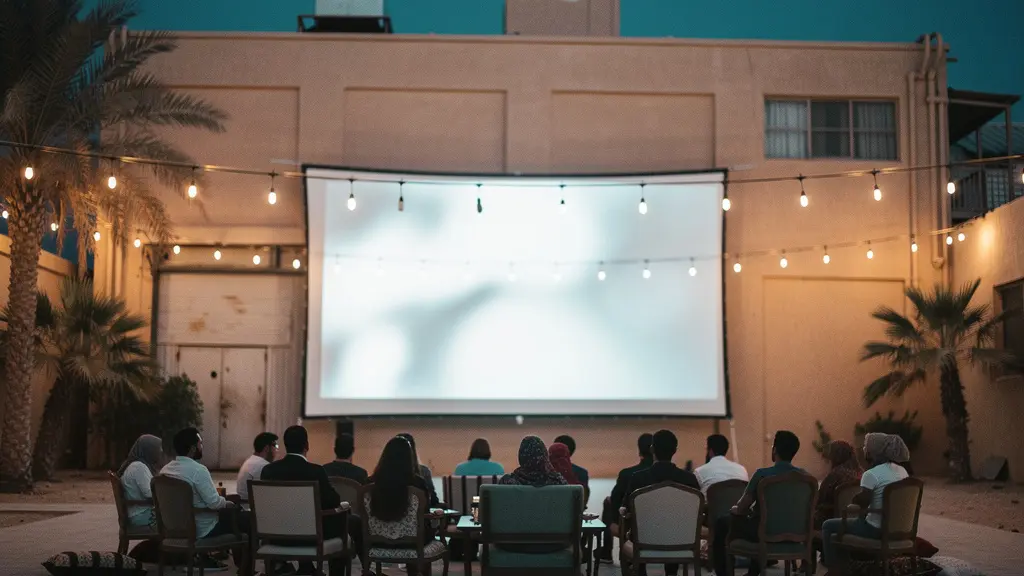
The key to truly experiencing UAE film festivals is understanding they are a dynamic cultural ecosystem, split between glamorous spectacles and intimate community cinema.
- Short film is the dominant artistic format, fueled by significant regional funding and a need to capture rapid societal change.
- Navigating the scene requires specific cultural knowledge, from Q&A etiquette to the strategic mistake of buying passes on the day of a screening.
Recommendation: Identify whether you seek star-studded premieres or deep cinematic dialogue, and use that to guide your festival choices, planning, and engagement.
The glittering image of a UAE film festival often brings to mind exclusive red carpets and industry-only events, leaving many cinema lovers wondering: are these vibrant celebrations of film even accessible to the public? The simple answer is a resounding yes. But gaining access is not merely about buying a ticket online. The real art lies in understanding the unique cultural landscape you are stepping into—a world where blockbuster premieres coexist with fiercely independent community screenings, each with its own rhythm, etiquette, and purpose.
Many guides will offer generic advice like “check the schedule” or “follow the festival on social media.” While helpful, this advice misses the essence of the UAE’s cinematic scene. To truly engage, one must look deeper. It’s about recognizing why the short film format resonates so profoundly in the Gulf, learning how to pose a question to a director in a way that honours local traditions of discourse, and knowing that the most coveted tickets might not be for the Hollywood headliner, but for a local film with deep community roots.
This guide is your invitation to go beyond the surface. It’s a cultural map designed for the curious cinephile, not the industry insider. We’ll explore the dual nature of the festival experience, from the high glamour of a gala to the raw authenticity of a community cinema. You will learn the practical strategies to avoid burnout, the scheduling mistakes that can leave you outside the theatre, and the artistic themes that give the region’s cinema its powerful and urgent voice. This is your guide to experiencing UAE film festivals not as a tourist, but as a participant in a vital cultural conversation.
To help you navigate this rich landscape, this article is structured to provide both a high-level cultural overview and specific, actionable advice. The following sections will guide you through every aspect of the festival experience.
Summary: Your Guide to Accessing UAE Film Festivals
- Why Is Short Film the Strongest Format in Gulf Cinema?
- How to Ask Questions to Directors During Festival Panels?
- Gala Screening or Community Cinema: Which Experience Is Right for You?
- The Scheduling Mistake of Waiting Until Day-Of to Buy Festival Passes
- How to Watch 3 Films in One Day Without Burning Out?
- How to Watch Independent Films at Cinema Akil?
- Why Does So Much Contemporary UAE Art Focus on Rapid Urbanization?
- Red Carpet Watching: Where to Stand to See Stars at UAE Premieres?
Why is short film the strongest format in Gulf cinema?
While international festivals often champion the feature-length epic, the creative heart of Gulf cinema beats strongest in the short film format. This isn’t an accident of budget, but a deliberate artistic and financial ecosystem. Short films offer a potent, agile medium for filmmakers to capture and comment on the dizzying pace of social and urban transformation across the region. A feature film can take years to develop, by which time the very cityscapes and social norms it sought to document may have changed. A short film, however, can act as a rapid-response cultural snapshot.
This creative urgency is met with robust institutional support. The region’s cultural foundations have recognized the power of short-form storytelling and actively nurture it with significant funding. For instance, the Sharjah Art Foundation provides a vital lifeline for emerging talent. Its Short Film Production Grant offers a funding pool of 120,000 AED to be shared among recipients, with an additional grant specifically for an Emirati filmmaker. This financial backing empowers directors to take creative risks without the immense pressure of securing feature-film financing.
The audience appetite and industry validation are equally immense. The inaugural Fujifilm Short Film Festival, held in collaboration with Cinema Akil, received over 2,000 submissions, demonstrating a massive wellspring of creative talent. This groundswell of interest, combined with dedicated funding and a cultural relevance that feature films struggle to match, has solidified the short film as the most vital and representative format in contemporary Gulf cinema. It is the format of the now, perfectly suited to a region in constant, dynamic flux.
How to ask questions to directors during festival panels?
A film festival Q&A in the UAE is more than a simple post-screening debrief; it’s an opportunity for a genuine cultural exchange. However, approaching it with the confrontational style sometimes seen at Western festivals can be counterproductive. The key is to engage with respect and cultural awareness, turning your question into an invitation for deeper dialogue rather than a demand for an answer.
Think of the interaction as mirroring the Majlis tradition of generous, indirect discourse. Before you pose a critical question, always open with a genuine and specific compliment. Mentioning a particular scene, a piece of dialogue, or a creative choice that moved you shows that you’ve engaged thoughtfully with the work. This builds a bridge of respect before you explore a more challenging aspect of the film. Your tone should be one of curiosity, not accusation. The goal is to understand the director’s intent, not to publicly challenge it.

Language is also a strategic tool. While English is the default in international-facing panels, consider asking your question in Arabic if the director is from the region. This can create a moment of intimacy and often elicits a more personal, less-guarded response. Above all, keep your question concise—under 30 seconds. A focused, thoughtful question demonstrates true engagement and respect for the time of the panelists and everyone else in the audience.
Gala screening or community cinema: Which experience is right for you?
The UAE film festival circuit presents a fascinating duality. On one hand, you have the high-gloss, star-studded gala premiere; on the other, the intimate, intellectually stimulating community screening. They are both valid and exciting ways to experience cinema, but they offer fundamentally different things. Choosing the right one depends entirely on what you hope to get out of your evening.
A gala screening is a spectacle. Held in opulent venues like the Dubai Opera or major mall cinemas, it’s a social and networking event as much as it is a film premiere. The dress code is formal, the atmosphere is electric with the presence of media and stars, and the focus is often on regional premieres of major blockbusters. It’s an event to see and be seen. In contrast, a community cinema experience, championed by venues like Cinema Akil, is about deep engagement with the art form. The vibe is relaxed, the dress code is “art-school casual,” and the audience is composed of dedicated cinephiles who stay for the passionate post-film debates.
To help you decide, consider this direct comparison which shows how venues like Cinema Akil create a different kind of value. The Arab Cinema Week, for example, transformed the viewing experience into a ten-day dialogue, connecting audiences directly with filmmakers to discuss pressing issues—a level of interaction rarely found at a premiere.
| Criteria | Gala Screening | Community Cinema |
|---|---|---|
| Typical Venue | Dubai Opera, Madinat Jumeirah, Mall cinemas (MOE, Dubai Mall) | Alserkal Avenue (Cinema Akil), pop-up outdoor venues, cultural centers |
| Dress Code | Red carpet couture: formal attire, designer wear expected | Art-school casual: relaxed streetwear, creative expression encouraged |
| Audience Vibe | Social/networking event; attendees may leave early after being seen | Dedicated cinephiles; post-film debates and genuine engagement |
| Content Focus | Regional premieres of blockbusters, star-studded spectacles | Experimental and independent films revealing raw, unpolished stories |
| Ticket Price Range | Higher (premium passes, VIP tiers) | Affordable (standard tickets, some free public screenings) |
| Interaction with Filmmakers | Limited; brief photo ops, formal introductions | Extensive; Q&A sessions, workshops, intimate conversations |
The scheduling mistake of waiting until day-of to buy festival passes
In many parts of the world, you might get away with a last-minute decision to catch a festival film. In the UAE, waiting until the day of the screening to buy your pass is one of the biggest strategic errors you can make. The demand for festival tickets, especially for local and independent films, is far more intense than most outsiders realize. The local cinema scene is vibrant and deeply engaged, with events like the WOIS Film Fest receiving over 5,000 submissions per year, indicating a massive base of creators and supporters.
One of the unique local dynamics is that Emirati directors often mobilize extensive networks of family, friends, and community members. The result? An obscure-seeming local film can sell out faster than a Hollywood headliner because an entire community is turning out to support one of its own. Furthermore, unlike Western festivals that might have “rush lines” for standby entry, this is rarely a viable option in the UAE. Venues, often located within malls, are subject to strict capacity controls and fire codes, making last-minute walk-ins nearly impossible.
To avoid disappointment, you must shift your mindset from casual moviegoer to strategic planner. Buying your pass is an event in itself that should happen the moment the festival program is released. This not only secures your seat but often grants access to other perks, like exclusive masterclasses with visiting industry legends, which are bundled into early-bird passes.
Your action plan: Secure your festival access
- Buy your pass as soon as the festival program drops: Recognize that local Emirati films can sell out instantly due to strong community and family support networks.
- Check for bundled perks: Look to see if your early bird festival pass includes valuable extras like masterclasses or workshops with visiting filmmakers.
- Do not rely on standby entry: Understand that strict UAE venue capacity controls, especially in malls, make rush lines or last-minute walk-ins extremely unlikely.
- Monitor social media during the sale window: Follow the festival’s channels closely, as screenings at intimate venues like Cinema Akil (133 seats) can sell out within hours of being announced.
How to watch 3 films in one day without burning out?
A film festival marathon—three or more films in a single day—is a cinephile’s dream, but in the UAE, it can quickly turn into a test of physical endurance. The primary challenge isn’t just mental fatigue; it’s the extreme environmental contrast. The shock to your system from moving between 40°C outdoor heat and a cinema where the air conditioning is blasting at sub-arctic temperatures is a real source of physical exhaustion.
Surviving, and enjoying, a marathon day requires a strategy. The most important concept is to plan a ‘sensory diet’. Don’t schedule three heavy, emotionally draining socio-political documentaries back-to-back. Instead, alternate genres. Start with a heavy film, follow it with a lighthearted animated short or a comedy to cleanse your palate, and save your most anticipated film for last when your energy might be waning. This approach helps prevent compassion fatigue and keeps your mind fresh and receptive.
Equally important is identifying your ‘third space’ in advance. This is a quiet, comfortable spot near the venue where you can decompress between screenings. In Alserkal Avenue, this might be a tranquil art gallery. At Souk Madinat, it could be a waterfront walkway. Use this 30-45 minute buffer not just to rush to the next theatre, but to walk, hydrate aggressively, and reset your body temperature. A warm cup of karak chai from a nearby café can be the perfect sensory reset, a moment of quiet contemplation before you dive back into the darkness of the cinema.

How to watch independent films at Cinema Akil?
For anyone serious about engaging with independent, arthouse, and world cinema in the UAE, all roads lead to Cinema Akil. It is more than just a movie theatre; it is the cultural heart of the region’s independent film scene. Founded by Emirati curator Butheina Kazim in 2014, it began as a nomadic pop-up cinema before establishing itself as the GCC’s first permanent arthouse cinema in 2018. Its home in a converted warehouse in Dubai’s Alserkal Avenue immediately sets the tone: this is a space for art, not just commerce.
The experience of watching a film here is unique. The 133-seat venue is filled with vintage seats salvaged from a demolished Dubai cinema, creating a tangible link to the city’s past. The inclusion of Project Chaiwala, a tea bar serving karak chai, has made the act of grabbing a warm, spiced drink an integral part of the viewing ritual. This isn’t a place of silent, isolated consumption; it’s a communal space where conversation is encouraged before and after the film.
Cinema Akil’s programming is its soul. It consistently screens films from the MENA region, East Africa, and South Asia that would never find a home in the mainstream commercial multiplexes. It serves as the main venue for crucial community-focused festivals like Reel Palestine and Arab Cinema Week. Getting there is part of the journey; located in Al Quoz, it’s best reached by a taxi from a nearby metro station. Whether you’re attending a special festival or just a regular screening, visiting Cinema Akil is the most direct way to tap into the pulse of the region’s vibrant indie film culture.
Why does so much contemporary UAE art focus on rapid urbanization?
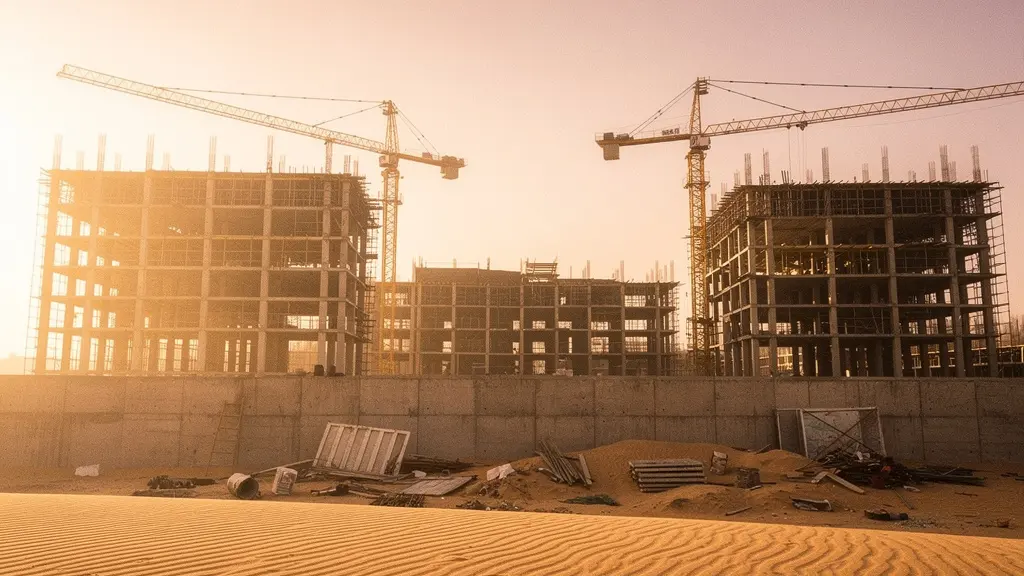
To an outside observer, the gleaming skyscrapers of Dubai and Abu Dhabi are symbols of progress and ambition. But for many local and long-term resident artists and filmmakers, this relentless, hyper-speed development comes at a cost. The focus on rapid urbanization in contemporary UAE art is not simply an aesthetic choice; it is an act of cultural preservation and a form of creative protest against the erasure of memory and community.
This artistic urgency is a direct response to the lived experience of seeing familiar landscapes and communities vanish overnight. The gentrification of older Dubai neighborhoods like Satwa and Karama serves as a powerful case in point. These areas were for decades vibrant hubs for South Asian communities. As redevelopment swept through, they were displaced.
Documenting Disappearing Dubai: The Case of Karama
The redevelopment of Karama exemplifies the tensions fueling much of the UAE’s contemporary art. As documented in cultural analyses, post-redevelopment rent in the new buildings was often significantly higher—in some cases, 42% higher than in the older buildings slated for demolition. This economic pressure effectively displaced the long-standing communities that had given the neighborhood its unique character for generations. In response, cultural projects like Mahmoud Kaabour’s ‘Satwa Stories’ and Gulf Photo Plus’s ‘Memories of Satwa’ emerged. These films and photo series function as both an archival record of a vanishing way of life and a poignant commentary on the human cost of hyper-urbanization.
When you watch a film from the Gulf that lingers on a half-demolished building or captures the stories of residents in an old neighborhood, you are not just watching a movie. You are witnessing an artist grappling with the profound question of what is lost when a society modernizes at such a breathtaking pace. The cinema becomes a repository for memories, a space to document what the concrete threatens to pave over.
Key takeaways
- The UAE film scene is a tale of two cinemas: glamorous, star-studded galas and intimate, community-driven arthouse screenings. Choose your experience wisely.
- The short film is the most vital format in Gulf cinema, acting as a rapid-response vehicle to capture a region in constant, dynamic change.
- Strategic planning is non-negotiable. From buying passes the moment they drop to planning a ‘sensory diet’ for marathon viewing days, success lies in the details.
Red carpet watching: Where to stand to see stars at UAE premieres?
The allure of the red carpet is undeniable, and UAE premieres attract some of the biggest names in regional and international cinema. The market’s scale, projected to generate $730 million in gross box office revenue in a single year, ensures a steady stream of high-profile events. However, the experience of star-watching here is different from Cannes or Hollywood. Forget sidewalk camping; the smartest vantage points are often indoors and elevated.
Many major UAE premieres take place inside luxury malls, like the Mall of the Emirates or The Dubai Mall. This provides a unique advantage for the savvy spectator. Instead of battling for a spot behind a barricade on the ground floor, head to the upper-floor balconies that overlook the atrium or entrance area. This gives you an unobstructed, bird’s-eye view of the entire arrival procession, free from the jostling crowds below.
Timing is also crucial. UAE events famously run on “Gulf Standard Time,” meaning they often start later than scheduled. Arriving 30-45 minutes *after* the printed start time is a wise move. The stars and VIPs tend to arrive in a compressed, intense window just minutes before the screening begins. Position yourself near a natural bottleneck, like the transition from the public mall area to the secured cinema entrance. This is where security details will slow the pace, giving you the best window for a photo or a moment of proximity.
Finally, adopt a “nod and smile” approach. Loudly shouting a star’s name is likely to be ignored. Calm, respectful gestures are far more effective in the local cultural context and are more likely to be rewarded with a brief acknowledgment. It’s about projecting respectful admiration, not demanding attention.
Now that you have the insider’s map to the UAE’s film festival ecosystem, from its grassroots community hubs to its glittering premieres, the next step is to choose your first screening and dive into the rich cinematic conversation happening across the region.
Frequently asked questions about Film Festivals in the UAE
Where exactly is Cinema Akil located and how do I get there?
Cinema Akil is located at Warehouse 68, Alserkal Avenue, Al Quoz Industrial District, Dubai. Parking is available within the Alserkal Avenue complex. The nearest metro station is Noor Bank, but it is roughly a 30-minute walk from there, so taking a taxi from the station is recommended.
What kind of films does Cinema Akil screen?
Cinema Akil screens independent, classic, and world cinema that is not typically distributed in mainstream commercial cinemas in the Middle East. Programming includes works from East Africa, South and West Asia, and the MENA region, with themed film weeks, retrospectives, and curated festival programs running throughout the year.
Does Cinema Akil offer outdoor screenings?
Yes. In addition to its permanent indoor venue at Alserkal Avenue, Cinema Akil hosts seasonal outdoor screenings during the cooler winter months and has partnered with venues like L’École Van Cleef & Arpels for rooftop terrace screenings in Hai d3 with views of the Dubai skyline.