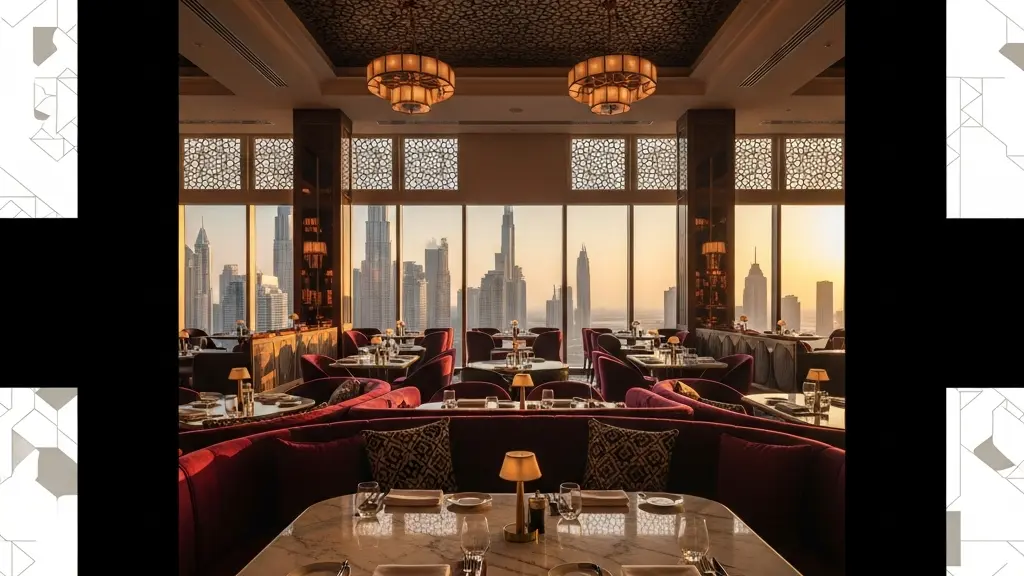
You’re paying for a licensed franchise operation, not the celebrity chef’s personal cooking.
- Dubai’s celebrity kitchens are run by proxy chefs using 90% imported ingredients at 30-50% markup over original locations
- Profit margins are razor-thin (3-10%), driving aggressive wine markups and theatrical presentation over substance
Recommendation: Verify if the venue is chef-owned or licensed, book signature dishes 48 hours ahead, and always check the standard wine list before accepting sommelier recommendations.
Walking into Bread Street Kitchen, you see Gordon Ramsay’s name glowing in neon above the door. What you do not see is Gordon Ramsay. This is the first harsh lesson of Dubai’s celebrity dining ecosystem: you are paying for a licensing agreement, not the chef’s physical presence or personal oversight. With 18.72 million international overnight visitors in 2024, a 9% increase driving rapid expansion, Dubai has become the global capital of culinary franchising, where brand equity often outweighs kitchen craftsmanship.
The platitudes suggest these restaurants bring world-class expertise to the desert, promising the same standards as London or New York flagships. The operational reality is more complex and commercially driven. Most venues operate under management agreements where the celebrity lends their name, provides initial staff training, and conducts periodic audits, then retreats to their flagship while local teams manage daily service. The kitchen is run by a “Chef de Cuisine” whose name appears nowhere on the marketing materials, working with ingredients that are overwhelmingly imported due to the UAE’s limited agricultural capacity.
This article dismantles the marketing mythology through an operational lens. Whether you are attempting to secure a Beef Wellington that sells out nightly, comparing the Dubai outpost to its London original, or calculating whether that sommelier-recommended wine pairing represents genuine value or margin recovery, the economics are specific to this high-rent, import-dependent market. Understanding these mechanics is not about cynicism—it is about spending wisely. From the optimal seat at the pass to the pre-show dining logistics near Coca-Cola Arena, knowing how these kitchens actually function transforms you from a tourist with a credit card into an informed diner capable of distinguishing theatrical presentation from genuine culinary excellence.
The following sections break down the specific mechanics of Dubai’s celebrity dining scene, from kitchen operations to seating strategies, providing the insider knowledge necessary to navigate these venues effectively.
Table of Contents: Celebrity Dining in Dubai Operational Reality
- Why Is the Celebrity Chef Almost Never in the Kitchen?
- How to Pre-Order the Beef Wellington to Ensure Availability?
- Dubai vs London: How Does the Quality of the Same Restaurant Compare?
- The Wine Pairing Mistake That Doubles Your Check at Celebrity Venues
- Kitchen View or Window: Where to Sit for the Best Experience?
- Tasting Menu or A La Carte: Which Offers Better Value at High-End Venues?
- Where to Eat Near the Arena to Ensure You Don’t Miss the Opening Act?
- Sea View or City View: Which Side Is Quieter at Night?
Why Is the Celebrity Chef Almost Never in the Kitchen?
The mathematics of celebrity dining operate on a licensing model rather than culinary leadership. When Gordon Ramsay maintains his three Michelin stars at Restaurant Gordon Ramsay in London—held since 1998 and representing the city’s longest-standing three-star restaurant—he does so through daily presence and rigorous oversight. His Dubai ventures, Bread Street Kitchen and Street Pizza, function under markedly different arrangements: franchise agreements where the celebrity chef visits once or twice yearly while a “Chef de Cuisine” manages daily operations.
This distinction matters because Dubai’s tourism boom drives celebrity restaurant expansion with 18.72 million international overnight visitors in 2024 creating insatiable demand for recognizable brands. The kitchen you’re observing is executing standardized recipes from a corporate playbook, not receiving creative direction from the name on the door. The resident chef may be talented—often recruited from international hotel chains—but they operate within strict parameters designed to protect brand consistency rather than encourage culinary innovation or seasonal adaptation.
The legal structure reveals the operational truth: most Dubai celebrity venues are licensing deals rather than chef-owned operations. This means the celebrity provides initial staff training, periodic quality audits, and menu approvals, but the day-to-day reality is managed by hospitality groups focused on volume, table turnover, and beverage sales. When you see the chef’s name embroidered on staff jackets, you’re seeing a marketing asset, not a guarantee of the founder’s personal culinary philosophy.
Verification checklist: Who is actually cooking your meal?
- Check if the restaurant lists a ‘Chef de Cuisine’ separately from the celebrity chef owner
- Look for the resident chef’s background on professional networks before booking
- Book within the first 3 months of opening for the highest chance of experiencing the original trained team
- Verify if it’s a licensing deal or actual chef ownership through restaurant announcements
How to Pre-Order the Beef Wellington to Ensure Availability?
The Beef Wellington has become the ultimate test of Dubai’s celebrity restaurant machinery. At venues like Bread Street Kitchen, this signature dish represents both a culinary benchmark and a supply chain constraint. The restaurant is so popular that you need to book in advance, but securing a table reservation is only half the battle—the Wellington typically sells out by 8:00 PM on weekends due to preparation complexity and ingredient limitations.
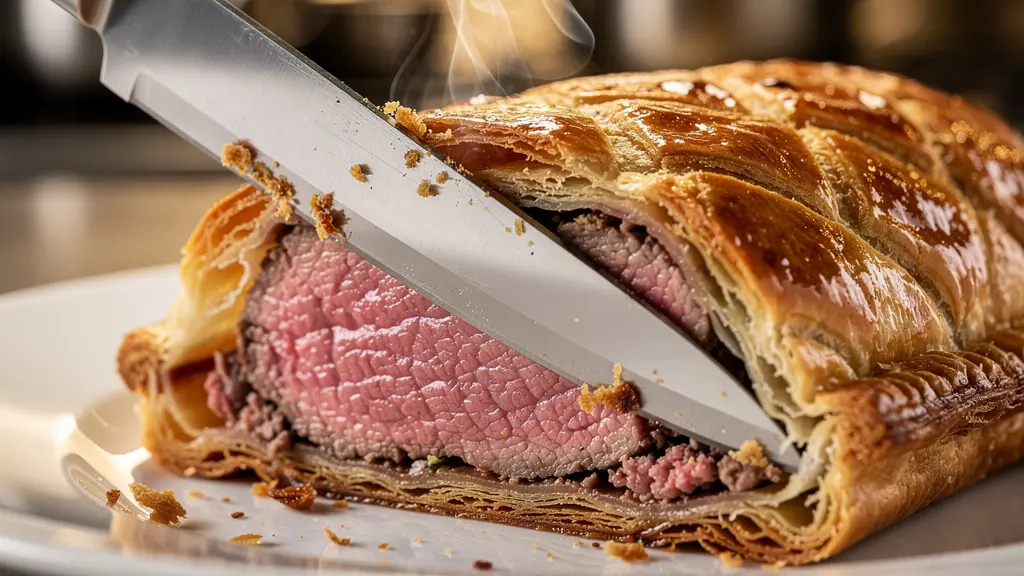
The preparation requires precise orchestration: beef tenderloin seared to specific standards, mushroom duxelles cooked to exact moisture content, parma ham (or beef ham in halal adaptations) wrapped with surgical precision, and puff pastry laminated to golden perfection. In high-volume Dubai kitchens, chefs prepare limited quantities daily to minimize waste given that 90 percent of UAE’s food comes from abroad, making premium beef both expensive and logistically challenging to store.
To guarantee availability, contact the restaurant 48 hours ahead via email or dedicated booking lines. Specify your party size, preferred doneness (medium-rare is optimal for texture), and any dietary restrictions. Some venues accept pre-orders with credit card guarantees, charging cancellation fees for no-shows. Arrive punctually—kitchens will not hold prepared Wellingtons beyond 15 minutes past reservation time during peak service, as the pastry becomes soggy and the meat continues cooking. This dish represents the intersection of theatrical dining and operational logistics; treating it as a standard menu item guarantees disappointment.
Dubai vs London: How Does the Quality of the Same Restaurant Compare?
Comparing a Dubai outpost to its London flagship reveals the structural compromises inherent to franchise dining in the Gulf. The most immediate difference is procurement methodology: while London locations source proteins and produce locally through established farm networks and daily markets, Dubai kitchens rely heavily on air-freighted ingredients arriving through Jebel Ali port. This logistical reality affects everything from vegetable texture to seafood freshness, despite the premium pricing applied to compensate for transport costs.
| Factor | Dubai Location | Original Location |
|---|---|---|
| Menu Adaptation | Halal-certified options, no pork products | Full original menu including pork dishes |
| Ingredient Sourcing | 90% imported, air-freighted ingredients | Locally sourced, farm-to-table options |
| Price Point | 30-50% higher due to import costs | Standard pricing |
| Chef Presence | Visiting celebrity chef 1-2 times yearly | More frequent oversight |
Religious compliance creates further culinary divergence. Menus undergo strict halal certification, systematically removing pork products and alcohol from ingredient lists (though wine remains available in licensed venues for service). This fundamentally alters classic dishes like carbonara, boeuf bourguignon, or coq au vin. Dubai’s heavy reliance on food imports affects restaurant quality with 8 million tons of food annually passing through the emirate, creating supply inconsistencies and seasonal limitations unknown in the original locations where chefs can visit supplier farms personally.
The Wine Pairing Mistake That Doubles Your Check at Celebrity Venues
The beverage program economics in Dubai create specific pressures that directly impact your final check. Net profit margins commonly range between 3-10% in UAE’s F&B landscape, with 25% of costs going to food, 25% to staff, 15-20% to rent, leaving little room for error. These razor-thin margins make wine sales essential for operational viability, leading to aggressive markup strategies that can transform a reasonable dinner into a financial shock.
The critical error occurs when diners accept the sommelier’s enthusiastic “special selections” without first reviewing the standard wine list. These recommendations often feature bottles with 300-400% markups targeting expense-account diners or special-occasion tourists who feel social pressure to accept expert guidance. Additionally, mocktails in Dubai—due to licensing restrictions, high-end ingredient costs, and tourism demand—are frequently priced identically to alcoholic wines, creating perverse value propositions where fruit juices cost as much as vintage Burgundy.
Smart wine ordering strategies at Dubai celebrity restaurants
- Ask for the wine list by glass options to control costs
- Inquire about mocktail prices upfront – they often match wine prices in Dubai
- Request to see the standard wine list before accepting sommelier’s ‘special’ recommendations
- Consider sharing bottles if dining in groups to reduce per-person markup
- Check if there’s a corkage fee option for bringing your own wine
Kitchen View or Window: Where to Sit for the Best Experience?
In celebrity venues, seating selection determines whether you receive a genuine culinary education or mere branded sustenance. The “pass”—the counter where finished dishes await servers—offers the only authentic interaction with the kitchen’s energy and operational standards. Here, you observe the brigade system in action, the pressure of synchronized service, and the actual craftsmanship behind your meal rather than the filtered version presented to the dining room.
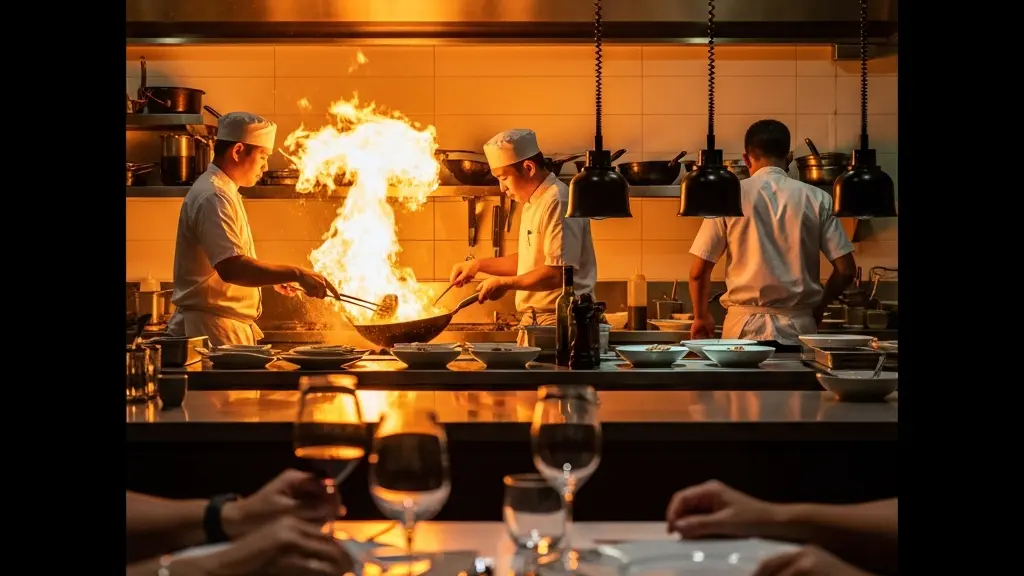
Window seats provide Instagram opportunities but disconnect you from the restaurant’s operational reality. In Dubai’s climate-controlled towers, “views” often mean looking at construction cranes, neighboring skyscrapers, or the haze of Sheikh Zayed Road traffic rather than meaningful scenery. The kitchen view, conversely, reveals whether the staff moves with synchronized precision or chaotic urgency—a reliable quality indicator invisible from the dining room’s center. You can spot corner-cutting, microwave use, or pristine organization from this vantage point.
Theatrical seating also affects service timing and food quality. Tables near the pass receive dishes immediately upon completion, ensuring optimal temperature and texture. Remote tables experience longer transit times, particularly problematic for delicate preparations like soufflés or plated ice creams that deteriorate rapidly. For the skeptical diner evaluating whether the kitchen deserves its reputation, the counter offers transparency: you see exactly who cooks your food, their hygiene practices, and how they handle pressure during the rush.
Tasting Menu or A La Carte: Which Offers Better Value at High-End Venues?
The dining format choice exposes Dubai’s specific value equations and cultural priorities. Dubai’s premium dining market shows that among Gen Z and Millennials, 44% plan increased spending on high-end experiences, yet this enthusiasm often obscures portion economics and actual nutritional return. Tasting menus prioritize Instagram aesthetics and narrative progression over caloric satisfaction, offering 8-12 photographic courses that leave hungry diners seeking post-meal shawarma or room service.
| Factor | Tasting Menu | A La Carte |
|---|---|---|
| Average Time | 2.5-3.5 hours | 1.5-2 hours |
| Price Per Person | AED 800-1500 | AED 500-1000 |
| Protein Content | 3-4 small portions | 1-2 full portions |
| Instagram Appeal | 8-12 photo opportunities | 3-4 photo opportunities |
| Customization | Limited/None | Full flexibility |
A la carte dining provides portion control and customization crucial for specific dietary requirements, appetite levels, or preferences regarding preparation methods. The protein-per-dirham ratio typically favors individual selections, particularly for diners prioritizing substance over presentation or those with high metabolic needs. Tasting menus lock you into the kitchen’s predetermined rhythm for 3+ hours—a significant time investment in a city where dining is often prelude to concerts, nightlife, or business meetings.
Where to Eat Near the Arena to Ensure You Don’t Miss the Opening Act?
Coca-Cola Arena presents unique temporal constraints that standard restaurant reservations fail to accommodate. Unlike standard dining where slight delays are socially acceptable, concert schedules are non-negotiable hard stops, yet Dubai’s traffic patterns around City Walk create unpredictable delays exacerbated by event-specific road closures. The solution lies not in rushing through courses, but in selecting venues offering “pre-theater” service protocols—expedited menus designed specifically for entertainment pacing with guaranteed service windows.
Pre-show dining strategy for Coca-Cola Arena
- Book restaurants within City Walk for actual walking distance to the arena
- Allow minimum 90 minutes for valet retrieval on event nights
- Consider dining at the arena itself to avoid traffic completely
- Look for restaurants offering ‘pre-theater’ express menus
- Confirm restaurant’s expedited service for ticketholders when booking
Miss Lily’s exemplifies the celebrity venue proximity strategy. Located within City Walk, it has hosted Kanye West, Chris Brown, Gunna, and Kevin Hart, offering Caribbean cuisine with arena-adjacent convenience. However, popularity creates its own delays—valet services on event nights can exceed 30 minutes as hundreds of diners simultaneously request vehicles, negating the location advantage if you cut timing too close.
The arena’s internal food options, while limited in culinary ambition, eliminate transit risk entirely. For external dining, request the check when main courses arrive, not after dessert service. This seemingly rude efficiency is standard practice for concert-goers and actually respected by service staff near venues who understand the imperative of curtain times.
Key takeaways
- Most Dubai celebrity restaurants are licensed franchises, not chef-owned operations, with proxy chefs running daily service
- Food costs reflect 90% import dependency and 30-50% markup over original locations, with menus adapted for halal compliance
- Wine markups and tasting menus are revenue drivers in a market with 3-10% profit margins, requiring strategic ordering
Sea View or City View: Which Side Is Quieter at Night?
With Dubai’s tourist influx concentrated in beachfront areas—the emirate welcomed 16.79 million international tourists from January to November 2024, recording a 9% increase—the acoustic geography of dining rooms follows predictable patterns of human behavior. Sea view tables attract celebratory tourist groups, influencer activity, and special-occasion energy, generating consistently higher decibel levels than city-facing interiors where business diners seek conversational privacy.
Sheikh Hamdan bin Mohammed, Crown Prince of Dubai, with Cristiano Ronaldo at SushiSamba in Dubai
– The National News, 10 Dubai restaurants that are celebrity favourites
SushiSamba illustrates this dynamic perfectly. The venue’s celebrity clientele—including royalty, athletes, and entertainment figures—congregates at perimeter tables for visibility and optimal lighting, creating concentration zones of heightened activity and photography. City view sections, overlooking Sheikh Zayed Road’s traffic flow rather than the Gulf, typically host business dinners requiring acoustic privacy for confidential discussions.
Acoustic design favors interior zones regardless of view premium. Hard surfaces reflecting ocean vistas amplify sound reflections, while interior banquettes with upholstered panels and fabric wall coverings absorb noise effectively. For diners prioritizing conversation over scenery or social media documentation, the “quiet side” is invariably the urban view, regardless of the real estate premium placed on waterfront positioning. The true luxury in Dubai’s celebrity dining scene is not the view, but the ability to hear your companions without shouting across the table.
Evaluate your next reservation through this operational lens: verify the chef’s actual presence, confirm signature dish availability 48 hours ahead, and select seating based on acoustic needs rather than photographic potential. Informed dining transforms expensive meals from tourist traps into calculated experiences.