Culture and Heritage
Cultural heritage transforms ordinary travel into meaningful connection. Beyond the surface of landmarks and monuments lies a complex tapestry of human achievement, adaptation, and identity that spans millennia. Whether you’re drawn to the silent corridors of ancient forts, the intricate symbolism of contemporary architecture, or the living traditions passed down through generations, heritage tourism offers a window into the forces that shaped civilizations.
Understanding culture and heritage requires more than visiting sites—it demands context. Why do certain architectural features exist? What economic realities drove traditional practices? How do modern nations honor their past while embracing the future? This exploration covers seven essential dimensions of heritage travel: museum experiences, architectural symbolism, desert survival traditions, falconry heritage, defensive structures, maritime legacies, and contemporary cultural expressions. Each dimension reveals different facets of how societies preserve, interpret, and present their identity to the world.
Understanding Museum Culture and Historical Districts
Museums function as curated narratives, carefully selecting artifacts and stories to convey specific interpretations of the past. The difference between a memorable museum visit and a forgettable one often lies in preparation and strategic planning rather than the exhibits themselves.
Museum pass systems, common in heritage-rich destinations, offer both convenience and challenges. A multi-site pass typically provides cost savings of 20-40% compared to individual entries, but only if you visit at least three or four locations within the validity period. Calculate your realistic itinerary before purchasing—an unused pass represents wasted money and creates pressure to rush through sites rather than absorb them deeply.
Historical districts like restoration projects reveal fascinating philosophical tensions. Should restoration recreate an idealized version of a specific historical moment, or show layers of change over centuries? The restoration philosophy chosen dramatically affects visitor experience. Some sites opt for adaptive reuse, where historical structures house modern functions while preserving architectural character. Understanding this concept helps you appreciate why certain elements appear surprisingly contemporary within ancient walls.
Practical considerations matter enormously. Friday closures catch many travelers off-guard in regions where it’s a holy day. Underground galleries in older museums often lack climate control, making morning visits more comfortable. Audio guides vary wildly in quality—preview the first two minutes before committing, as narrative storytelling approaches engage far more effectively than dry fact recitation. Crowd avoidance strategies are simple: arrive within thirty minutes of opening, or visit during the final ninety minutes before closing when tour groups have departed.
Modern Architecture as Cultural Expression
Contemporary architecture in heritage-conscious nations performs a delicate balancing act: demonstrating modernity and ambition while maintaining cultural continuity. The design evolution you witness in skylines reflects national identity projects as much as functional building needs.
Symbolism operates on multiple levels in modern structures. Geometric patterns might reference traditional Islamic art, while building materials nod to desert landscapes. A tower’s twisting form may evoke calligraphy or palm fronds swaying. These aren’t arbitrary aesthetic choices—they’re deliberate statements about belonging to both a specific cultural lineage and the global architectural conversation.
Photographing reflective facades presents technical challenges that reward preparation. The golden hour—the first hour after sunrise and final hour before sunset—transforms glass and metal surfaces into canvases of color. Scout your location beforehand to understand sun angles. A polarizing filter reduces glare but can create unnatural dark spots on certain building materials. The most striking architectural photography often happens during the “blue hour” just after sunset, when ambient light balances with artificial building illumination.
Engineering feats like extreme-height towers or gravity-defying cantilevers spark debates about form versus function. Critics sometimes label ambitious architecture as impractical, but this misunderstands the function these buildings serve: they’re instruments of cultural diplomacy and national branding, where the form itself becomes the primary function. Appreciating this perspective shifts how you interpret bold architectural statements.
Living Desert Traditions and Bedouin Heritage
Desert survival traditions represent sophisticated environmental knowledge developed over countless generations. Understanding these survival skills contextualizes seemingly simple practices as elegant solutions to extreme challenges.
The traditional coffee ritual exemplifies this depth. Coffee service follows precise etiquette: accept with your right hand, drink at least one cup but no more than three, and shake your cup gently when finished to signal you’ve had enough. This isn’t arbitrary formality—in historical context, the ritual created structured social interaction in isolated communities and demonstrated hospitality through scarce resources. The cardamom-spiced coffee itself, consumed from small cups, provides stimulation without the dehydration risk of large quantities.
Distinguishing authentic experiences from commercial interpretations requires awareness. Genuine cultural exchange typically involves:
- Smaller groups (fewer than 12 people) allowing actual conversation
- Contextual explanation of practices rather than pure performance
- Incorporation of less photogenic but culturally significant elements
- Local community members participating, not just hired performers
Avoid romanticized misconceptions about desert life. Historical reality involved harsh conditions, high infant mortality, and constant resource scarcity. Modern presentations often sanitize these difficulties while highlighting romantic aspects like starlit nights and freedom. Both perspectives have truth, but balanced understanding respects the resilience required to thrive in such environments.
The Art of Falconry and National Pride
Falconry occupies unique cultural space as both ancient practice and living tradition. The national bird status granted to falcons in certain countries reflects deeper associations with nobility, patience, and the relationship between human will and natural instinct.
The bond between falconer and bird fascinates because it defies typical domestication. Falcons aren’t tamed—they’re persuaded to cooperate through consistent, respectful interaction. A trained hunting falcon chooses to return to its handler after pursuing prey, a decision renewed each time. This partnership metaphor resonates culturally in societies that value honor-based relationships over contractual ones.
Specialized medical facilities for falcons, complete with avian ophthalmologists and orthopedic surgeons, initially strike visitors as excessive. Understanding the economic and cultural value clarifies this: a trained hunting falcon can represent years of work and substantial investment. These facilities also support falcon conservation and rehabilitation of injured wild birds.
Hunting styles have evolved with technology. Telemetry systems that track falcons via GPS allow hunting across larger territories with reduced loss risk, while traditional visual tracking demands constant observation and deep knowledge of falcon behavior. Both approaches have advocates, mirroring broader debates about technology’s role in traditional practices.
Illegal trade awareness matters. Endangered falcon species face poaching pressure due to cultural demand. Ethical engagement means supporting regulated breeding programs and never purchasing birds without verified documentation of legal origin.
Defensive Architecture and Ancient Engineering
Forts and defensive structures reveal the strategic realities that shaped regional history. Their locations weren’t random—they controlled water sources, trade routes, or mountain passes that determined economic and military power.
The cooling architecture found in traditional forts demonstrates sophisticated climate engineering. Wind towers (barjeel) capture breezes and direct them over water features, creating natural air conditioning. Thick walls of coral stone or mud brick provide thermal mass, absorbing daytime heat and releasing it slowly at night. Minimal window openings on sun-facing walls reduce heat gain. These passive cooling strategies maintained interior temperatures 10-15 degrees Celsius below exterior conditions without any mechanical systems.
Irrigation systems like the aflaj (ancient water channels) represent collective engineering achievements. The Al Ain Oasis system, for example, distributed water equitably through precisely calibrated flow divisions, with maintenance responsibilities shared across beneficiary families. Understanding this cooperative infrastructure challenges individualistic assumptions about historical societies.
Preservation styles vary significantly between sites. Some maintain structures in stabilized ruin states, preserving authenticity while preventing further deterioration. Others pursue complete reconstruction, recreating buildings that may have changed substantially over centuries. Comparing approaches—such as different philosophical choices at various forts—reveals ongoing debates about what preservation actually means and whose version of history gets told.
Practical considerations: heat exhaustion during fort tours is preventable but common. Visit early morning, carry twice as much water as you think you’ll need, and wear a hat. Stone courtyards reflect and radiate intense heat by midday, turning outdoor spaces into ovens.
Maritime Heritage and Pearl Diving Legacy
Coastal heritage centers on the sea’s dual nature as resource and danger. Pearl diving, before cultured pearls collapsed the industry, formed the economic foundation of entire coastal societies, creating social structures and debt systems that persisted for generations.
The pearl diving debt cycle trapped many divers in exploitative arrangements. Boat owners (nokhadas) advanced money for equipment and family support during the diving season. Poor harvests meant debt rolled forward, compounding across years. A diver might inherit his father’s debt and pass expanded obligations to his sons. This economic reality, honestly presented in quality maritime museums, provides sobering context for the “romantic” era of pearl diving.
Traditional boat building techniques for dhows employed no written plans—knowledge passed through apprenticeship and direct observation. Master builders visualized the entire vessel and communicated through demonstration rather than blueprints. This oral knowledge transmission system succeeded for centuries but became vulnerable when economic changes reduced the number of practicing builders to preserve the tradition.
Maritime museums vary enormously in approach. The best optimize storytelling through careful artifact selection and narrative flow, using objects as evidence for larger historical arguments rather than simply displaying collections. Underground galleries in older museums often recreate historical streetscapes or dock scenes, providing spatial context that helps visitors visualize daily life.
Comparing exhibits across different maritime museums reveals how the same history gets interpreted through different lenses—economic, social, or technical. This multiplicity of perspectives enriches rather than contradicts, offering dimensional understanding of complex historical periods.
Contemporary Heritage: When Technology Meets Tradition
Modern heritage expressions navigate the tension between preservation and innovation. Adaptive reuse transforms historical buildings into contemporary cultural spaces—galleries, cafes, or performance venues—allowing structures to remain economically viable while preserving their architectural character. This approach prevents the museum-ification that can make heritage districts feel frozen and lifeless.
Projection mapping technology revolutionizes how stories get told on historical buildings. High-powered projectors transform facades into dynamic canvases, animating architectural features or depicting historical scenes directly on the surfaces where events occurred. This technique makes abstract historical narratives tangible and emotionally immediate in ways that placards never achieve.
Light art festivals represent the fusion of technology and heritage, often using historical sites as both canvas and context. Understanding the distinction matters:
- Static light installations create photographic moments and enhance architectural features through consistent illumination
- Dynamic light shows incorporate narrative storytelling, changing colors and patterns to convey themes or historical sequences
The best implementations complement rather than overwhelm their historical contexts, using technology to reveal and celebrate existing architectural elements rather than simply decorating them. International artists bring diverse perspectives to local heritage, sometimes seeing symbolic potential in architectural features that familiarity had rendered invisible to local observers.
This contemporary layer of heritage doesn’t replace traditional preservation—it expands the toolkit for making history relevant to new generations who experience the world through digital interfaces and visual storytelling.
Cultural heritage rewards patient, contextual engagement. Whether you’re exploring centuries-old forts, decoding architectural symbolism, or participating in living traditions, depth of understanding transforms observation into genuine connection. Each dimension of heritage—from museum narratives to falconry bonds to maritime legacies—offers different entry points into the complex relationship between past and present. The most meaningful heritage experiences happen when you move beyond checking off famous sites toward asking why these particular places, practices, and preservation choices matter to the communities that maintain them.
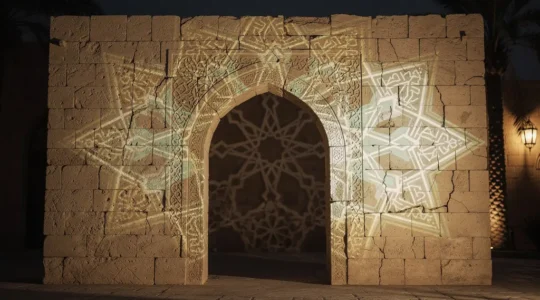
Digital Art on Heritage Walls: How Does Technology Enhance Islamic Geometry?
Modern projection mapping does not simply decorate heritage sites; it mathematically decodes their architectural DNA. Projections are narrative tools that visualize invisible histories, such as the pre-oil pearling economy. Technical precision, involving LiDAR scanning and audio synchronization, is required to…
Read more
Ahoy, Little Sailors! Which UAE Maritime Museum Is a Treasure Trove of Fun for Kids?
The secret to a magical museum trip isn’t just *which* one you choose, but *how* you turn it into a family adventure. Al Shindagha Museum generally wins for sensory immersion that captivates younger children. Human guides who tell stories often…
Read more
How Pearl Diving Shaped the UAE Economy Before the Oil Boom?
The UAE’s pre-oil wealth was built on the immense value of natural pearls, but this glittering industry was a paradox, sustained by a brutal economic system of systemic debt. Beneath the romantic image of daring divers lay a harsh reality…
Read more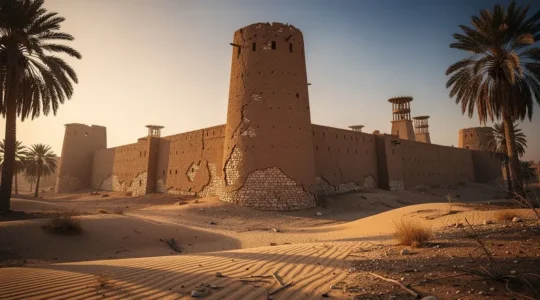
Exploring Al Ain Forts: Which Citadels Are Worth the Drive from Dubai?
The true value of the UAE’s heritage sites lies not in their age, but in their sophisticated architectural response to the harsh desert environment. Al Ain’s mud-brick forts are masterpieces of passive cooling, using thermal mass and strategic design to…
Read more
Understanding Falconry: Why Is It So Expensive and Prestigious in the UAE?
The immense prestige and cost of falconry in the UAE stem not just from tradition, but from treating it as a modern, high-stakes professional sport for elite avian athletes. A falcon’s value is determined by its performance lineage and the…
Read more
How to Experience Authentic Bedouin Life Without Falling for Tourist Traps?
The key to an authentic Bedouin experience is not found in luxury camps, but in understanding the sophisticated systems that underpin their culture. Genuine hospitality, like the coffee ritual, is a complex social contract, not just a friendly gesture. Choosing…
Read more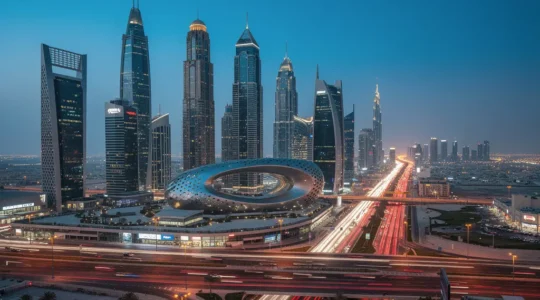
How to Tour UAE Modern Architecture Highlights in 48 Hours?
In summary: A successful architectural tour of the UAE involves understanding the “why” behind the design, not just listing iconic buildings. Focus on the dialogue between engineering ambition, cultural symbolism, and environmental context. Mastering specific photographic techniques and timing is…
Read more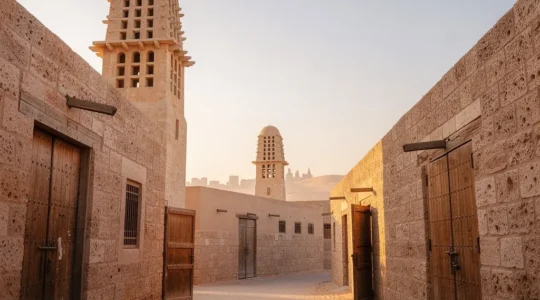
Why a Day Trip to Sharjah’s Heritage Area Is an Essential Pilgrimage for History Buffs
The true value of Sharjah’s Heritage Area lies not in its “authenticity,” but in its status as a meticulously curated, state-funded preservation project—an intellectual counterpoint to Dubai’s commercialized history. Sharjah’s restoration is academically driven, using original materials and archaeological methods,…
Read more