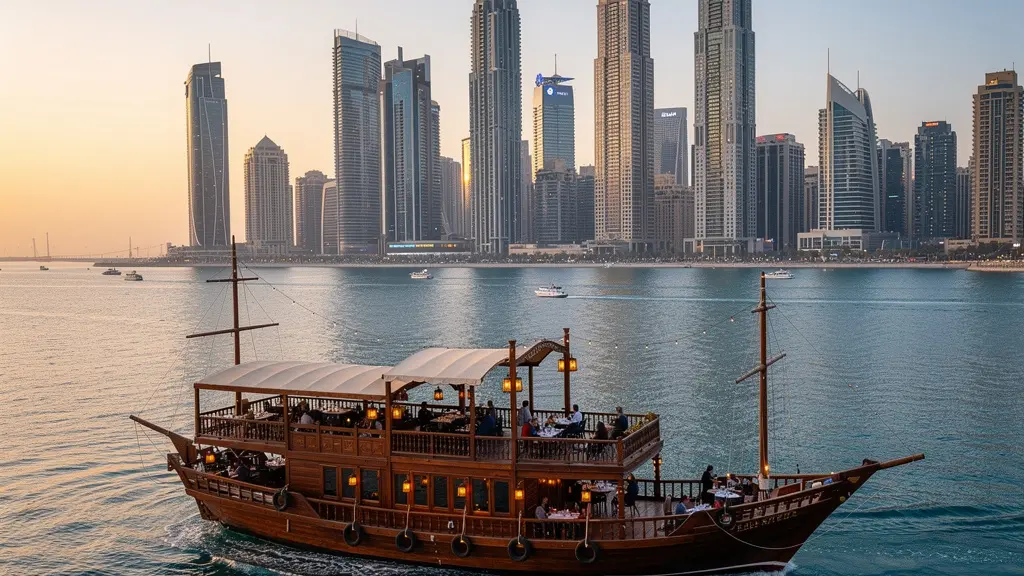
The romantic promise of a dhow cruise often masks a low-quality tourist trap; a discerning eye is required to distinguish a memorable evening from a disappointing one.
- The quality of a cruise is not in its price, but in verifiable details like the presence of an onboard chef versus reheated catering.
- Securing a premium experience depends on specific booking requests and strategic arrival times, not just choosing the upper deck.
Recommendation: Prioritize cruises on vessels with proven historical authenticity and inquire directly about their food sourcing and seating arrangements before committing.
The shimmering Dubai skyline, a traditional wooden dhow gliding through calm waters, a romantic dinner under the stars—this is the pervasive image sold to couples seeking a magical evening. It’s a powerful and alluring promise. Yet, for every couple that lives this dream, another finds themselves on a crowded, noisy vessel, picking over a lukewarm buffet while a tinny sound system blares. The difference between a genuinely refined waterfront dining experience and a floating tourist trap is often a matter of subtle but critical details that brochures and booking sites conveniently omit.
Most guides will offer generic advice: compare the Creek to the Marina, or look at reviews. But this surface-level approach fails to address the core fears of the discerning diner. It ignores the crucial questions about food provenance, the strategic cartography of seating, and the very soul of the vessel itself. Is the food freshly prepared by an onboard chef, or is it a mass-catered affair that has been sitting for hours? Is your ‘private’ table situated next to a speaker, or does it offer a quiet corner for conversation? These are the questions a critic would ask.
This guide adopts that critical lens. We will move beyond the platitudes to dissect the dhow cruise as a serious dining venue. We will not just list options; we will provide a framework for evaluation. By understanding the craftsmanship of the dhow, the logistics of its food service, and the tactics for securing the best seat, you can navigate the market with the confidence of an expert, ensuring your romantic evening lives up to its promise. This is not about finding the cheapest option, but about securing the highest value for your time and expectations.
To help you make an informed choice, this guide breaks down the essential elements to critique. From the very construction of the boat to the timing of your departure, each section provides the specific knowledge needed to identify a quality experience.
Summary: Dhow Cruise Dinner: How to Spot a Tourist Trap vs a Quality Experience?
- Why Are Traditional Dhows Still Built Without Metal Nails?
- How to Secure a Private Table on the Open Air Deck?
- Dubai Creek or Marina: Which Canal Offers the Best Night Views?
- The Buffet Mistake: What to Check Before Eating on a Budget Cruise
- Which Cruise Departs at the Right Time to See Festival Fireworks?
- Why Did Traditional Dhow Builders Never Use Blueprints?
- Fountain View or Skyline View: Which Table Seat Is Worth the Premium?
- Michelin Dining in Dubai: How to Get a Table at Starred Restaurants?
Why Are Traditional Dhows Still Built Without Metal Nails?
The authenticity of a dhow cruise begins with the vessel itself. A discerning eye will notice that genuine traditional dhows have a unique construction, a legacy of a time before mass production. Historically, metal was a liability at sea; iron nails would rust and degrade in saltwater, weakening the hull. To combat this, ancient builders developed a genius technique. For centuries, 100% of dhows were built without using a single nail, relying instead on a “stitching” method.
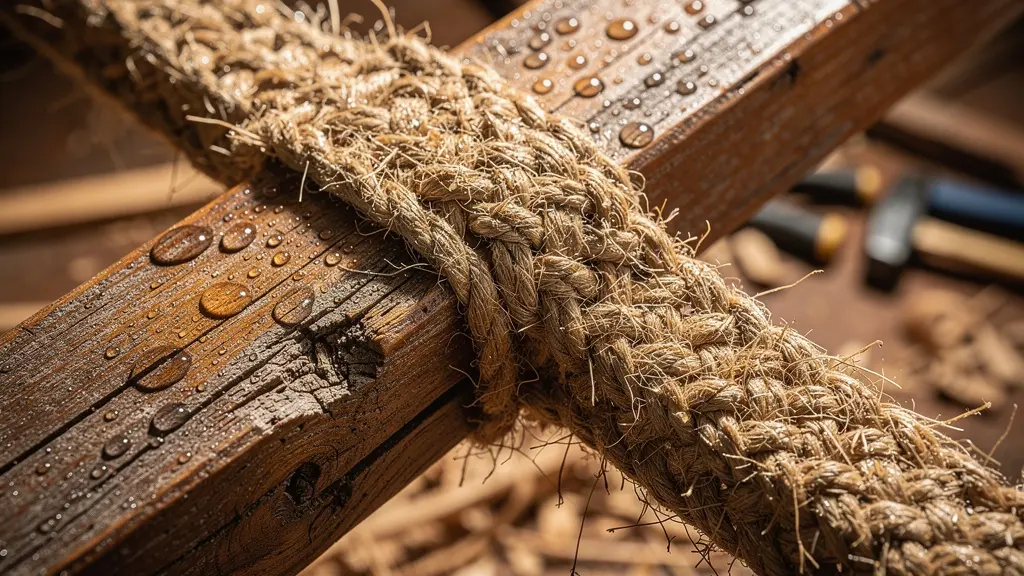
This involved drilling holes along the edges of planks and lacing them together with coir—a rope made from coconut fiber. When submerged, the coir would swell, creating an incredibly strong, watertight, and flexible seal. This flexibility allowed the dhow to withstand rough seas by moving with the waves rather than resisting them. The image below shows the intricate texture of this traditional joinery.
Today, while modern builders in shipyards like Dubai’s Al Jaddaf do use nails for efficiency, the foundational Arabian method persists. According to research by maritime historians, builders still assemble the outer planks of the hull first, creating the shell of the boat. Only then do they shape and fit the internal ribs. This ensures a perfectly tight fit as the wood naturally dries and shrinks, a testament to an enduring craft that prioritizes integrity over expediency. A vessel built with this heritage in mind is often the first sign of a more authentic overall experience.
How to Secure a Private Table on the Open Air Deck?
Securing a truly romantic setting on a dhow cruise is an exercise in proactive precision, not luck. The generic request for an “upper deck table” is what most tourists ask for, and it often lands them in a crowded area or next to a loudspeaker. To secure a prime location, you must operate with the specificity of a seasoned regular. The goal is not just to be on the open-air deck but to occupy a seating dead zone—a space with optimal views and minimal acoustic interference.
The most coveted spots are typically at the bow (the front of the dhow), far from the main dining area, the speakers, and the foot traffic to the buffet. These tables offer unobstructed, forward-facing views and a greater sense of intimacy. However, they are rarely assigned by default. You must specifically request a “private table on the bow, away from the speakers.” Using this exact terminology signals to the operator that you are a discerning guest, not a casual tourist, and increases the likelihood of your request being honored. The time of your arrival is also a critical factor; being among the first to board provides a crucial window to confirm your assigned table and, if necessary, negotiate a better one.
Your Action Plan: Securing the Best Table on a Dhow
- Book Directly: Book with the operator, not a third-party site, and follow up with a phone call to log your specific table request.
- Use Precise Terminology: Explicitly ask for a “private table on the bow away from speakers” to demonstrate you know what you want.
- Arrive Early: Be at the dock 30 minutes before the official boarding time. This gives you leverage to speak with the host before the rush.
- Specify Deck Preference: Choose the upper deck for the best skyline views or the air-conditioned lower deck if comfort from heat or wind is a priority.
- Verify Capacity: Ask about the boat’s maximum capacity (often around 140 persons). A less crowded boat inherently offers a more private experience.
Dubai Creek or Marina: Which Canal Offers the Best Night Views?
The choice between Dubai Creek and Dubai Marina is the most fundamental decision when booking a dhow cruise, and it defines the entire character of the evening. The common platitude is “Creek for history, Marina for modernity,” but a critic’s analysis goes deeper, focusing on atmosphere, scale, and visual narrative. The Marina, a concept that only began in 2010, is now considered the more upscale and visually dramatic option. Its canal is a canyon of illuminated skyscrapers, with landmarks like the Cayan Tower, Ain Dubai, and opulent superyachts providing a constantly evolving panorama of contemporary ambition.
The Creek, on the other hand, offers a more intimate and chaotic charm. It is the city’s historical artery, and the views are of a different nature: the bustling souks, the traditional architecture of the Heritage Village, and the sight of other wooden abras and trading dhows crisscrossing the water. The experience is less about towering scale and more about textured, historical immersion. This difference is also reflected in the numbers; over 30 dhows operate in Dubai Creek versus only 8 in the Marina, making the Creek a more crowded waterway, which can either add to the vibrant atmosphere or detract from the tranquility, depending on your preference.
Your choice should be guided by the type of romance you seek:
- Dubai Marina: Choose this for a sleek, glamorous, and photogenic backdrop. The grandeur of the skyline provides a powerful and distinctly “Dubai” experience, ideal for a modern, high-impact evening. Departures are typically from Dubai Harbour or JBR.
- Dubai Creek: Opt for this route if you desire a connection to the city’s past and a more authentic, bustling port atmosphere. It’s a cultural immersion, with the gentle lapping of water against old wooden hulls and the distant call to prayer from nearby minarets.
This isn’t a question of which is “better,” but which narrative best aligns with your vision for the night.
The Buffet Mistake: What to Check Before Eating on a Budget Cruise
No single element creates more disappointment on a dhow cruise than the buffet. The images may promise a lavish spread, but the reality is often a collection of uninspired, lukewarm dishes prepared hours in advance. The critical mistake is assuming all buffets are created equal. The quality of the food is directly tied to the cruise’s business model, a fact revealed by a simple cost analysis. A detailed price analysis reveals that budget cruises allocate roughly 20% of the ticket price to food, whereas premium cruises dedicate closer to 40%. This disparity in culinary allocation is the difference between reheated catering and a genuine dining experience.
A discerning diner must become an investigator before booking. The key is to look for signs of fresh, onboard preparation. The presence of a dedicated onboard chef or live grilling stations are the strongest indicators of quality. These features mean the food is cooked to order, not simply reheated in chafing dishes. Conversely, a lack of any mention of live cooking is a major red flag, suggesting a reliance on off-site catering.
Before you book, perform your own quality check using this checklist:
- Scrutinize Recent Photos: Ignore the professional marketing shots. Look for uncurated, recent guest photos on Google Maps and TripAdvisor to see the real state of the buffet.
- Ask About the Chef: Inquire directly: “Is there a dedicated chef onboard, or is the food catered and reheated?” Their answer is telling.
- Verify Live Cooking: Specifically ask if they have “live grilling or cooking stations.”
- Check Dietary Options: Confirm how vegetarian or special dietary needs are handled. Needing to pre-request them is standard, but a quality operator will have more than one token option.
- Read Food-Specific Reviews: Filter reviews for keywords like “food,” “buffet,” “fresh,” and “cold” to get a clear picture of the culinary reality.
–
–
–
Sacrificing on price often means sacrificing on the plate. For an experience centered on a “dinner cruise,” the quality of the dinner cannot be an afterthought.
Which Cruise Departs at the Right Time to See Festival Fireworks?
Booking a dhow cruise to view a major Dubai fireworks display, such as on New Year’s Eve or during the Dubai Shopping Festival, presents a high-risk, high-reward scenario. The promise is a front-row seat to one of the world’s most spectacular shows, but the reality can be a logistical nightmare. Many tourists fall into the trap of booking a cruise with vague promises of “best viewing spots,” only to find their vessel positioned behind a skyscraper or too far away for a meaningful view. Cautionary tales from past events abound, with guests reporting cruises that were poorly organized and completely missed the main event despite premium pricing.
To mitigate this risk, a critic’s approach is essential. Success lies in interrogating the operator about the logistics of their viewing plan. The most critical factor is timing. A cruise that departs 90 minutes before the scheduled fireworks allows the captain ample time to navigate to a pre-determined optimal position and secure it before the waterways become congested. Any departure time closer to the event risks getting stuck in traffic.
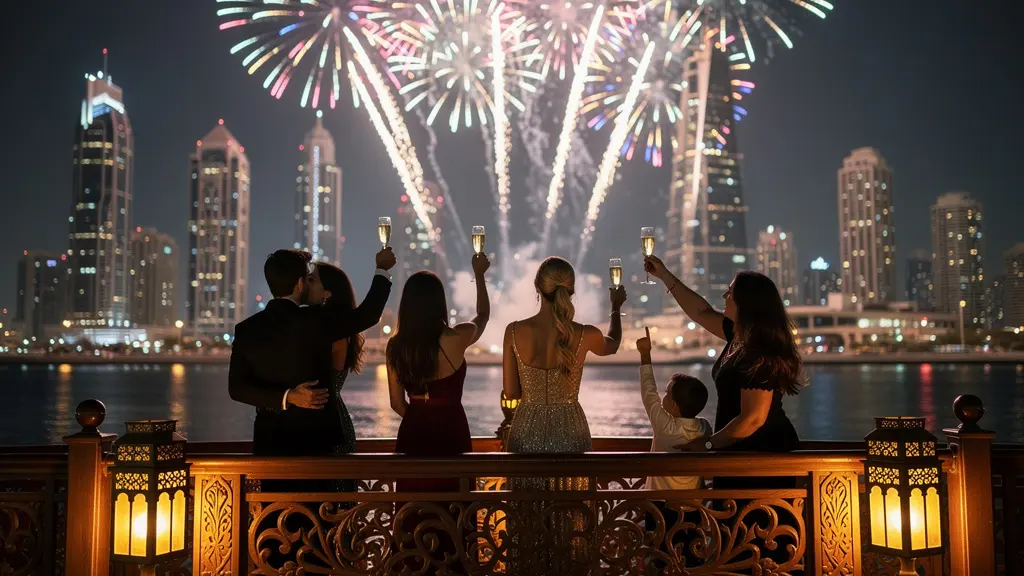
Furthermore, you must demand specifics. Ask the operator for the exact planned GPS coordinates of their viewing location and verify it on a map yourself. Ensure their proposed route passes key launch sites like the Burj Al Arab or Palm Jumeirah. A professional operator will have a clear, defensible plan. A vague answer is a major red flag. Also, consider post-fireworks cruises; a departure after the show can offer a much more relaxed experience on less crowded waters, allowing you to enjoy the glittering aftermath of the celebrations in peace.
Why Did Traditional Dhow Builders Never Use Blueprints?
The most remarkable aspect of traditional dhow construction is not just what materials were used, but what were absent: blueprints. For centuries, master builders have created these complex, seaworthy vessels without a single sheet of paper to guide them. This practice is not a sign of primitive methods but rather the hallmark of a deeply ingrained, intuitive form of artistry. The design of the dhow is not an external document to be followed; it is an internal knowledge system, a mental library of shapes, curves, and proportions passed down through generations.
This inherited knowledge is a powerful blend of mathematics, engineering, and instinct. The master builder, or ‘ustadh,’ holds the entire form of the boat in his mind. He can envision how the curve of each plank will contribute to the hull’s final shape and how the vessel will behave in the water. This is a skill honed over a lifetime of apprenticeship, starting from childhood. As Majid Obaid al Falasi, a third-generation dhow builder from the legendary Al Falasi family in Dubai, explains, this craft is part of his very being.
It is in me. I was born in such a family who is related to the sea. This way is passed on from generation to generation. When I was young I was playing on top of the wood.
– Majid Obaid al Falasi, The National
This blueprint-free mastery has allowed for incredible feats, such as the construction of the world’s largest wooden dhow, the ‘Obaid,’ measuring 92 meters, built by Majid Al Falasi himself. Choosing a cruise on a dhow that comes from such a lineage is choosing to participate in a living history. It is an appreciation for a level of human craftsmanship that is increasingly rare in the modern world, and it adds an intangible layer of depth and soul to the experience that a mass-produced fiberglass boat could never replicate.
Fountain View or Skyline View: Which Table Seat Is Worth the Premium?
On many premium Marina dhow cruises, guests are presented with a choice that can significantly impact their experience: a table with a prime view of the Dubai Fountain shows or one with a panoramic view of the skyline. Both are often marketed as premium, but they offer vastly different sensory experiences. A critical assessment reveals a trade-off between a short, spectacular burst of action and a long, continuous visual journey. The right choice depends entirely on your priorities for the evening: are you seeking a dramatic show or a romantic ambiance?
A fountain-view table offers a front-row seat to a magnificent 5-minute performance of light, water, and music that occurs every 30 minutes. However, this comes with drawbacks. The powerful soundtrack can be overwhelmingly loud, interrupting conversation. On windy nights, you may be subject to a fine mist of water. Furthermore, photographing yourselves against the fountain often results in backlit, silhouetted images. In contrast, a skyline-view table provides a consistent, well-lit panoramic backdrop for the entire two-hour journey. It’s better for conversation, more comfortable in terms of ambient noise, and offers superior conditions for romantic couple shots.
| Aspect | Fountain View Tables | Skyline View Tables |
|---|---|---|
| Visual Experience | 5-minute spectacular shows every 30 minutes | Continuous 2-hour panoramic views |
| Photo Quality | Backlit/silhouetted couple photos | Well-lit romantic couple shots |
| Ambient Noise | Loud fountain soundtrack during shows | Consistent background music level |
| Weather Impact | Potential water mist on windy nights | Protected from fountain spray |
| Best Landmarks | Ain Dubai close-ups, Bluewater Island | Marina towers, Cayan Tower, JBR |
To maximize your choice, request port-side (left) tables for the best fountain views when departing from the Marina, and starboard-side (right) tables for the most impressive perspectives of the Marina towers. Ultimately, the skyline view is often the superior choice for a romantic dinner, offering a beautiful but unobtrusive backdrop that enhances, rather than dominates, the evening.
Key Takeaways
- Vessel Authenticity is Key: A quality experience often starts with a vessel built with traditional, blueprint-free craftsmanship, indicating an operator’s respect for heritage over mass production.
- Interrogate the Food Source: The most critical question to ask before booking is whether there’s an onboard chef, as this is the primary indicator of food quality versus reheated catering.
- Master Seating Cartography: Don’t just ask for the “upper deck.” Use precise language to request a private table at the bow, away from speakers, to secure a truly intimate setting.
Michelin Dining in Dubai: How to Get a Table at Starred Restaurants?
While the headline of this section may seem out of place, its purpose is to frame the dhow cruise within Dubai’s broader fine-dining landscape. A standard dhow cruise, even a premium one, is not a Michelin-star experience. The pricing alone reflects this, with top-tier dhows costing a fraction of a meal at a starred restaurant. However, the discerning diner can apply a Michelin-level mindset to curate an elevated waterfront experience that transcends the standard buffet-and-tour package.
Instead of settling for the all-inclusive model, consider “unbundling” the experience. This means treating the dhow as a unique mode of transport or a venue for a specific part of your evening, rather than the entire event. By thinking creatively, you can combine the ambiance of a traditional vessel with the culinary excellence of Dubai’s world-class restaurant scene. This approach allows you to enjoy the best of both worlds: the romance of the water and a genuinely exceptional meal.
Here are several strategies to elevate your dhow experience to a higher standard:
- Charter and Cater: For the ultimate private experience, charter a small dhow and arrange for catering from one of Dubai’s premium restaurants. This offers total control over the food, music, and itinerary.
- The Sunset Aperitif Cruise: Book a shorter, one-hour sunset cruise without dinner. Use it as a romantic pre-dinner activity, enjoying drinks and the views, before disembarking for a reservation at a top waterfront restaurant in the Marina or at the Creek’s Al Seef development.
- Seek A-La-Carte Menus: A handful of operators, like the award-winning Alexandra Dhow Cruise, offer a-la-carte menus instead of a buffet. This is a strong sign of a commitment to quality and a more restaurant-like experience.
- Dhow as Water Taxi: Utilize the traditional abra or a small dhow as a private water taxi service to arrive in style at a fine dining establishment located along the waterways.
–
–
–
By adopting this flexible and critical approach, you move from being a mere tourist to a sophisticated curator of your own unique Dubai experience.
Now, apply this critic’s framework. Scrutinize the details, ask the right questions, and assemble an evening that is not just a tour, but a genuinely memorable and refined romantic experience.