In summary:
- The biggest risk on Jebel Jais is not the ascent, but overheating your brakes on the way down, a phenomenon known as brake fade.
- Mastering engine braking, even in an automatic car, is the most critical skill for a safe and controlled descent.
- Altitude significantly impacts your vehicle; from tire pressure to engine cooling, understanding these changes is key to preventive safety.
- Strategic planning for activities, from the zipline to sunset viewing, is essential to manage crowds and maximize your experience.
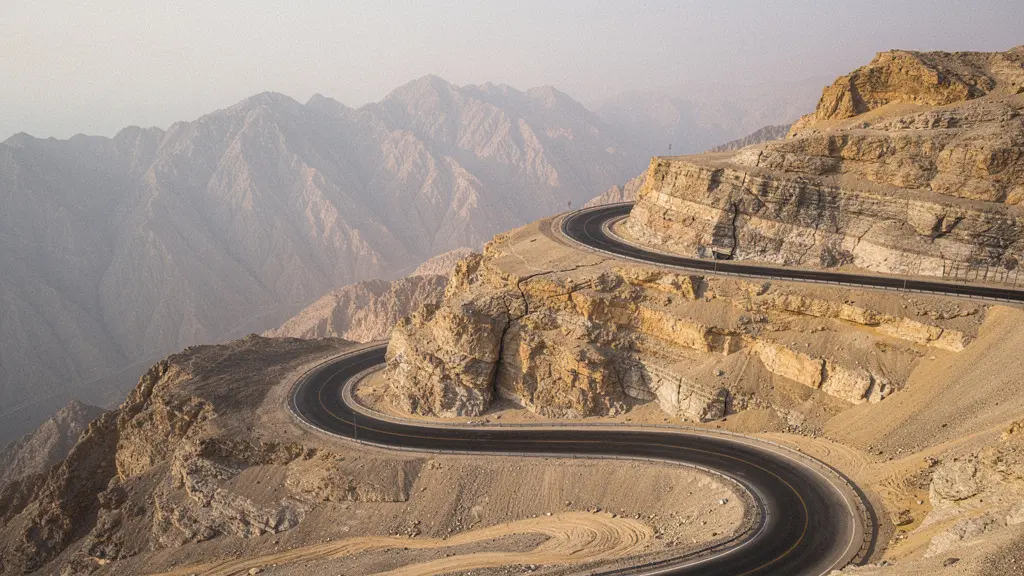
The winding ribbon of asphalt that climbs Jebel Jais is one of the UAE’s greatest driving roads, promising breathtaking views and a thrilling journey. For many drivers, however, that thrill is mixed with a palpable sense of anxiety. The steep inclines, hairpin bends, and sheer drops are intimidating, and the common advice to simply “drive slowly and be careful” feels woefully inadequate. It fails to address the unique physical forces at play when you take a vehicle up and down nearly 2,000 meters of elevation.
Most guides focus on the destination, not the journey. They’ll tell you what to see, but not how to get there without putting unnecessary strain on your vehicle and your nerves. The real key to mastering this mountain road lies not just in caution, but in comprehension. It’s about understanding the physics of the drive—why your brakes can fail on the descent, how the thin air affects your engine, and how to use your car’s own mechanics to maintain absolute control. This is the difference between being a passenger holding on for dear life and a pilot in command of your vehicle.
This guide is designed from the perspective of a driving instructor specializing in mountain terrain. We will move beyond generic tips to give you the technical knowledge and actionable strategies needed to navigate Jebel Jais with confidence. We’ll break down the science behind the drive, provide checklists for preparing your vehicle, and offer expert timing and booking advice for the mountain’s top attractions. By the end, you’ll not only feel prepared but empowered to tackle the drive safely and enjoy every moment.
To help you plan your entire trip, this article covers everything from the technical aspects of the drive to the logistics of enjoying the attractions. You can navigate directly to the section most relevant to you using the summary below.
Contents: Your Guide to Mastering Jebel Jais
- Why Is It 10 Degrees Cooler on Jebel Jais Than at Sea Level?
- How to Secure a Slot for the World’s Longest Zipline on Weekends?
- Viewing Deck Park or Jais Sledder: Which Attraction Is Best for Non-Hikers?
- The Driving Error That Overheats Brakes on the Way Down from Jebel Jais
- When to Arrive at Jebel Jais to Claim a Picnic Spot Before Sunset?
- Why Is Hiking in September Still dangerous Despite Lower Temperatures?
- How to Find Glamping Spots in RAK That Offer Privacy and Mountain Views?
- Camping in Hatta: How to Book the Best Spots During Winter Season?
Why Is It 10 Degrees Cooler on Jebel Jais Than at Sea Level?
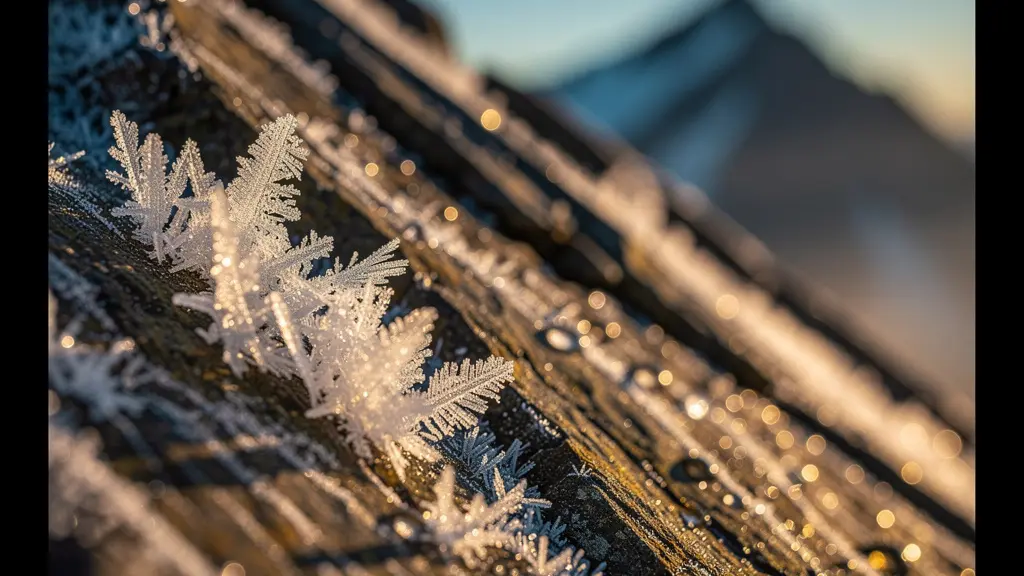
The refreshing temperature drop at the summit of Jebel Jais is its main allure, but it’s not magic; it’s physics. The phenomenon is known as the adiabatic lapse rate, which describes how air cools as it rises in altitude. As air is forced up the mountain, the pressure decreases, allowing it to expand. This expansion requires energy, which the air draws from its own heat, causing it to cool. This process is remarkably consistent, and scientific data confirms an average 6.5°C temperature drop per 1,000 meters of elevation. Given Jebel Jais’s height of 1,934 meters, a 10-12°C difference from sea level is standard.
This change has direct implications for your vehicle. The thinner, cooler air affects both your tires and engine. For every 1000 feet you climb, your tire pressure can drop by 1-2 PSI, impacting handling and safety. Conversely, thinner air is less effective at cooling your engine, which is working harder on the ascent. You must monitor your engine temperature gauge more frequently than you would on a flat road, especially during the summer months. Turbocharged engines are particularly sensitive, and it’s good practice to let them idle for 30-60 seconds after parking at the summit to allow the turbo to cool down properly before shutting off the engine.
This scientific principle also dictates your personal comfort. Even on a scorching 45°C day in Ras Al Khaimah, the summit can be a pleasant 33°C. This significant difference means you should always pack extra layers, as the temperature can fall quickly, especially after sunset. This environmental shift is a core part of the Jebel Jais experience, affecting everything from your car’s performance to the clothes you need to pack.
How to Secure a Slot for the World’s Longest Zipline on Weekends?
The Jais Flight is the world’s longest zipline and the crown jewel of the mountain’s attractions. Consequently, securing a spot, especially on a weekend, requires strategic planning rather than spontaneous luck. The operation has a limited capacity to ensure safety and manage guest flow. For instance, official operating data shows that during the off-peak season, there may be as few as seven public slots per day, each accommodating around 20 participants. During peak season, this number increases, but so does demand, making advance booking non-negotiable.
To increase your chances of getting a weekend slot, you need to think like a pro. Booking several weeks or even months in advance is the most obvious step, but there are other tactics you can employ. The first slot of the day (usually around 10:30 AM) is often the best choice; it offers superior visibility before midday haze sets in and has a lower chance of delays cascading from earlier groups. If you’ve missed out, check the booking portal on Wednesday mornings. This is a common time for people to cancel their weekend plans, freeing up last-minute availability. Another underutilized strategy is to contact the concierge at major hotels in Ras Al Khaimah, as they often hold block bookings for their guests and may have exclusive access.
Finally, consider your timing and package. Arriving at the welcome center at least 30 minutes before your scheduled slot is mandatory; lateness can result in your slot being forfeited without a refund. If direct bookings are full, look at combo packages that bundle the zipline with other activities like the Jais Sledder. These often have separate availability pools. For maximum flexibility, plan your visit during the shoulder seasons (March-May or September-November) when crowds can be up to 50% smaller than during the winter peak, making weekend bookings far more accessible.
Viewing Deck Park or Jais Sledder: Which Attraction Is Best for Non-Hikers?
For visitors who aren’t inclined to tackle the hiking trails, Jebel Jais offers two excellent, low-exertion alternatives: the Viewing Deck Park and the Jais Sledder. Choosing between them depends entirely on your group’s priorities, balancing thrill, accessibility, and cost. The Viewing Deck Park is the quintessential passive experience, offering free entry and seven platforms with stunning panoramic vistas of the Hajar Mountains. It’s the ideal choice for those seeking relaxation, photography, and an accessible experience for all ages and mobility levels, including wheelchairs.
In contrast, the Jais Sledder offers a dose of adrenaline. This alpine coaster sends you down the mountain on an 8-minute ride, reaching speeds of up to 40 km/h. It’s a fantastic option for families with children (age 3+ required) and anyone looking for a memorable activity beyond just sightseeing. However, it requires moderate walking to get to the starting point and has a per-ride cost. Weekend visitor flow analysis shows the Viewing Deck Park can reach full capacity by 4 PM as people gather for sunset, leading to waits for prime photo spots. The Jais Sledder, however, tends to maintain more consistent, shorter queues throughout the day, making it a more predictable option if your time is limited.
To help you decide, here is a direct comparison of the two attractions based on key criteria from the official Jebel Jais visitor portal.
| Criteria | Viewing Deck Park | Jais Sledder |
|---|---|---|
| Toddler Friendliness | Excellent (no restrictions) | Good (age 3+ required) |
| Accessibility | Wheelchair accessible | Moderate walking required |
| Thrill Factor | Low (scenic views) | Medium (40 km/h speeds) |
| Duration | Unlimited | 8 minutes per ride |
| Cost per Experience | Free entry | AED 50 per ride |
| Photo Opportunities | Excellent panoramic | Action shots available |
Ultimately, the choice is simple. If your goal is to soak in the majestic scenery at your own pace without spending anything, the Viewing Deck Park is unbeatable. If you want to add a memorable, controlled thrill to your mountain visit, the Jais Sledder is worth every fil.
The Driving Error That Overheats Brakes on the Way Down from Jebel Jais
The single most dangerous and common mistake drivers make on Jebel Jais has nothing to do with the ascent. It happens on the way down. The error is relying solely on the brake pedal to control speed, a practice known as “riding the brakes.” This leads to a hazardous condition called brake fade. As you continuously apply the brakes, the friction generates immense heat—far more than the system is designed to dissipate over a sustained period. When the brake pads and fluid overheat, they lose their ability to create friction effectively. The pedal will feel spongy and sink to the floor, and the car will simply stop slowing down, regardless of how hard you press.
The correct, professional technique to prevent this is to use engine braking. This involves using the engine’s own resistance to help slow the vehicle, saving your brakes for when you truly need them. In an automatic car, you achieve this by shifting the transmission out of ‘D’ (Drive) and into a lower gear, typically marked as ‘L’ (Low), ‘2’, or ‘1’. Some modern cars have a ‘B’ (Brake) mode for this purpose or allow you to use paddle shifters to manually select a lower gear (even in a standard automatic). Before you even begin the descent, shift into a low gear. The engine’s RPM will rise, and you’ll hear it working harder, but this is exactly what it’s designed to do. This will hold the car at a safe, controlled speed, allowing you to use the brakes only for short, firm applications before sharp turns.

This technique is not just for experts or manual cars; it is an essential safety procedure for any vehicle on a steep descent. Even a standard rental sedan has the capability. Mastering this will not only save your brakes from overheating but will give you a profound sense of control, turning a nerve-wracking descent into a safe and predictable part of the drive.
Action Plan: Preventing Brake Overheating on Descent
- Engage Low Gear First: Before starting the descent, shift your automatic transmission to ‘L’, ‘2’, or use paddle shifters to select a low gear.
- Brake in Bursts: Apply firm, deliberate pressure on the brakes for 3-4 seconds on straight sections to scrub off speed, then release completely.
- Allow for Cooling: Actively let the brakes cool by releasing the pedal for at least 10-15 seconds between applications. Do not ride the pedal.
- Listen and Feel for Warnings: A high-pitched squeal indicates brake pad glazing (overheating), and a “spongy” pedal feel is the first sign of brake fade. If you notice either, pull over safely and let the brakes cool for at least 30 minutes.
- Anticipate Longer Stopping: After a long descent, your brakes will be hot. Plan for stopping distances to be up to 20% longer at the bottom of the mountain.
When to Arrive at Jebel Jais to Claim a Picnic Spot Before Sunset?
Catching the sunset from one of Jebel Jais’s designated picnic spots is a quintessential UAE experience. However, turning this dream into a reality requires more than just showing up. On weekends, the best spots are claimed well before the sun begins to dip. To secure a prime location without stress, you need to work backward from the sunset time itself. The entire drive from the base to the upper picnic areas can take 45-60 minutes, and that doesn’t account for weekend traffic, which can add another 15-20 minutes, especially on the final ascent.
A reliable method is to use a “reverse-planning” timeline. First, check the exact sunset time for your specific date of visit. From that time, begin subtracting the necessary blocks for preparation. You should allocate at least 30 minutes to find a suitable spot and park, as the most obvious ones fill up first. Add another 15 minutes for setting up your picnic blanket and supplies. Factoring in the potential for traffic delays and a buffer for unexpected stops, a safe formula is to arrive at the base of the mountain no later than 1 hour and 30 minutes before the official sunset time. This gives you a comfortable window to ascend, find a spot, and settle in before the golden hour begins.
Here is a simple timeline to follow:
- Check the sunset time for your visit date.
- Subtract 30 minutes for selecting your spot and parking.
- Subtract 15 minutes for setting up your picnic.
- Subtract 20 minutes as a buffer for traffic on the upper mountain.
- Subtract 60 minutes for the ascent itself.
This means your target arrival time at the mountain’s entry checkpoint should be roughly 2 hours and 5 minutes before sunset. As an alternative strategy, consider staying for an hour after the sunset. While everyone else rushes to leave, creating a traffic jam on the way down, you can enjoy the twilight and then have a much clearer, safer, and less stressful descent.
Why Is Hiking in September Still dangerous Despite Lower Temperatures?
As summer’s intense heat begins to wane, many hikers eagerly eye the trails of Jebel Jais in September. While the ambient air temperature is indeed lower than in July or August, a hidden danger makes hiking during this month uniquely hazardous: retained rock heat. Over the long, scorching summer months, the dark-colored mountain rock absorbs and stores a tremendous amount of thermal energy. Even as air temperatures drop, the ground itself continues to radiate this stored heat.
This creates a dangerous microclimate close to the ground where hikers spend their time. In fact, thermal analysis reveals that rock surfaces can cause the perceived temperature to be 5-7°C warmer than what weather apps report. This means that on a 35°C day, the heat radiating from the trail beneath your feet can make it feel like 40-42°C, putting you at a much higher risk of heat exhaustion and heatstroke. This effect is compounded by another factor: humidity. September often sees higher humidity levels than the peak summer, which inhibits the body’s ability to cool itself through sweating, drastically increasing the risk of heat-related illness.
Because of these hidden risks, a September hike requires a protocol as strict as a summer one. Hikes must begin before dawn (ideally before 6 AM) to get ahead of the worst of the radiated heat. Hikers should carry at least 50% more water than they would for a winter hike of the same length and wear light-colored, moisture-wicking clothing. It’s also crucial to monitor distant weather patterns, as September marks a transitional period where the risk of sudden, localized thunderstorms and flash floods can increase. Ignoring these factors can turn a pleasant outing into a life-threatening emergency.
How to Find Glamping Spots in RAK That Offer Privacy and Mountain Views?
Ras Al Khaimah’s glamping scene has exploded, but not all spots are created equal. Many prioritize capacity over experience, resulting in tents placed too close together, compromising the very sense of escape that draws people to the mountains. Finding a location that offers both stunning mountain views and genuine privacy requires a bit of digital detective work. Your first step should be to move beyond simple searches and use tools like Google Maps’ satellite view. This allows you to visually inspect the layout of a campsite and check the actual spacing between tents; look for a minimum of 20-30 meters between units for adequate privacy.
The orientation of the tents is also crucial. A camp that advertises “mountain views” might have all its tents facing the same direction, meaning your view is of your neighbor’s patio. Look for sites where tents are staggered or face different directions—ideally east for sunrise views or west for sunset views—to ensure your line of sight is unobstructed. To find hidden gems, expand your search terms to include phrases like “RAK farm stay” or “wadi cabin,” which can uncover smaller, family-run operations that aren’t listed on major booking platforms. Finally, scrutinize the details: are the bathroom facilities private and en-suite, or are they shared blocks? This is often the biggest differentiator between a true luxury experience and glorified camping.
Case Study: Camp 1770’s Privacy-First Model
A prime example of a privacy-focused setup is Camp 1770, strategically located at 1,770 meters on Jebel Jais. By positioning itself at the highest accessible point for glamping, it offers an immediate advantage: temperatures are consistently 8-9°C cooler than the base, and it is completely isolated from road traffic and noise. The camp’s layout is intentionally sparse, ensuring panoramic mountain views are not interrupted by other tents. This focus on elevation and seclusion, combined with all-inclusive packages, makes it a benchmark for private mountain glamping in the region.
By applying this checklist of verifying spacing, orientation, and facility privacy, you can sift through the marketing and find a glamping experience that truly delivers on its promise of a peaceful mountain retreat.
Key Takeaways
- Engine braking is the most critical, non-negotiable technique for a safe descent on any mountain road, preventing catastrophic brake failure.
- Altitude is a physical force that impacts your vehicle’s core functions, including tire pressure, engine cooling, and performance.
- Strategic timing, based on reverse-planning from a key event like sunset, is essential for avoiding crowds and maximizing enjoyment on Jebel Jais.
Camping in Hatta: How to Book the Best Spots During Winter Season?
While Jebel Jais offers its own unique camping, the principles of strategic booking are universal across the UAE’s top outdoor destinations, and nowhere is this truer than at Hatta. During the peak winter season (October to March), Hatta’s managed campsites, from the trailers to the lodges, become the most sought-after real estate in the country. The demand is so intense that booking data confirms that prime spots for weekends often sell out within 10 minutes of being released online. Success is not about luck; it’s about preparation and speed.
The booking window for the entire winter season typically opens on a specific day, often the first Monday of August at 9 AM. The first rule is to be ready. Set a calendar reminder and have your plan locked in. This means you must pre-register an account on the official Hatta Wadi Hub booking portal and save your payment details well in advance to avoid wasting precious seconds during checkout. Know exactly what you want to book. For the best views of the dam, for example, target units 15-20 at the Hatta Caravan Park. Have several backup dates and accommodation types ready in case your first choice is gone in a flash.
If you’re flexible, your chances increase dramatically. Booking a stay for a Sunday to Wednesday period can offer up to 40% better availability compared to the instantly sold-out Thursday-to-Saturday slots. If you do get waitlisted, don’t give up. Check the booking portal again 48-72 hours before your desired date, as this is the most common window for last-minute cancellations due to changed plans or weather forecasts. This disciplined and strategic approach is the only way to guarantee your spot at Hatta during the high season, transforming a frustrating lottery into a predictable outcome.
Apply these technical principles and planning strategies on your next mountain adventure to ensure a safe, controlled, and thoroughly memorable experience.