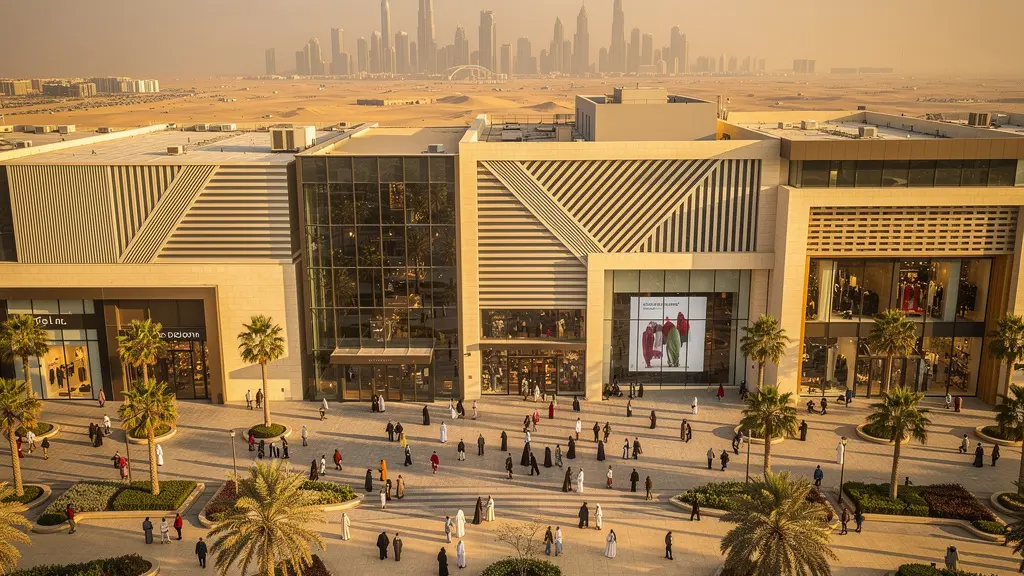
The biggest DSF discounts aren’t on the price tags; they’re in the strategic choices you make before you even enter a mall.
- Real value lies in outlets and local designer markets over the obvious flagship stores in major malls.
- Psychological traps like bundle deals and low-cost impulse raffle entries are designed to make you overspend on things you don’t need.
Recommendation: Focus on logistical planning (transport, timing) and targeted shopping to beat the crowds and the marketing hype.
The first wave of the Dubai Shopping Festival (DSF) hits you like a sensory tsunami. Gleaming malls flash signs promising “90% OFF,” the air buzzes with the prospect of winning a new Lexus, and every storefront seems to pull you in. For the average shopper, it’s a whirlwind of excitement and impulse. The common advice—wear comfortable shoes, stay hydrated, set a budget—is well-meaning but fundamentally misses the point. It treats you like a tourist, not a strategist.
The truth is, DSF is a masterfully designed system of managed chaos. It’s an economic engine built on consumer psychology, logistics, and carefully crafted illusions of value. To truly win at DSF, you don’t need a bigger budget; you need a better strategy. The real question isn’t just “where are the deals?” but “how does this system work, and how can I use that knowledge to my advantage?”
But what if the key wasn’t chasing the loudest discount signs, but navigating the quieter, more strategic paths to value? This guide deconstructs the DSF machine. We’ll move beyond the marketing hype to reveal the hidden mechanics of the raffles, the real difference between outlet and mall discounts, and the psychological traps designed to make you spend more. This is your playbook for shopping smarter, not just harder.
This article breaks down the essential strategies to transform you from a regular consumer into a savvy DSF value-hunter. Explore the sections below to master every aspect of the festival, from logistics to deal psychology.
Table of Contents: DSF Sales Strategy: Finding Real Discounts vs Marketing Hype
- Why Do You Need to Keep Your Receipts to Win a Lexus?
- How to Find Local Designers at MOTB Instead of Mall Brands?
- Dubai Mall or Outlet Village: Where Are the Deepest Discounts During DSF?
- The “Bundle Deal” Mistake That Makes You Spend More on Things You Don’t Need
- Where to Park to See the DSF Fireworks at The Beach Without Getting Stuck?
- Why Does Booking a Stopover in Dubai Save You Up to 30% on Long-Haul Flights?
- Eid Al Fitr or Eid Al Adha: Which Holiday Has Better Fireworks and Sales?
- How to Buy Your First Piece of Middle Eastern Art on a Budget?
Why Do You Need to Keep Your Receipts to Win a Lexus?
That glossy Lexus in the middle of the mall isn’t just for decoration; it’s the ultimate bait in the DSF ecosystem. The question isn’t just about luck, it’s about understanding the entry mechanism. You don’t just “win”; you qualify. Your receipts are the currency. For most of the major DSF raffles, like the DSF Mega Raffle, there’s a minimum spending threshold. This means your shopping receipts are literally your tickets to the grand prize draw. An AED 300 minimum spending threshold for most DSF raffles is standard to enter, effectively turning your retail therapy into a lottery entry.
However, the system is evolving. The high-stakes, high-cost raffles of the past are now complemented by more accessible, low-cost games of chance. As one long-time resident noted, the landscape has shifted dramatically. A UAE resident, Nadia Hashim, recalled in an interview with Khaleej Times, “I remember when the DSF raffle tickets cost Dh200 in the early days. Now, you can buy a pack of raffle coupons for just Dh10, which includes three tickets and some vouchers.” This democratization has been driven by new platforms and even petrol stations selling entry packs. While this lowers the barrier to entry, it also cleverly encourages small, frequent spending across more venues. So, while your big-ticket receipt might get you into the Lexus draw, don’t discount the power of smaller purchases that qualify you for other prizes. The strategy is to know which game you’re playing with each purchase.
How to Find Local Designers at MOTB Instead of Mall Brands?
While the mega-malls are the epicenters of DSF’s mass-market appeal, the savvy shopper knows that unique value—and a more authentic Dubai experience—is found elsewhere. Resisting the pull of familiar global brands is the first step to discovering local gems. Your primary destination for this should be the Market Outside the Box (MOTB). Held at the Dubai Design District, MOTB is a curated outdoor festival that deliberately shuns the mainstream. It’s a vibrant platform for home-grown designers, quirky fashion, and handmade jewellery.
This isn’t your typical shopping trip; it’s a cultural immersion. The atmosphere is deliberately crafted to be the antithesis of a sterile mall, with live music, art installations, and street food. The latest editions have blended retro aesthetics with Gen Z culture, creating an energetic vibe that encourages discovery. Here, you’re not just buying a product; you’re often buying it directly from the person who made it. This is where you find one-of-a-kind pieces that tell a story, far from the mass-produced items available in every other major city. For the value-oriented shopper, this is true arbitrage: finding high-quality, unique items before they hit the mainstream and their prices escalate.
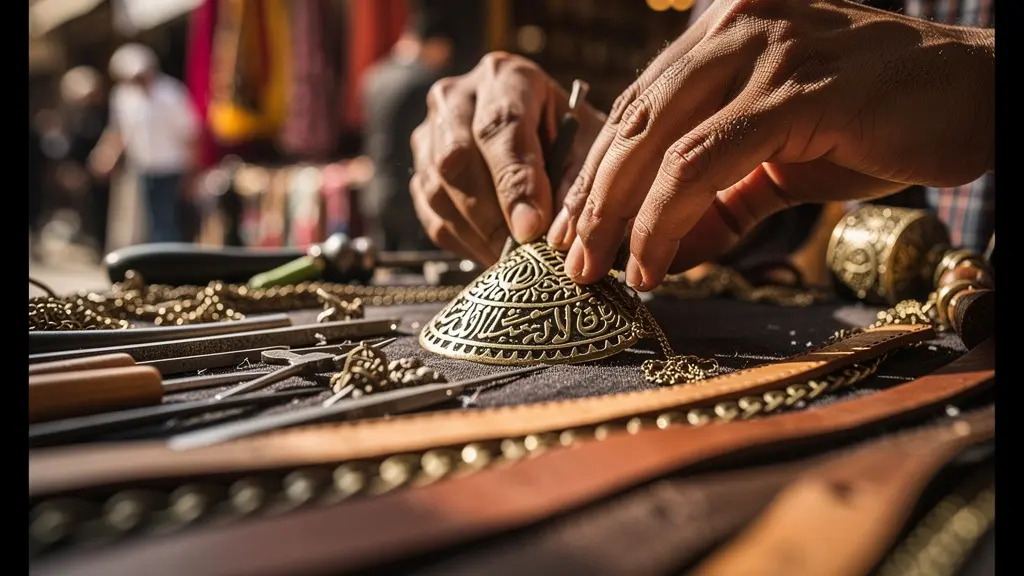
As seen in the craftsmanship of local artisans, the focus is on texture, detail, and authenticity. Forget the “90% off” signs; the value here is in the originality and the direct connection to the creative heart of the city. Seeking out these spaces is a conscious strategy to trade the fleeting thrill of a discount for the long-term satisfaction of owning something truly special.
Dubai Mall or Outlet Village: Where Are the Deepest Discounts During DSF?
The “up to 90% off” signs are a ubiquitous feature of DSF, creating a frenzy of perceived opportunity. During peak events like the 12-hour mega sale, these discounts are real but often on very limited stock. A Khaleej Times report on the 30th anniversary festival confirmed a wide 25% to 90% discount range during DSF mega sales. The critical question for the savvy shopper, however, is not *if* the discount exists, but *where* the most consistent and deepest value can be found. This brings us to the core strategic choice: the flagship glamour of Dubai Mall versus the dedicated bargain-hunting of The Outlet Village.
A surface-level comparison is misleading. The deepest percentage discount on a single item might be in Dubai Mall on a flash sale, but the highest probability of finding a great deal across a wider range of items is often elsewhere. To make an informed decision, you need to weigh multiple factors beyond the sticker price. The following comparison breaks down the fundamental trade-offs between these two popular destinations.
| Factor | Dubai Mall | Outlet Village |
|---|---|---|
| Store Count | 1,200+ stores | 130+ boutiques |
| Discount Range | 25-75% during DSF | 30-90% year-round |
| Product Type | Current season items | Past season overstock |
| Transportation Cost | Metro accessible | Taxi/car required |
| Time Investment | Central location | 45-60 min from city |
| Brand Variety | Full brand portfolios | Limited selections |
The table reveals the strategic calculus: Dubai Mall offers convenience, variety, and the latest collections with temporary DSF discounts. The Outlet Village demands a greater investment in time and transport but offers structurally lower prices on past-season items year-round, which are then further discounted during DSF. The deepest, most reliable discounts are at the Outlet Village, but they come at the cost of selection and convenience. The pro-shopper’s move is to have a specific list for Dubai Mall (current season items you’re willing to pay a premium for) and dedicate a separate trip to the Outlet Village for opportunistic bargain hunting.
The “Bundle Deal” Mistake That Makes You Spend More on Things You Don’t Need
During DSF, your biggest financial risk isn’t paying full price; it’s falling for a “deal” that makes you spend more. Retailers are masters of psychology, and one of their most effective tools is the bundle deal. “Buy 2, Get 1 Free,” “Spend 500 AED, Get a 100 AED Voucher,” or pre-packaged gift sets all seem like incredible value. They tap into a powerful sense of urgency and a fear of missing out, especially when purchase intent is high. A staggering 61% of UAE residents are likely to make purchases during DSF, creating a fertile ground for these psychological traps.
The “Bundle Deal” mistake operates on a simple principle: it shifts your focus from what you *need* to what you could *get*. You walk in wanting one specific item, but the offer is structured to reward a larger purchase. You end up buying two extra items you didn’t plan for, just to secure the “free” one. The perceived saving on the third item masks the actual extra cost of the two you didn’t need. This is a classic discount illusion, where the structure of the offer makes you feel smart for spending more money.

As the image suggests, the hero product you wanted is surrounded by other items that dilute the value. The savvy strategy is to be ruthlessly disciplined. Before you approach the checkout, ask yourself one question: “Would I have bought these extra items on their own at full price?” If the answer is no, you are about to fall into the trap. Walk away. The true saving is not the discount you get, but the unnecessary expense you avoid.
Where to Park to See the DSF Fireworks at The Beach Without Getting Stuck?
The DSF experience isn’t just about shopping; it’s also about the world-class entertainment, from drone shows to fireworks. However, enjoying these spectacles can quickly turn into a logistical nightmare if you don’t have a plan. The fireworks at The Beach, JBR, are a prime example. The common mistake is to drive there, hoping to find parking. This is a recipe for spending hours in traffic and missing the show. The pro-shopper knows that logistical leverage is as important as finding a discount.
The core of the strategy is to avoid the epicenter. The free, twice-daily drone shows at Bluewaters and The Beach are designed to be accessible, but not by car during peak hours. Official advice and seasoned residents agree: the Dubai Metro is your primary weapon. It bypasses the gridlock entirely. The mistake many make is taking a taxi or ride-hailing service directly to the venue. You will get stuck. A far better approach is to use a hybrid model. Take the metro or tram to a station near the JBR/Marina area, but not directly at it. Then, enjoy a short walk to the viewing spot. This allows you to bypass the worst of the traffic and the crowds.
After the show, the real strategy comes into play. Do not attempt to order a ride-hailing service from the heart of the crowd. You will be hit with massive surge pricing and a long wait. Instead, walk 10-15 minutes away from the main event zone into a less congested area before you even open the app. This simple act can save you significant time and money. The following plan summarizes the key steps to a stress-free event experience.
Your Action Plan: Smart Transportation for DSF Events
- Use the Dubai Metro as your primary mode of transport to connect to major malls and event venues.
- Download the Visit Dubai and Dubai Calendar apps for real-time event and traffic updates.
- Park at less-congested metro or tram stations outside the immediate JBR/Dubai Marina area and ride in.
- Consider visiting on weekdays (Sunday-Tuesday) for a slightly quieter and less crowded experience.
- Walk for 10-15 minutes away from the main event zone before booking a ride-sharing service to avoid surge pricing.
Why Does Booking a Stopover in Dubai Save You Up to 30% on Long-Haul Flights?
The concept of a “free” or cheap stopover in Dubai is one of the travel industry’s most effective marketing tools, particularly from hub airlines like Emirates. The promise of saving up to 30% on a long-haul flight by breaking the journey in Dubai is tantalizing. The mechanics are simple: airlines prefer to fill their planes, and offering a discounted multi-day stopover is a great way to sell two flight legs (e.g., London-Dubai, Dubai-Singapore) to a passenger who might otherwise fly direct with a competitor. This strategy allows them to optimize capacity on their hub-and-spoke model. For the traveler, this can indeed result in a significantly cheaper overall flight ticket compared to booking two separate trips.
However, the savvy traveler must look at the total cost of the trip, not just the airfare. Timing your stopover to coincide with DSF seems like a perfect two-for-one deal, but it comes with a major caveat: accommodation costs. While you save on the flight, you land in the city during its absolute peak season. The influx of millions of visitors for the festival puts immense pressure on the hospitality sector. A DSF planning guide highlights that tourists should budget for a 20-40% increase in hotel prices during DSF compared to other times of the year. This surge can quickly erode the savings you made on your flight ticket.
The strategic play is to be deliberate. If your primary goal is to experience DSF, then accept the higher hotel prices as part of the cost of the event and enjoy the flight savings. However, if your main goal is simply a cheap stopover, then timing is everything. Booking your stopover in the shoulder seasons just before or after DSF will give you the best of both worlds: a discounted flight and more reasonable hotel rates. The “30% saving” is real, but only if you account for where that saving is being offset by other costs.
Key Takeaways
- True discounts are often found at outlets and local designer markets, not just in the flagship stores of major malls.
- Psychological traps like bundle deals and low-cost impulse raffles are strategically designed to increase your overall spending.
- Logistics are paramount: smart transportation planning and strategic timing are more valuable than chasing the biggest discount sign.
Eid Al Fitr or Eid Al Adha: Which Holiday Has Better Fireworks and Sales?
For residents and regional tourists, the shopping calendar is punctuated by major holidays, with Eid Al Fitr and Eid Al Adha being significant peaks of retail activity. Both are marked by sales, family-oriented events, and fireworks. Traditionally, Eid Al Fitr, which follows Ramadan, sees a slightly larger retail push as it’s a time of gift-giving and new clothes. However, both holidays primarily cater to a local and regional audience with more traditional celebrations. The discounts, while present, are often more selective and don’t have the city-wide, all-encompassing scale of another major event.
When you compare them to the Dubai Shopping Festival, the difference in scale becomes immediately apparent. As Ahmed Al Khaja, CEO of the Dubai Festivals and Retail Establishment (DFRE), stated, “DSF is Dubai’s biggest and most highly anticipated annual festival, showcasing everything that makes the city extraordinary.” It is an event engineered for a global audience. The question of which Eid is “better” for sales is almost moot for an international visitor when compared against the DSF behemoth.
The following table puts the scale into perspective:
| Aspect | DSF (Dec-Jan) | Eid Festivals |
|---|---|---|
| Duration | 38 days continuous | 3-7 days each Eid |
| Discount Range | 25-75% citywide | 20-50% selective |
| Tourist Focus | International visitors | Local/regional focus |
| Entertainment Scale | 1000+ drone shows nightly | Traditional celebrations |
| Raffle Prizes | 75+ cars, AED 5M+ cash | Limited raffles |
| Weather | Pleasant winter (20-25°C) | Varies by lunar calendar |
The takeaway for the savvy shopper is clear. If you’re seeking a more authentic, cultural experience with a local flavour, the Eid holidays are wonderful times to visit. But if your primary goal is to maximize shopping value and experience the largest possible scale of entertainment and sales, there is no contest. DSF operates on a completely different level in terms of duration, scope of discounts, and sheer volume of prizes and events.
How to Buy Your First Piece of Middle Eastern Art on a Budget?
Venturing beyond electronics and fashion offers one of the most rewarding DSF experiences: acquiring your first piece of Middle Eastern art. This can feel intimidating, but DSF creates unique opportunities for entry-level collectors. The key is to avoid traditional, high-end galleries and instead immerse yourself in the cultural markets that flourish during the festival. Locations like Al Seef and Global Village are essential destinations. Al Seef, with its blend of traditional architecture and modern retail, becomes a hub for local artisans selling everything from calligraphy to handcrafted textiles directly to the public.
Your strategy for budget art buying should be focused and methodical. Follow these principles:
- Start with prints and photography: Look for limited edition prints from local artists. They offer an affordable entry point into collecting and are easier to transport.
- Seek authenticity: Always request a Certificate of Authenticity and, if possible, a statement from the artist. This is crucial for verifying the work’s origin and potential future value.
- Focus on craft: Don’t overlook smaller decorative pieces from verified craftsmen. Intricately painted ceramics, metalwork, or woven textiles can be stunning works of art in their own right.
- Compare and negotiate: Prices can vary significantly between the traditional souks and more formal market stalls. Don’t be afraid to politely compare and, where appropriate, negotiate, especially if you are buying more than one piece.
- Leverage the festival: Many vendors offer festival-exclusive pricing. The city-wide 25-75% discount range often extends to art and craft vendors in these designated cultural zones.
Buying your first piece of art during DSF is not about finding a hidden Picasso; it’s about finding a piece that speaks to you and captures the spirit of your visit. It’s a tangible memory and a direct investment in the region’s vibrant creative culture. By focusing on these designated markets and looking for certified, smaller-scale works, you can acquire a meaningful piece without breaking the bank.
Armed with these strategies, you’re no longer just a tourist with a credit card; you’re a value hunter operating with insider knowledge. The Dubai Shopping Festival is a game of skill, not just chance. It’s time to plan your DSF attack, cut through the hype, and shop smarter, not harder.