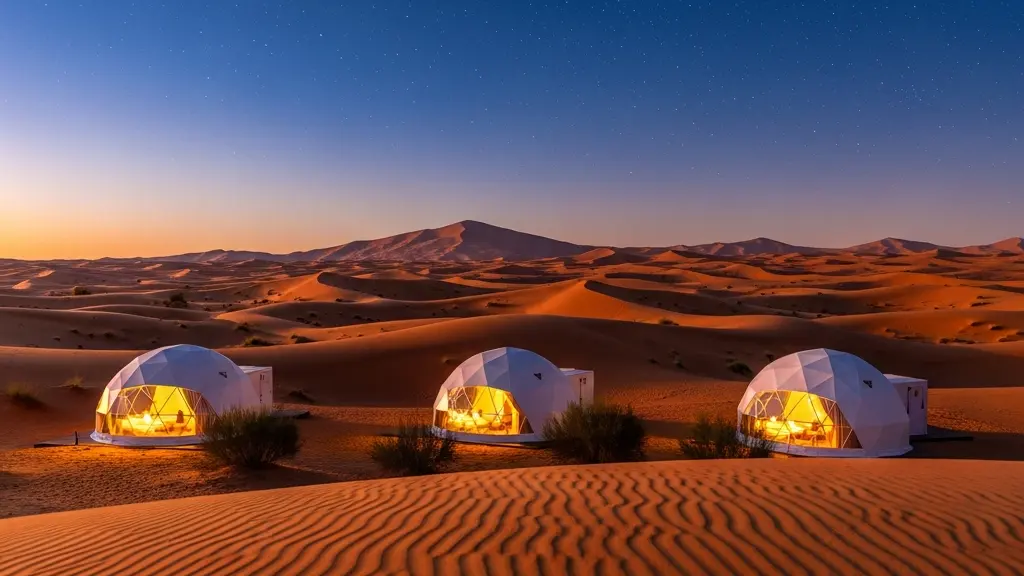
True eco-glamping in the UAE is less about luxury amenities and more about making conscious trade-offs; your biggest tool is not a booking site, but a sustainability audit mindset.
- Assess the “Comfort-Carbon Trade-off”: Question the reliance on A/C and water-intensive features in a desert environment.
- Analyze a camp’s philosophy: Compare minimalist, nature-focused retreats with high-design eco-luxury to find what “eco” truly means to them.
- Evaluate your impact: Adhere to strict protocols for waste, water, and wildlife interaction to leave a minimal trace.
Recommendation: Before booking, scrutinize a camp’s resource management (water, energy, waste) as closely as you do its Instagram-worthy views.
The allure of the UAE desert is undeniable: vast, silent landscapes under a blanket of stars. The rise of glamping promises an immersive experience without sacrificing comfort. For the eco-conscious traveler, however, this creates a fundamental conflict. How can you indulge in a plush bed and a hot shower in the middle of an arid landscape without feeling a pang of guilt about the carbon footprint of the generator humming just out of sight? Many guides offer lists of “eco-friendly” spots, but often, the “eco” label is a thin veneer over resource-intensive luxury.
The common advice is to look for solar panels or recycling bins. While important, these are just surface-level indicators. The real challenge—and the heart of the matter—is tackling the non-negotiables of desert survival: heat and water. The manufactured comfort of powerful air conditioning and unlimited water is the single biggest environmental cost of desert glamping. But what if the key to a truly sustainable desert stay wasn’t just finding a camp with better marketing, but fundamentally shifting our perspective? What if we approached booking not as a consumer, but as a sustainable tourism auditor?
This guide abandons the generic listicle. Instead, it equips you with an auditor’s mindset to deconstruct the promises of eco-glamping. We will analyze the core trade-offs between comfort and conservation, from the physics of tent design to the realities of water scarcity. By understanding these principles, you can make informed choices that align with your values, ensuring your desert escape is genuinely conscientious.
This article provides a framework for auditing your next glamping trip. You will learn to analyze accommodation design, water and waste protocols, and even how to choose a location based on its environmental trade-offs, empowering you to find an experience that is both memorable and responsible.
Summary: A Guide to Auditing Your UAE Eco-Glamping Experience
- Why Are Dome Tents Better at Regulating Heat Than Traditional Canvas?
- How to Handle Limited Water Showers at Eco-Retreats?
- Mleiha or Sonara: Which Camp Offers a More Authentic Eco-Experience?
- The Food Waste Mistake That Attracts Foxes to Your Tent
- Moon Phase Planning: When to Book for the Best Milky Way Views?
- How to Find Glamping Spots in RAK That Offer Privacy and Mountain Views?
- Trailers or Damani Lodges: Which Hatta Accommodation Offers Better Views?
- How to Visit the Al Marmoom Desert Conservation Reserve Without a Guide?
Why Are Dome Tents Better at Regulating Heat Than Traditional Canvas?
The geodesic dome has become the icon of modern glamping, and for good reason. From a physics perspective, its spherical shape is superior at managing heat compared to a traditional, boxy canvas tent. The curved surface minimizes the area directly exposed to the high-noon sun, reducing solar gain. Furthermore, the shape promotes natural convection: as air warms inside, it rises to the top of the dome and can be vented out, pulling cooler air in from the base. This passive cooling design is, in theory, an elegant, low-energy solution to desert heat.

However, the reality in the UAE’s extreme climate presents a critical “Comfort-Carbon Trade-off.” While passive design helps, it’s rarely enough. As the Al Marmoom Domes case study shows, even structures with 360-degree views and strategic ventilation rely on modern air conditioning. The real question for an eco-auditor isn’t “does it have A/C?” but “how much does it depend on it?” Some camps use high-efficiency, heat-reflective PVC fabric and smart ventilation to supplement smaller, less energy-intensive A/C units. Others prioritize absolute comfort over all else. For instance, reports show that some five-star bubble glamping tents feature air-conditioning systems that maintain frigid temperatures even in peak summer, representing a significant energy expenditure. A truly eco-conscious choice involves accepting a comfortable, but not artificially cold, indoor temperature.
How to Handle Limited Water Showers at Eco-Retreats?
If a glamping site advertises long, high-pressure showers, it’s a red flag for any sustainability auditor. In an arid region, water is the most precious resource, and its conservation is a cornerstone of genuine eco-tourism. Limited water showers are not an inconvenience; they are a sign of a camp’s commitment to a resource scarcity mindset. Instead of fighting this limitation, the conscious traveler embraces it as part of the authentic desert experience. This philosophy is shared by the most responsible operators in the region.
As the experts at Nomadic UAE highlight in their guide to sustainable glamping:
Many resorts and campsites prioritize responsible tourism by minimizing their carbon footprint, conserving water, and implementing recycling programs.
– Nomadic UAE, Glamping UAE Sustainability Guide
This means adopting practices that are both respectful and practical. Many UAE eco-resorts utilize greywater systems, where shower water is filtered to irrigate native desert plants like Ghaf trees. Using biodegradable soaps and shampoos is therefore not just a suggestion but a requirement to avoid harming the local flora. The “navy shower” technique—wetting down, turning the water off to lather, and rinsing quickly—becomes a small but meaningful act of participation in the camp’s conservation efforts. Viewing the outdoor shower as a natural cooling process, perhaps timed with the sunset, transforms it from a utility into a ritual.
Mleiha or Sonara: Which Camp Offers a More Authentic Eco-Experience?
Choosing between two highly-rated “eco” camps like Mleiha’s Moon Retreat and Sonara’s Nest is a perfect exercise for a sustainability auditor. There is no single “better” option; instead, they represent two different philosophies of eco-luxury. The choice depends on what you value most: minimalist immersion or high-design sustainability. An audit requires looking past the marketing and into the operational details.
This comparative data, drawn from a thorough guide to glamping in the UAE, allows you to conduct your own audit. Mleiha focuses on a connection to place—its location within an archaeological site is key. The experience is more rustic, with pre-ordered meals and an emphasis on stargazing, suggesting a lower operational footprint. Sonara, located in the Dubai Desert Conservation Reserve, offers an award-winning eco-design by a famed architect and a full-service host model. Its dining, featuring wood-fired pizzas and wagyu sliders, points to a more resource-intensive, service-heavy experience, even if the design is sustainable.
| Feature | Mleiha Moon Retreat | Sonara Nest |
|---|---|---|
| Location | Mleiha Archaeological Site, Sharjah | Dubai Desert Conservation Reserve |
| Accommodation | 10 domes + 6 tents with BBQ terraces | 14 luxury nests built into sand dunes |
| Eco-Focus | Simple, minimalist approach with temperature-controlled pools | Award-winning eco-design by Gianni Ranaulo |
| Privacy Level | Remote desert location for stargazing | Private pods with dedicated host service |
| Dining | Pre-ordered meals, no on-site restaurant | Wood-fired pizzas, wagyu sliders menu |
The verdict? If your definition of an authentic eco-experience is minimalism and a deep connection to history and the cosmos, Mleiha is the stronger choice. If you prioritize innovative green architecture and high-touch service within a protected area, Sonara’s model is more aligned. The audit reveals that authenticity isn’t a single standard but a spectrum of choices.
The Food Waste Mistake That Attracts Foxes to Your Tent
A key tenet of sustainable tourism is leaving the environment exactly as you found it. In the desert, this goes beyond packing out your trash. The most common mistake glampers make is improper food management, which can have a direct and disruptive impact on local wildlife. The scent of food scraps, even from a hastily cleaned plate, can attract desert foxes, ants, and other creatures directly to your tent, creating a nuisance for you and dangerously habituating them to human food sources.
The issue isn’t just about leftover food on a plate; it’s about the entire lifecycle of your provisions. Storing food in soft bags is ineffective, as canvas tent walls do not block scents. Even toiletries like scented soaps or perfumes can attract curious animals. The cardinal sin is burying organic waste in the sand. Unlike in a forest, organic matter decomposes extremely slowly in the arid desert, and burying it merely encourages animals to dig, disrupting the fragile desert crust. As a guest, your responsibility is to adhere to a strict protocol that protects both you and the ecosystem.
Your Wildlife-Safe Food Storage Checklist
- Store all food items, including snacks and dry goods, in sealed, hard-shell containers, preferably inside your vehicle.
- Clean all dishes, cutlery, and cups immediately after use to eliminate any sugar or food residue that attracts insects.
- Keep toiletries and any scented items (deodorant, perfume) in airtight bags or containers.
- Never bury organic waste. Use the designated, animal-proof waste bins provided by the facility for all trash.
- If a camp provides designated outdoor BBQ areas, use them and clean them thoroughly after your meal.
Many responsible camps, like Liwa Nights, actively manage this by maintaining strict food policies and even having their own animals, like Arabian Salukis, on the property. Their testimonial confirms that “The camp maintains strict food storage policies to protect both guests and local wildlife.” This ensures the desert ecosystem remains undisturbed while providing authentic, safe experiences. Following these rules isn’t a chore; it’s an act of respect for the wild home you are a guest in.
Moon Phase Planning: When to Book for the Best Milky Way Views?
One of the most profound experiences the desert offers is a clear, unpolluted view of the night sky. However, achieving this requires more than just getting away from city lights; it demands “light pollution discipline,” both from the camp and the visitor. The biggest source of light pollution in the desert isn’t a distant city—it’s the moon itself. A full moon can act like a natural floodlight, washing out the fainter stars and the delicate structure of the Milky Way.
Therefore, a true celestial enthusiast plans their trip not just by the season, but by the lunar cycle. The ideal time for stargazing is during the New Moon phase, when the moon is not visible in the sky. The four-day window surrounding the New Moon offers the darkest conditions. The best months are from November to February when the winter air in the UAE is typically less hazy and more stable. Even if you can’t book on a New Moon, checking the moonrise and moonset times is a pro-tip. If the moon sets before 10 PM, you will still have hours of prime, dark-sky viewing late into the night.
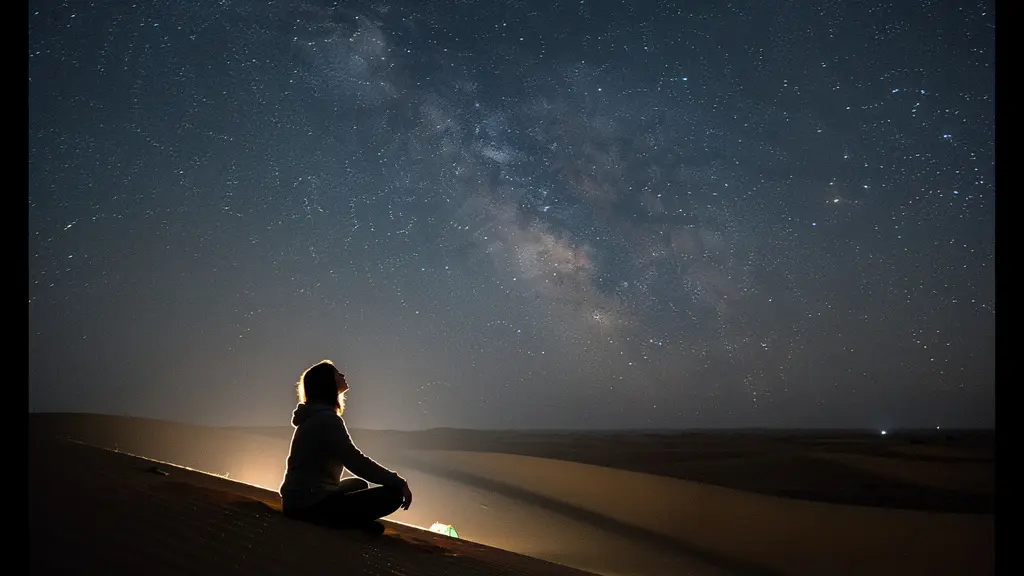
Certain locations are designed to maximize this experience. For example, Sharjah’s Moon Retreat, where some domes are specifically designed for stargazing, is an excellent choice. Some camps in the Mleiha area even offer sessions with astronomy experts and telescopes, transforming a beautiful view into an educational journey. Choosing a camp that minimizes its own ground-level light pollution—using shielded, downward-facing lights—is also a key part of the audit. By planning around the cosmos, you shift from being a passive tourist to an active participant in one of nature’s greatest shows.
How to Find Glamping Spots in RAK That Offer Privacy and Mountain Views?
In the mountainous terrain of Ras Al Khaimah (RAK), the choice of a glamping spot involves a strategic trade-off between privacy, views, and microclimate. Unlike the open desert, the topography of the mountains creates distinct advantages and disadvantages depending on your camp’s specific location. An auditor must analyze the map: is the camp in a wadi, on a ridge, or at the end of a trail? Each position offers a different experience.
This decision matrix clarifies the trade-offs. A camp situated deep in a wadi (valley) offers excellent privacy and protection from wind, but your views will be limited by the valley walls. Conversely, a spot on an exposed ridge provides breathtaking panoramic mountain views and benefits from a cooling breeze that can lower the ambient temperature by several degrees, but it offers far less privacy. The ultimate in seclusion is often found at camps located at the end of dead-end trails, where there is no passing traffic.
| Location Type | Privacy Level | View Quality | Temperature Benefit |
|---|---|---|---|
| Wadi Position | High (sound isolation) | Limited (valley walls) | Protected from wind |
| Ridge Position | Low (exposed to others) | Panoramic mountain views | 3-5°C cooler with breeze |
| Dead-end Trails | Maximum (no passing traffic) | Variable | Depends on elevation |
Case Study: The Bear Grylls Explorer Camp Advantage
The Bear Grylls Explorer Camp in RAK exemplifies the benefits of a “Ridge Position.” Its elevated mountain location provides not only stunning vistas but also a natural temperature reduction. The camp’s design, with cabins spaced for seclusion, mitigates the typical privacy concerns of a ridge-top spot, offering a balanced solution for those seeking both views and a sense of isolation.
When searching for a spot in RAK, look at satellite maps and guest photos. Pay attention to the surrounding topography. Is the camp clustered together or are the units spread out? Is it on a main hiking route or tucked away? By asking these questions, you can select a location that perfectly matches your priorities for panoramic views and peaceful solitude.
Trailers or Damani Lodges: Which Hatta Accommodation Offers Better Views?
In Hatta, the dramatic landscape of mountains and water presents another fascinating audit. The two most popular glamping options, the Sedr Trailers and the Damani Lodges, offer radically different experiences based on one key factor: elevation. One is not inherently “better,” but they cater to different preferences for views, sun exposure, and privacy. The choice between them is a classic case of auditing your priorities.
An in-depth FACT Magazine comparison helps break down the specifics. The Sedr Trailers, parked on the banks of the Hatta Dam, offer a unique, water-level perspective. You are right on the lake, with direct views of the water. However, this position means you may fall into the mountain’s shadow earlier in the afternoon and are more visible to kayakers and hikers on the dam. The Damani Lodges, built into the mountainside, provide an elevated, birds-eye vista. Their private terraces offer sweeping hilltop views and catch the morning sun, but you are further from the water itself. They generally offer more seclusion, feeling like cosy mountain retreats.
| Feature | Sedr Trailers | Damani Lodges |
|---|---|---|
| Position | Banks of Hatta Dam (water level) | Built into Hatta mountains (elevated) |
| View Type | Direct lake views | Hilltop vistas with private terraces |
| Sun Exposure | Can fall into early shadow | Catches morning glow from elevation |
| Privacy | Visible to kayakers and hikers | Cosy mountain retreats with seclusion |
| Style | Luxurious American-style Airstreams | Purpose-built mountain lodges |
Alternative Option: The Hatta Dome Park
For those who want a hybrid experience, the Hatta Dome Park offers a third choice. These 15 luxury domes are situated with panoramic windows that provide majestic views of the Hatta mountain range, combining the elevated vista of the lodges with the trendy dome accommodation style. Many even include plunge pools and fire pits, offering a different kind of luxury altogether.
Your audit comes down to this: do you want to be *on* the water, or do you want to look *down* on it? Do you prefer the novelty of an Airstream trailer or the solidity of a mountain lodge? There is no wrong answer, only the one that best fits your vision of a perfect Hatta escape.
Key Takeaways
- Question Everything: Don’t take “eco” labels at face value. Scrutinize a camp’s A/C, water, and waste policies to understand their true commitment.
- Embrace Trade-Offs: Real sustainability involves choices. Be prepared to trade a little convenience (like unlimited water) for a much lower environmental impact.
- Your Behavior Matters: Being a conscious traveler extends to your own actions. Proper food storage and waste disposal are as important as the camp’s infrastructure.
How to Visit the Al Marmoom Desert Conservation Reserve Without a Guide?
The Al Marmoom Desert Conservation Reserve is a vast, protected area and a jewel of Dubai’s natural heritage. While much of it is restricted to guided tours to protect sensitive wildlife breeding areas, it is possible to experience its beauty independently if you know the rules. The key to a successful self-guided visit lies in access with responsibility. The freedom to explore certain areas comes with a strict obligation to respect the reserve’s conservation mission.
Independent travelers can access the area around the Al Marmoom Domes in Al Qudra with private vehicles without needing a special permit. This area offers a stunning introduction to the reserve’s landscape. The most critical rule is to stay on designated tracks at all times. Venturing off-track is strictly forbidden as it can damage fragile habitats and cause stress to wildlife. If you are lucky enough to spot wildlife, such as the Arabian Oryx, you must maintain a minimum distance of 50 meters and never attempt to feed or approach them. To further reduce your impact, keep your engine idling to a minimum.
For those wanting to explore deeper into the reserve quietly, the Al Marmoom Cycling Track is an outstanding option. This paved track winds through the dunes, allowing you to cover significant ground with virtually zero environmental disturbance. It offers one of the best ways to immerse yourself in the silence of the desert and increase your chances of spotting wildlife from a respectful distance. As a What’s On review notes, the experience is “a dreamy glamping experience with floor-to-ceiling windows offering 360-degree desert views,” but this dream is sustained only by the disciplined respect of its visitors.
Adopting a sustainability auditor’s mindset transforms you from a simple tourist into a conscious custodian of the places you visit. It empowers you to see beyond the glossy photos and make choices that are not only better for the planet but also lead to a more profound and authentic connection with the magnificent desert landscapes of the UAE. Your next step is to apply this framework to your own travel planning.