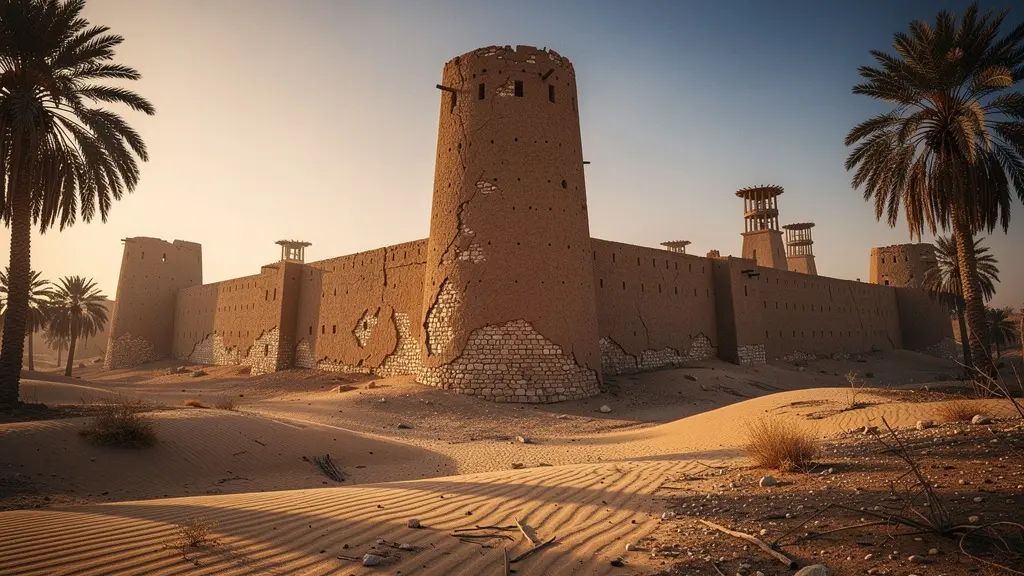
The true value of the UAE’s heritage sites lies not in their age, but in their sophisticated architectural response to the harsh desert environment.
- Al Ain’s mud-brick forts are masterpieces of passive cooling, using thermal mass and strategic design to maintain comfortable interior temperatures.
- Material choices, like stone in Hatta versus coastal coral, were deliberate engineering decisions based on regional climatic demands and resource availability.
- Restoration philosophies differ significantly, with Sharjah’s “living heritage” approach offering a dynamic contrast to more museum-like districts.
Recommendation: To truly appreciate the region’s history, a visitor must look beyond a single site and understand the network of architectural intelligence connecting Al Ain, Sharjah, and Hatta.
For the history enthusiast, the 90-minute drive from the hyper-modern skyline of Dubai to the ancient oases of Al Ain is a journey back in time. The promise of UNESCO World Heritage sites, dominated by imposing desert forts, is a powerful draw. Yet, a common perception reduces these structures to picturesque relics—photogenic collections of mud-brick walls and defensive towers. Many visitors arrive, take their photos, and leave with only a superficial understanding of what they have seen, often missing the profound narrative embedded within the architecture itself.
The standard travel guide might list the forts’ construction dates or the rulers who commissioned them, but this barely scratches the surface. The real story is far more compelling. What if the key to understanding these citadels was not in their military history alone, but in their brilliant, passive engineering? These are not merely defensive structures; they are highly evolved environmental machines, each element a calculated response to the challenges of desert life. The very materials used, the thickness of the walls, and their orientation are all part of a sophisticated system of climatic adaptation.
This guide adopts the lens of an archaeologist to deconstruct these architectural marvels. We will move beyond the surface to analyze the science behind their design. By examining the forts of Al Ain, and then comparing their principles to the heritage districts of Sharjah and the mountain dwellings of Hatta, we reveal a richer, more interconnected story of Emirati ingenuity. This comparative approach allows us to understand not just what these buildings are, but precisely why they were built the way they were, and why they remain essential viewing for any serious student of history and architecture.
To fully appreciate the depth of the region’s defensive and domestic architecture, this article explores the underlying principles that make each site unique. The following sections will guide you through the engineering, preservation, and practical exploration of these historical treasures.
Summary: A Deep Dive into the UAE’s Architectural Heritage
- Why Are Al Jahili Fort Walls Designed to Keep the Interior Cool?
- How to Trace the Falaj Water Channels Through the Al Ain Oasis?
- Modern Restoration or Ruins: How Does UAE Fort Preservation Differ from Qatar?
- The Midday Mistake That Makes Visiting Outdoor Forts Unbearable
- Sunset at Al Jahili: When Is the Best Time for Dramatic Fort Photography?
- Heart of Sharjah or Al Fahidi: Which Heritage District Feels More Authentic?
- Why Were Hatta Houses Built Using Stones Instead of Coral Blocks?
- Why a Day Trip to Sharjah Heritage Area Is Essential for History Buffs?
Why Are Al Jahili Fort Walls Designed to Keep the Interior Cool?
The imposing walls of Al Jahili Fort are not merely for defense; they are a critical component of a sophisticated passive cooling system. From an archaeological perspective, their design reveals a deep, empirical understanding of material science and thermodynamics. The primary mechanism at play is thermal mass. The walls are constructed from a mixture of mud-brick, cob, and local clays, creating a dense, thick barrier. During the blistering heat of the day, this mass slowly absorbs solar energy, preventing it from penetrating the interior spaces. As the desert temperature plummets at night, the stored heat is gradually released back into the environment, effectively regulating the internal temperature across a 24-hour cycle.
This core principle is augmented by several other integrated design features that work in concert to create a comfortable microclimate. The structure is not a simple box but a system designed for airflow and shade. These are not accidental features but a form of vernacular architecture refined over centuries. Understanding these elements is key to appreciating the fort as a piece of environmental engineering.
The primary components of this traditional desert cooling system include:
- Thick thermal mass walls that absorb daytime heat and radiate it slowly overnight.
- A large central courtyard, which helps create a stack effect, drawing hot air up and out while pulling cooler air into the shaded lower levels.
- Strategic and narrow window placement to minimize direct sun exposure while still permitting crucial cross-ventilation.
- Integration of wind towers, or barjeel, in more complex structures, designed to channel prevailing winds downward for natural air conditioning.
- Shaded walkways and verandas that act as transitional climate zones, protecting the main interior rooms from direct solar gain.
By observing these features, it becomes clear that Al Jahili Fort and similar structures are not passive recipients of the climate but active participants in managing it. The design is a testament to an era where survival depended on working with, not against, the forces of nature.
How to Trace the Falaj Water Channels Through the Al Ain Oasis?
The existence of Al Ain’s lush palm oases and the forts that guard them is entirely dependent on one of the ancient world’s great hydro-engineering achievements: the aflaj (singular: falaj) irrigation system. Tracing these water channels is to follow the literal lifeblood of the desert. These are not simple surface ditches but complex networks that tap into underground water sources and transport water over great distances with minimal loss to evaporation. As a case study reveals, the falaj system in Al Ain demonstrates remarkable longevity and engineering prowess; archaeological finds date the Hili Falaj back to 1200 BC, proving that this technology has sustained the region for over three millennia.
To trace the system on the ground, one must learn to identify its key components. The journey begins at the source, either an underground aquifer or a natural spring. From there, the water flows through a combination of covered and open channels. The covered sections, often running deep underground, are crucial for preventing evaporation. Periodically, you will spot vertical shafts, known as thugbah, which serve as access points for maintenance. Where the water is needed for irrigation, it emerges into open channels called sharia, from which it is distributed to the date palm groves. Walking through the Al Ain Oasis, you can follow these open channels, listen to the sound of flowing water, and observe the intricate system of gates used to direct the flow to different plots.
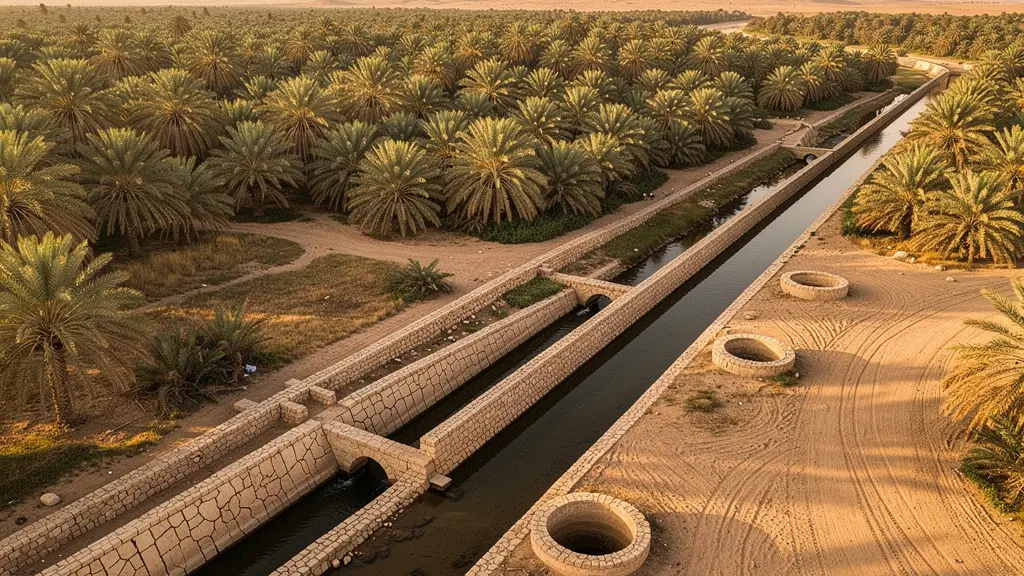
Not all falaj systems are the same. Their design varies based on the water source, a detail that reflects another layer of engineering sophistication. This is best understood by comparing the primary types found in the region.
| Falaj Type | Water Source | Channel Length | Water Supply |
|---|---|---|---|
| Dawoodi Falaj | Deep underground aquifers | Up to 10 meters | Year-round constant flow |
| Ayni Falaj | Natural springs | Variable | Seasonal variation |
| Ghaili Falaj | Surface water (ponds/lakes) | Short channels | Increases after rain |
Each type represents a specific solution to a local geological condition, demonstrating the highly adaptive nature of this ancient technology. Tracing these channels is therefore more than a pleasant walk; it is an exercise in reading the historical and hydrological landscape.
Modern Restoration or Ruins: How Does UAE Fort Preservation Differ from Qatar?
The approach to heritage preservation varies significantly across the Gulf. While some regions may favor leaving ruins as stabilized archaeological sites, the United Arab Emirates, particularly in Abu Dhabi, has championed a philosophy of comprehensive rehabilitation. This approach seeks to restore structures not just to a state of stability, but to a condition that evokes their original form and function, making them accessible and educational for the public. Al Jahili Fort is perhaps the finest example of this philosophy in practice. Instead of a crumbling ruin, the visitor encounters a fully realized structure that feels both ancient and alive.
This was achieved through a 2007-2008 major rehabilitation project by the Department of Culture and Tourism Abu Dhabi, which meticulously restored the mud-brick structure while integrating modern, non-invasive amenities like climate-controlled galleries and subtle lighting. The project’s success lies in its respect for the original materials and building techniques. Rather than using concrete or other modern materials that would be visually and structurally jarring, the restoration relied on traditional earth-building methods. This commitment to authenticity maintains the fort’s architectural integrity, particularly its thermal performance.
The quality of this approach has not gone unnoticed. It sets a benchmark for earthen architecture conservation worldwide. As the Department of Culture and Tourism Abu Dhabi proudly notes, this dedication to authentic restoration has earned international acclaim:
The project has been awarded the prestigious Terra Award at terra Lyon 2016, the 12th World Congress on Earthen Architectures
– Department of Culture and Tourism Abu Dhabi, Al Jahili Fort Conservation Report
This philosophy of active, award-winning rehabilitation distinguishes the UAE’s approach. Instead of presenting history as a static, decaying ruin, it aims to create an immersive experience, allowing visitors to engage with the past in a dynamic way. This choice to fully restore, rather than merely preserve, makes sites like Al Jahili powerful educational tools and cultural hubs.
The Midday Mistake That Makes Visiting Outdoor Forts Unbearable
The most common error a visitor can make when exploring Al Ain’s forts is to misjudge the desert sun. Many tourists, accustomed to temperate climates, plan their main outdoor exploration between noon and 3:00 PM. This is a significant mistake. During these hours, the sun is at its zenith, and ambient temperatures can become dangerously high. The very thermal mass principles that keep the fort interiors cool mean the exterior surfaces have been absorbing heat for hours, radiating it back into the open courtyards. This creates an environment that is not just uncomfortable but can be physically unbearable and even hazardous.
An archaeologist or seasoned desert traveler understands that a successful visit requires a strategic itinerary that works with the climate, not against it. The day must be structured around the sun’s path, utilizing the fort’s own design to one’s advantage. The goal is to be in shaded or air-conditioned spaces during the peak heat and to explore the exposed areas during the cooler parts of the day. This simple shift in timing transforms the experience from a test of endurance into a pleasant and insightful exploration.
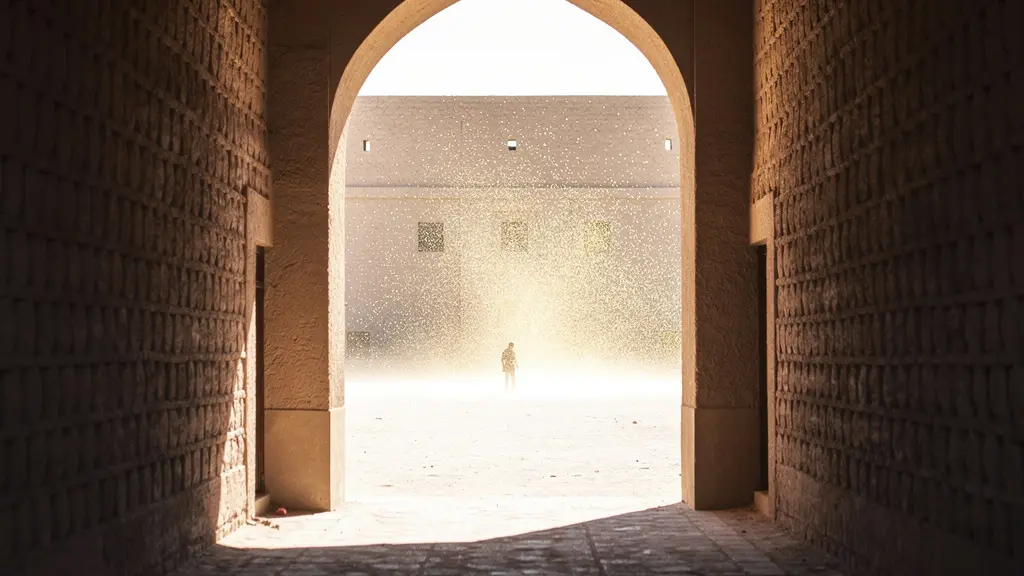
A well-planned visit involves retreating to the fort’s cool interiors during midday, just as its original inhabitants would have done. Al Jahili Fort’s modern restoration cleverly facilitates this with its climate-controlled museum and exhibition spaces, providing a perfect refuge from the heat.
Your Action Plan: The Desert Strategist’s Fort Visiting Itinerary
- Early Morning (9:00 AM): Begin your visit by exploring the fully exposed outdoor sections, such as the main courtyard and battlements, while temperatures are still pleasant.
- Mid-Morning (10:30 AM): Move to the interior exhibitions. The fascinating Wilfred Thesiger photography collection is housed in an air-conditioned gallery, offering a cultural experience away from the rising heat.
- Midday (12:00-2:00 PM): Make a strategic retreat into the Al Jahili Fort museum’s main climate-controlled galleries. This is the ideal time to learn about the fort’s history in comfort.
- Late Afternoon (4:00 PM onwards): As the sun begins to descend and the light softens, return to the outdoor areas. This is the beginning of the “golden hour” for photography.
- Evening: After sunset, the fort’s exterior is beautifully illuminated. A final walk around the perimeter offers a dramatic and different perspective of the architecture.
By following this schedule, you not only avoid the worst of the heat but also experience the fort in a variety of lighting conditions, enhancing both your comfort and your appreciation of the site.
Sunset at Al Jahili: When Is the Best Time for Dramatic Fort Photography?
For photographers, Al Jahili Fort transforms as the sun begins its descent. The harsh, flat light of midday gives way to the warm, directional light of the late afternoon, sculpting the fort’s earthen walls and casting long, dramatic shadows. This period, known as the “golden hour”, is unquestionably the best time for capturing the texture, scale, and mood of the architecture. It typically begins about an hour before sunset and is when the fort’s ochre and sand-colored walls truly come alive.
However, the photographic opportunity does not end when the sun dips below the horizon. The period immediately following sunset, the “blue hour”, offers a completely different but equally stunning visual palette. During these 20-30 minutes, the sky takes on a deep, saturated blue hue. This provides a magnificent contrast to the warm artificial uplighting that illuminates the fort’s walls after dark. The high-contrast scenes created during this time can be incredibly powerful, emphasizing the structure’s bold geometric forms against the soft twilight sky.
To make the most of these fleeting moments, a photographer must arrive with a plan. Scouting locations in advance is crucial, as the light changes rapidly. Knowing where you want to be positioned when the best light hits will be the difference between a missed opportunity and a spectacular shot. Successful photography at Al Jahili is about anticipating the light and using the fort’s own architectural elements to frame and compose your images.
Here are some expert tips for maximizing your golden and blue hour photography at the fort:
- Arrive by 4:00 PM to scout your locations. Identify the best angles before the golden hour begins.
- Position yourself in the far corner of the main courtyard to capture the setting sun illuminating the texture of the iconic main tower.
- Use the repeating arches of the corridors and walkways as natural frames to compose your shots of the changing sky.
- The tapering tiers of the circular watchtower can be used to create powerful leading lines that draw the viewer’s eye towards the sunset.
- Stay for the blue hour. This is when the modern uplighting switches on, creating dramatic, high-contrast images against the deep blue sky.
- For an added layer of cultural context, try to capture the moment of the evening call to prayer, which often coincides with this magical time of day.
Heart of Sharjah or Al Fahidi: Which Heritage District Feels More Authentic?
While Al Ain offers a deep dive into defensive architecture, the coastal cities of Dubai and Sharjah provide a different perspective on heritage: the restored merchant’s quarter. For a history enthusiast, comparing Al Fahidi Historical Neighbourhood in Dubai with the Heart of Sharjah project is a fascinating study in restoration philosophy. While both aim to preserve the past, they offer distinctly different experiences of “authenticity.” Al Fahidi, with its meticulously restored individual houses converted into quiet galleries, museums, and cafés, often feels like an open-air museum—a beautifully preserved but tranquil snapshot of a bygone era.
The Heart of Sharjah, by contrast, pursues a vision of “living heritage.” It is not just a collection of preserved buildings but a comprehensive urban restoration project that aims to reintegrate the historic area into the daily life of the city. It is the largest heritage project in the Gulf, and its scale is matched by its ambition. Here, the sounds of commerce and community are not historical reenactments; they are the real-time pulse of active souqs, craft workshops, and local families going about their lives. This approach creates an atmosphere that feels less like a curated exhibition and more like a journey into a still-beating heart.
As Khalid Jasim Al Midfa, Chairman of Sharjah’s Commerce and Tourism Development Authority, has stated, this diversity is a strength: “The beauty of the United Arab Emirates is we are seven completely different emirates, but we share the same values in terms of culture, history, safety and security.” This is perfectly illustrated by the different atmospheric goals of the two districts.
The choice between them depends on what the visitor seeks. Al Fahidi offers quiet contemplation, while Heart of Sharjah offers dynamic immersion. A direct comparison of their key aspects makes the distinction clear.
| Aspect | Heart of Sharjah | Al Fahidi (Dubai) |
|---|---|---|
| Size & Scale | 35,000 m² – largest heritage project in Gulf | Smaller district with 50 restored houses |
| Primary Purpose | Living heritage with active souqs and community | Museum piece with galleries and cultural centers |
| Atmosphere | Bustling marketplace with sounds of commerce | Quiet, contemplative museum environment |
| Restoration Approach | Comprehensive urban restoration (completion 2025) | Individual building conversions to museums/cafés |
| Visitor Experience | Traditional souqs, crafts workshops, local interactions | Art galleries, coffee museums, cultural understanding center |
Ultimately, “authenticity” is subjective. For some, it lies in the pristine, quiet preservation of Al Fahidi. For others, it is found in the bustling, lived-in energy of the Heart of Sharjah, where the past is not just remembered but actively inhabited. An analysis from an academic perspective on urban conservation often highlights the value of Sharjah’s integrated approach for long-term cultural sustainability.
Why Were Hatta Houses Built Using Stones Instead of Coral Blocks?
An examination of the traditional houses in the Hatta Heritage Village immediately reveals a stark material difference from the coastal heritage sites: the walls are made not of coral block or mud-brick, but of local mountain stone. This was not an aesthetic choice but a sophisticated and necessary response to a different microclimate. As a student of vernacular architecture, one must always ask: what environmental problem does this material solve? In Hatta’s case, the answer lies in its location within the Hajar Mountains.
Unlike the relatively stable temperatures of the coast, mountain regions experience a more significant diurnal temperature variation—hotter days and significantly cooler nights. In this environment, a material with high thermal mass is essential for passive temperature regulation. Research into the thermal performance of traditional building materials shows that stone possesses superior thermal mass effectiveness compared to the coral block used in coastal areas like Dubai and Sharjah. The dense stone walls would absorb the sun’s heat during the day, preventing the interiors from overheating. During the cold mountain nights, this stored heat would be slowly released, keeping the living spaces warmer and more comfortable.
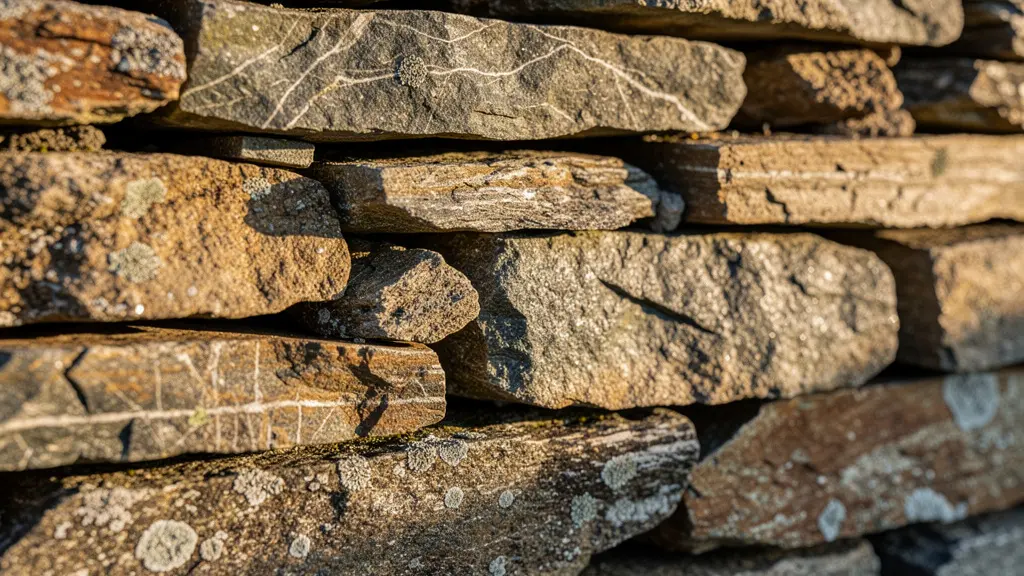
Furthermore, stone offered superior durability in a region that, while arid, experiences more rainfall and occasional flash flooding than the coast. Coral block, being more porous, is less suited to withstand running water and harsher winter conditions. The builders of Hatta were practical engineers; they used the most effective and durable material that their immediate environment provided. Their choice of stone over mud-brick or coral was a deliberate and intelligent decision rooted in the principles of climatic adaptation and resource availability. Visiting Hatta after seeing the coastal and oasis sites provides a complete picture of how Emirati builders masterfully adapted their techniques to diverse local conditions.
Key Takeaways
- The UAE’s heritage architecture is a masterclass in passive cooling and climatic design, not just defensive construction.
- Understanding the ‘why’ behind material choices (mud-brick in Al Ain, stone in Hatta) reveals a deep environmental intelligence.
- To gain a full perspective, a history enthusiast should compare the ‘museum-piece’ feel of Al Fahidi with the ‘living heritage’ of Sharjah.
Why a Day Trip to Sharjah Heritage Area Is Essential for History Buffs?
After exploring the military and engineering prowess of Al Ain’s forts, a day trip to the Sharjah Heritage Area becomes an essential intellectual conclusion to a tour of UAE history. While Al Ain speaks of defense and survival in the oasis, Sharjah tells the story of a thriving maritime, cultural, and commercial hub. It offers a different, yet equally vital, dimension of the nation’s past. Its importance is not just historical but contemporary; it is a place where heritage is practiced, not just preserved. This commitment was globally recognized when Sharjah was officially recognized as a UNESCO Creative City for Crafts and Folk Art in 2019.
For a history buff, this designation is significant. It signals that Sharjah offers more than just restored buildings; it provides access to the living traditions and intangible heritage of the region. A visit here allows one to witness craftspeople at work, engage with the bustling commerce of the Souq Al Arsah, and understand the cultural context that shaped the Emirates. The emirate has curated a dense and interconnected museum ecosystem within its heritage area, allowing a visitor to layer their understanding of history in a single, walkable district. You can move from the history of defense at Al Hisn Fort to the legacy of pearling at the Maritime Museum, all within minutes.
This “living heritage” approach, as discussed, stands in contrast to other models. It makes Sharjah an indispensable stop because it completes the historical narrative. It connects the inland resilience seen in Al Ain with the coastal cosmopolitanism that defined the region’s relationship with the wider world. To visit Al Ain without seeing Sharjah is to read only half the story.
A focused itinerary can provide a comprehensive overview:
- Begin at Al Hisn Fort Museum to understand Sharjah’s own history of maritime defense and its early interactions with colonial powers.
- Visit the Sharjah Maritime Museum to dive deep into the pearling heritage and the complex legacy of the “Pirate Coast.”
- Explore the Sharjah Heritage Museum, housed in beautifully restored merchant houses, for detailed displays on traditional Emirati life.
- Tour the magnificent Sharjah Museum of Islamic Civilization for a comprehensive overview of regional cultural and scientific history.
- Conclude your day in the Heart of Sharjah’s working souqs, experiencing living heritage firsthand by interacting with active craftspeople and merchants.
By combining a visit to the powerful forts of Al Ain with the vibrant cultural heart of Sharjah, the history enthusiast can construct a far more nuanced and complete understanding of the ingenuity and resilience that has shaped the UAE.