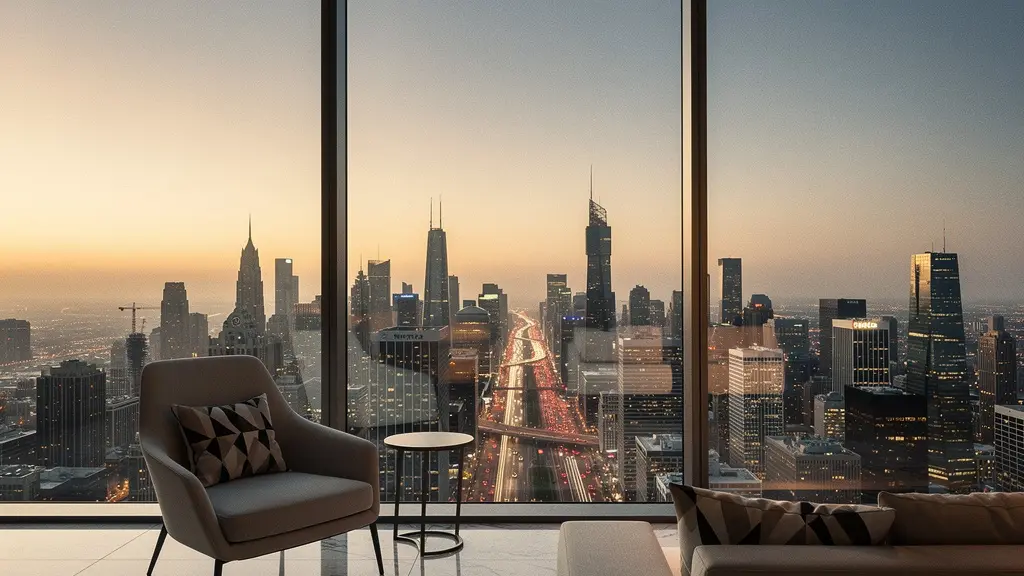
Securing a high-floor room isn’t about luck or simply asking; it’s about understanding the hotel’s hidden operational logic.
- Factors like elevator commute time and window cleaning schedules influence room allocation more than you think.
- Strategic requests (e.g., specifying a quieter side over just a “high floor”) have more leverage with the front desk.
Recommendation: Treat your booking as a strategic brief, not a simple request, by using the insider insights in this guide to influence the hotel’s decision-making.
For any discerning traveler, the promise of a high-rise hotel isn’t just a bed for the night; it’s the sprawling cityscape, the horizon-touching sunset, and the feeling of floating above the urban hustle. Yet, many arrive only to be assigned a room on the 15th floor, their panoramic dreams dashed. The common advice is frustratingly passive: “add a note to your booking,” “ask nicely at check-in,” or “hope for an upgrade.” These approaches treat room allocation like a lottery, leaving your experience to chance.
From my side of the front desk, I can tell you there’s a better way. The key isn’t about hope; it’s about strategy. Hotels operate on a complex ‘operational calculus’—a mix of logistics, staffing, and engineering realities. Understanding this internal logic is your most powerful tool. It allows you to transform a vague preference into a compelling, practical request that the hotel is motivated to fulfill. This isn’t about demanding; it’s about aligning your desires with the hotel’s operational flow.
This guide will pull back the curtain on that calculus. We’ll explore why a room on the 70th floor can impact your schedule, how your choice of view affects your sleep, and the crucial questions to ask about a district’s walkability. We will even delve into easily overlooked details like window cleaning schedules and the physics of glare-free photography, giving you the insider knowledge to make your high-floor request not just heard, but prioritized.
To navigate these strategic choices effectively, this article breaks down the essential factors you need to consider. The following sections will equip you with the insider knowledge to make your next high-rise stay a guaranteed success.
Summary: A Strategic Guide to High-Rise Hotel Bookings
- Why Can Staying on the 70th Floor Add 15 Minutes to Your Commute?
- Sea View or City View: Which Side Is Quieter at Night?
- DIFC or Downtown: Which District Is Better for Walking to Meetings?
- The Curtain Mistake: Checking the Window Cleaning Schedule
- Open Balcony or Sealed Window: Which High-Rise Hotels Allow Fresh Air?
- How to Choose Between Level 124 and Level 148 at Burj Khalifa for Sunset?
- How to Photograph Glass Buildings Without Glare Ruining the Shot?
- Fountain View or Skyline View: Which Table Seat Is Worth the Premium?
Why Can Staying on the 70th Floor Add 15 Minutes to Your Commute?
The allure of a top-floor suite is powerful, but few guests consider the logistical reality of the ‘vertical commute.’ In a supertall skyscraper, reaching your room isn’t as simple as hopping into an elevator. To manage traffic and energy, these buildings use complex zoned elevator systems, often requiring you to take one bank of elevators to a ‘sky lobby’ and then transfer to a second, local bank serving the upper floors. During peak morning and evening hours, this can easily add 10-15 minutes to your journey from the lobby to your room door.
This isn’t just a minor inconvenience; for a business traveler with a tight schedule, it’s a significant time cost. Hotels at the top of mixed-use towers are prime examples. The Ritz-Carlton in Hong Kong, occupying floors 102 to 118 of the ICC, and the Signiel in Seoul’s Lotte World Tower (floors 87-101) both exemplify this challenge. While the views are unparalleled, navigating their elevator systems during rush hour requires strategic planning.
So, how do you mitigate this? Think like a logistician. If your schedule is packed, a room on a lower floor of the high-zone (e.g., floor 55 instead of 75) might offer 95% of the view with 50% of the travel time. When booking, instead of just asking for the “highest floor possible,” you can make a more strategic request: “I’d prefer a high-floor room that doesn’t require an elevator transfer,” or “Could you place me on the lowest floor of the highest elevator zone?” This shows the front desk you’ve considered the building’s operations, making your request far more compelling.
Sea View or City View: Which Side Is Quieter at Night?
Choosing between a glittering city view and a tranquil sea view seems like a purely aesthetic decision. However, from an operational and experiential standpoint, the choice has significant implications for your sleep quality. At extreme heights, the factors that disrupt sleep are different. It’s not just about street-level sirens; it’s about wind, ambient light, and the very structure of the building.
High-end hotels invest heavily in mitigating these issues. For instance, the Shangri-La at The Shard in London, on floors 34 to 52, uses advanced window engineering to minimize both light intrusion from the city and wind noise from over the Thames. Your choice of room orientation plays directly into these environmental factors. A sea-facing room may be free from urban light pollution, but it could be more exposed to the low-frequency humming of high winds against the facade. Conversely, a city-facing room is often more sheltered from wind but is subject to the persistent urban glow that can affect sleep.
To make an informed decision, you need to weigh the specific variables of your location. The following table breaks down the key factors to consider when you’re more than 50 floors up.
| Factor | Sea View | City View |
|---|---|---|
| Wind Noise | Higher exposure to prevailing winds, potential for low-frequency humming | More protected by adjacent buildings, reduced wind exposure |
| Light Pollution | Minimal ambient light, ideal for sleep quality | Persistent urban glow affecting melatonin production |
| Morning Sun | Direct eastern exposure causing early glare | Filtered light through urban canyon effect |
| Construction Noise | Lower risk of adjacent development | Higher probability of nearby high-rise construction |
| Emergency Vehicle Sounds | Minimal street noise penetration | Occasional siren echoes between buildings |
When you book, specifying your priority—”I’d prefer a room on the quietest side of the building” or “a room with minimal light pollution”—gives the front desk a concrete parameter to work with. This is far more effective than a generic “sea view” request and demonstrates that you are a discerning guest who values the quality of your stay.
DIFC or Downtown: Which District Is Better for Walking to Meetings?
For a business traveler, the choice of hotel district is paramount. In a sprawling modern metropolis like Dubai, deciding between two powerhouse districts such as DIFC (Dubai International Financial Centre) and Downtown is a critical strategic move. On a map, two points may look close, but the reality of ground-level (and above-ground) navigation can make or break a tight meeting schedule. True walkability in these environments isn’t about sidewalks; it’s about a network of climate-controlled walkways, sky-bridges, and direct metro connections that allow you to bypass street-level heat and traffic entirely.
The best district depends entirely on the location of your meetings. DIFC is a master-planned financial hub with an exceptional network of internal, air-conditioned paths connecting offices, hotels, and restaurants. Downtown, while home to iconic landmarks, can be more fragmented for pedestrian business travel. The key is to analyze your “door-to-meeting” time, which includes the elevator descent, lobby navigation, and access to transport links. A hotel with a dedicated business entrance or a direct basement connection to a metro line can save you precious minutes.
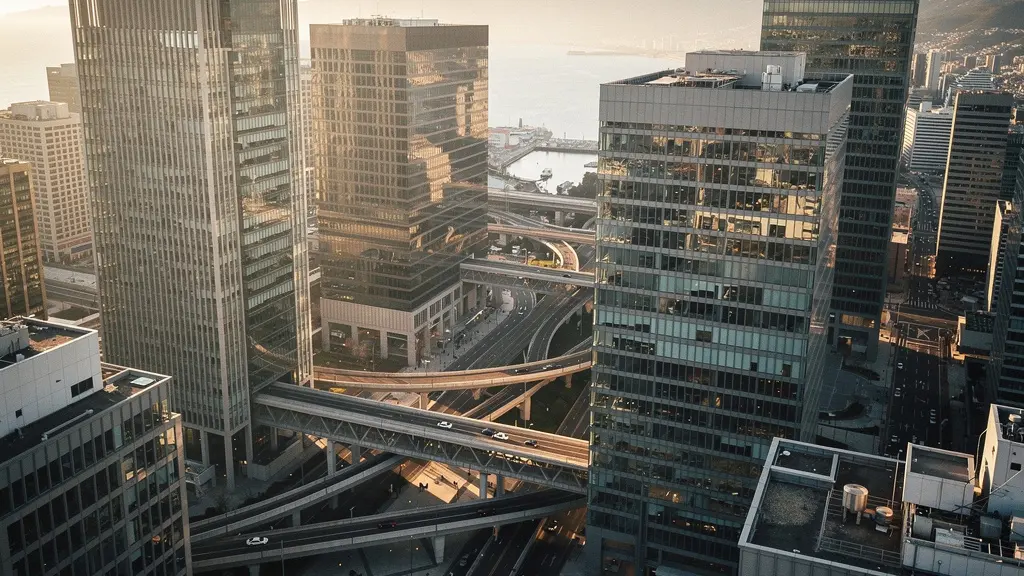
As the aerial perspective above illustrates, modern business districts are designed as interconnected ecosystems. Before booking, your goal should be to map out this system. Ask the hotel concierge for a map of connected walkways or for advice on the most efficient pedestrian route to your meeting locations. This proactive approach shows you’re a serious business traveler and can often lead to better room placement and service.
Your District Accessibility Checklist
- Map all climate-controlled walkways within a 500m radius of your hotel using building connectivity diagrams.
- Calculate total door-to-meeting time including elevator descent, lobby navigation, and taxi pickup zones.
- Identify hotels with dedicated business entrances that bypass main tourist lobbies.
- Check for direct metro connections from basement levels, avoiding street-level access.
- Verify late-night transport options including 24-hour taxi stands and ride-hailing pickup points.
The Curtain Mistake: Checking the Window Cleaning Schedule
Here’s an insider tip that virtually no traveler considers: the window cleaning schedule. You’ve successfully secured a stunning corner suite on the 65th floor, dreaming of waking up to a panoramic sunrise. Instead, you’re awakened by the gentle hum of the Building Maintenance Unit (BMU) as a cleaning cradle descends directly outside your window, obscuring your multi-million-dollar view for the next several hours. You are forced to keep the curtains closed for privacy, completely negating the primary benefit of the room. This is the ‘Curtain Mistake.’
Exterior facade cleaning is a routine and essential part of supertall building operations. For guest-facing windows, patterns observed at major skyscraper hotels worldwide show that management often increases cleaning frequency in the weeks leading up to peak seasons to ensure pristine views. While necessary, this can directly conflict with your stay. A hotel will rarely, if ever, volunteer this information at booking.
The solution requires proactive communication, not with the reservations team, but directly with the hotel’s engineering or maintenance department. They manage the BMU schedule and are the only ones who can give you a definitive answer. Here’s a script you can adapt to take control of the situation:
- 48 hours before arrival, call the hotel’s main line and ask to be connected to the Engineering Department. Avoid the general reservations line, as they won’t have this information.
- Use a clear and specific script: “Hello, I have a confirmed reservation for [dates] under the name [Your Name]. I’ve booked a [room category] specifically for the view. Could you please confirm if there is any scheduled facade maintenance or window cleaning on the side of the building where my room is located during my stay?”
- Document the response. If they confirm no cleaning is scheduled, you have peace of mind. If there is, you can request a room on a different facade of the building at check-in, referencing your conversation.
This simple, two-minute phone call elevates you from a passive guest to a proactive planner. It demonstrates an unparalleled level of detail and respect for the hotel’s operations, making the front desk far more likely to accommodate your requests.
Open Balcony or Sealed Window: Which High-Rise Hotels Allow Fresh Air?
For many guests, the ability to step out onto a balcony for a breath of fresh air is a non-negotiable part of the luxury hotel experience. However, as buildings climb higher, the rules of physics and safety take over. You’ll find that the vast majority of rooms in supertall skyscrapers feature permanently sealed windows and no balconies. This isn’t a cost-cutting measure; it’s a critical engineering and safety requirement.
The reasons are twofold: wind pressure and safety. At several hundred meters up, wind forces can be immense, making a standard operable window or balcony door a significant structural and safety hazard. Furthermore, liability and insurance regulations are incredibly strict. As a result, architectural standards for supertall buildings generally prohibit operable windows in hotels above 20-25 floors. This means that if ‘atmospheric access’ is a priority for you, you must specifically seek out hotels that have engineered unique solutions to provide it.
Some innovative properties have risen to the challenge. The Grand Hyatt Shanghai, located within the Jinmao Tower, offers a stunning example. While the rooms themselves have sealed windows, the hotel provides an unparalleled outdoor experience with its 88th-floor Skywalk. This attraction allows guests to strap into a safety harness and walk on a glass platform around the building’s spire, over 1,100 feet in the air. It’s a brilliant way to deliver that thrilling open-air sensation without compromising the safety of individual rooms.
When searching for a hotel, if a balcony is a must-have, you’ll need to filter your search specifically for properties that advertise this feature, and you’ll likely be looking at buildings under 30 stories. For a true high-rise experience, you must adjust your expectations and look for hotels that offer controlled open-air experiences like rooftop bars, observation decks, or specialized attractions like the Skywalk.
How to Choose Between Level 124 and Level 148 at Burj Khalifa for Sunset?
A sunset visit to the Burj Khalifa is a quintessential Dubai experience, but the choice between the “At the Top” observation deck (Levels 124/125) and the premium “At the Top, SKY” (Level 148) can be confusing. The price difference is significant, and the right choice depends on your priorities: crowd tolerance, photography needs, and the specific kind of sunset experience you’re after. Level 148 is not just “higher”; it offers a fundamentally different, more exclusive experience.
At 555 meters, Level 148 provides a slightly wider horizon and, more importantly, a capped attendance policy. This means more personal space, less jostling for a spot by the window, and a calmer ambiance. For photographers, this extra room is crucial for setting up equipment. Level 124/125, while still breathtaking at 452 meters, has a much higher capacity and can feel crowded during the popular sunset slot. The key is to understand that you’re paying a premium not just for altitude, but for exclusivity.
This comparative table highlights the key differences to help you decide which ticket offers the best value for your specific goals.
| Factor | Level 124 (452m) | Level 148 (555m) |
|---|---|---|
| Horizon Distance | ~76 km visibility | ~84 km visibility |
| Sunset Timing Difference | Standard sunset time | 1-2 minutes later sunset |
| Crowd Density | Higher visitor capacity, tighter viewing positions | Capped attendance, more personal space |
| Best Months | Ocean-set months (better direct view) | Skyline-set months (layered silhouette drama) |
| Photography Space | Limited tripod room during peak | Adequate space for equipment setup |
| Prime Booking Time | 45-60 minutes before calculated sunset | 45-60 minutes before calculated sunset |
To maximize your visit, a strategic approach to timing is essential. Don’t just book the generic “sunset” slot. Use a sunset calculator app for your specific date and book your entry for 45-60 minutes *before* that time. This allows you to see the city in daylight, enjoy the golden hour, witness the sunset, and watch the city lights begin to twinkle below. During peak season, allow for up to two hours of queueing time, or consider the SKY ticket for its queue-jumping privileges, which can be worth the premium alone.
How to Photograph Glass Buildings Without Glare Ruining the Shot?
You’ve secured the perfect room with a view of a stunning glass skyscraper, but every photo you take with your smartphone is ruined by distracting reflections and glare. This is a common frustration, but it’s solvable with a little bit of physics and the right technique. The key is to understand and manipulate the polarization of light. Reflected glare from non-metallic surfaces like glass is polarized, and you can reduce or eliminate it by shooting from a specific angle or using a filter.
The science behind this is known as Brewster’s angle. While the technical details are complex, the practical application is straightforward: based on principles applied to architectural photography, maximum glare reduction on typical commercial glass is achieved when your camera’s line of sight is at an angle of approximately 56° to the “normal” (a line perpendicular to the glass surface). You don’t need a protractor; just know that shooting straight-on (0°) produces the most glare, while shooting from an angle significantly reduces it.
You don’t need a professional DSLR to apply these principles. Modern smartphones, combined with an inexpensive accessory, can achieve incredible results. The most effective tool is a clip-on Circular Polarizing Lens (CPL) filter, which costs less than $15. This small filter screws onto a clip that fits over your phone’s camera, allowing you to rotate it to block the polarized, reflected light. By simply turning the filter while looking at your screen, you can watch the reflections on a glass building magically disappear.
Here is a simple anti-glare protocol you can use with just your smartphone:
- Change your angle: Before anything else, move your position. Avoid shooting a glass facade head-on.
- Use a clip-on CPL filter: This is the single most effective tool. Attach it and rotate it until the glare is minimized.
- Use your phone’s ultra-wide lens: If you have one (often labeled 0.5x), switching to it can naturally reduce angle-of-incidence glare.
- Underexpose slightly: In your phone’s Pro or Manual mode, reduce the exposure by one stop (-1 EV). This prevents the bright glare spots from being “blown out” (pure white) and allows you to recover shadow details later in an editing app like Snapseed or Lightroom Mobile.
- Time your shot: Use an app like Sun Surveyor to see when adjacent buildings might cast a shadow on the facade you want to photograph, eliminating direct sun and thus, glare.
Key Takeaways
- Securing a high-floor room is a game of strategy, not luck; understanding hotel operations gives you leverage.
- Factors beyond the view, like elevator time, noise profiles, and maintenance schedules, are critical for a successful stay.
- Specific, informed requests (e.g., “quietest side” instead of “sea view”) are more effective and better received by front desk staff.
Fountain View or Skyline View: Which Table Seat Is Worth the Premium?
At many iconic city-center restaurants, you’ll be presented with a choice: a standard table, or a ‘premium’ table with a direct view of a famous landmark, like the Dubai Fountain. These premium seats often come with a hefty minimum spend. From the front desk, we see countless guests pay this premium, only to be disappointed. The question is, are you paying for a consistent view or for a brief, intermittent show? The answer lies in the operational economics of the attraction itself.
Let’s take the Dubai Fountain as a prime example. It’s the world’s largest choreographed fountain system, a spectacular sight. However, the shows run in 30-minute intervals from 6 PM onwards, and each show lasts about 5 minutes. This means that over a typical 90-minute dinner, the main attraction is only active for about 10-15 minutes. As an analysis of the Dubai Fountain’s viewing economics reveals, you are paying a significant premium for a view that is “active” for only about 15% of your mealtime. For the other 85% of the time, a skyline view offers a more consistent and arguably more impressive panorama.
This doesn’t mean a fountain view is never worth it, but it requires a strategic approach. If the show is your absolute priority, then paying the premium for a front-row seat is the only way. However, if you want to be smarter with your money, consider alternatives. Often, “second-row” tables, slightly off-axis, offer 80% of the view for 0% of the premium. For a business dinner where conversation is key, the consistent, non-distracting ambiance of a skyline view is almost always the superior choice. The fountain shows can be surprisingly loud, with low-frequency vibrations felt through the window glass, interrupting discussion.
Before you commit to a premium, call the maître d’ 72 hours in advance to request a specific table number from the floor plan, or simply ask for the “best non-premium table with a partial fountain view.” This informed request will set you apart and often yield a fantastic result without the added cost.
Ultimately, securing the perfect high-rise experience comes down to shifting your mindset. Stop hoping and start planning. By understanding the hotel’s operational calculus and making informed, strategic requests, you place yourself in the top tier of guests—the ones whose preferences are not just noted, but actively catered to. Apply these insider strategies on your next trip, and you won’t just be booking a room; you’ll be orchestrating your ideal stay.