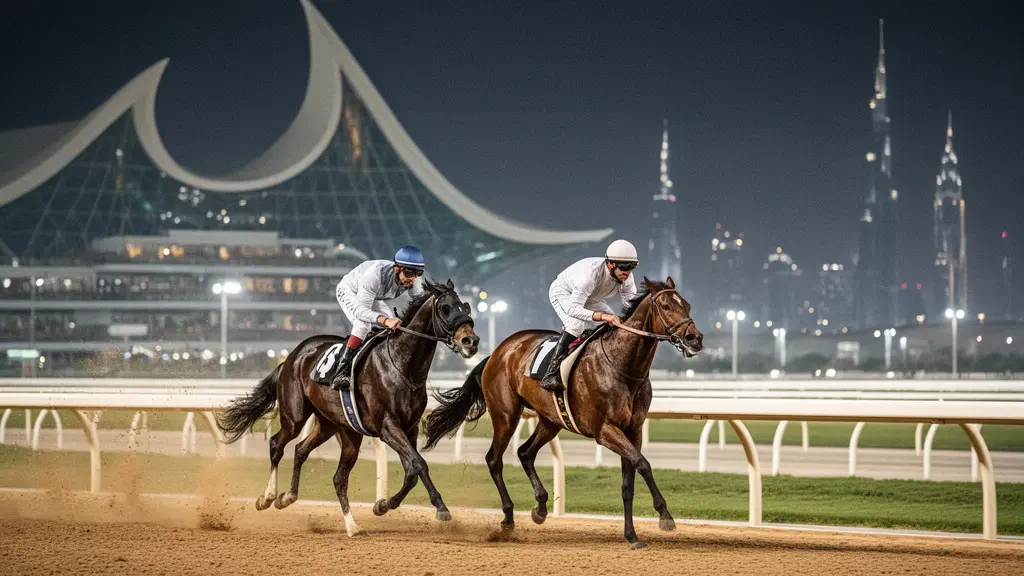
To a Western visitor, horse racing without betting can seem like a puzzle. The reality is that Dubai’s racing scene operates on a completely different economic and cultural model. It’s not a system with a missing piece; it’s a world where the immense prize money is funded by patronage and the ultimate “wager” is on global prestige and breeding excellence, not a winning ticket. This guide decodes that system for you.
For many Western tourists, a day at the races is synonymous with the rustle of betting slips, the flashing odds on a tote board, and the collective groan or cheer as a photo finish is announced. Stepping into the magnificent Meydan Racecourse in Dubai can therefore be a disorienting experience. The familiar infrastructure of gambling is conspicuously absent, leaving a first-time visitor with a fundamental question: if you can’t place a bet, what’s the point?
This question, while logical, misses the core of Dubai’s equestrian identity. The sport here isn’t simply racing *without* betting; it’s a spectacle built on an entirely different foundation. The immense wealth on display isn’t generated by punters but is fueled by a powerful patronage model. The entire ecosystem revolves around the pursuit of prestige, the validation of elite breeding programs, and the celebration of pure horsemanship. The absence of betting isn’t a limitation but a defining feature that fosters a unique atmosphere of sporting purity.
But if the entire financial and cultural model is different, how does it actually function? This guide breaks down the mechanisms that make Dubai a global horse racing hub. We will explore the legal nuances that permit prediction games while banning gambling, introduce the titan stables that dominate the scene, analyze how track surfaces influence strategy, and provide the essential etiquette to ensure you have a flawless experience. It’s time to look beyond the missing betting windows and discover the real sport of kings in the desert.
To get a feel for the on-track intensity and the world-class quality of the equine athletes, the following video offers a glimpse into the action from the Al Quoz Sprint, one of the premier turf races.
To fully grasp how this unique sporting culture operates, this article will guide you through its essential components. The following summary outlines the key areas we will cover, from the on-track rules to the prestigious traditions that surround the main events.
Summary: A Deep Dive into Dubai’s Unique Racing World
- Why Is the ‘Pick 6’ Prediction Game Legal While Gambling Is Not?
- Godolphin vs International Stables: Who Are the Giants of Dubai Racing?
- Dirt Track or Turf: How Does the Surface Affect the Race Speed?
- The Credential Mistake That Gets You Kicked Out of the Parade Ring
- Meydan Season: Why Are Thursday Night Races Better for Casual Viewing?
- When Does the President’s Cup for Falconry Take Place?
- Apron Views or Sky Bubble: Which Ticket Offers the Best Party Vibe?
- Understanding Falconry: Why Is It So Expensive and Prestigious in the UAE?
Why Is the ‘Pick 6’ Prediction Game Legal While Gambling Is Not?
The central distinction lies in the legal definition of “skill” versus “chance.” In the UAE, all forms of gambling based on luck are strictly prohibited. As legal experts point out, “Consequently, gambling, wagering, and betting of any kind are also illegal.” This creates a clear red line that race organizers cannot cross. However, competitions that are structured as tests of knowledge and analytical skill, with prizes awarded for correct predictions, are permitted.
This is where free-to-enter games like the popular “Pick 6” come in. In this format, participants are not staking their own money. Instead, they are using their knowledge of horse form, pedigree, and track conditions to predict the winners of six designated races. The prizes are sponsored and awarded to those who demonstrate the most skill. This reframes the activity from a game of chance to a competition of expertise. It encourages a deeper engagement with the sport itself, as success depends on diligent study rather than random luck.
Without odds boards and bookmakers, how do fans make informed choices? This is where publications like the long-running Al Adiyat Racing Plus become indispensable. Functioning as the key reference for local racing, it provides the official UAE racecard, detailed form guides, and expert analysis in both Arabic and English. For a visitor, this publication is the practical tool to decipher the field, understand the context of each horse’s performance, and make educated predictions, embracing the sport as an intellectual challenge rather than a gamble.
Godolphin vs International Stables: Who Are the Giants of Dubai Racing?
While international challengers fly in for major events, the Dubai racing scene is fundamentally dominated by one entity: Godolphin. This is the global thoroughbred breeding and horse racing stable founded by the Maktoum family, the rulers of Dubai. To understand Godolphin is to understand the “patronage model” that fuels the sport. They are not just a racing team; they are a vertically integrated system that breeds, develops, and campaigns elite horses across the globe.
The scale of their operation is immense. As a dominant force in breeding, Godolphin consistently ranks as a leading owner and breeder by earnings worldwide. This global footprint, as detailed in profiles by publications like America’s Best Racing, demonstrates a long-term strategy focused on building bloodlines and achieving international success. Their iconic royal blue silks are a constant presence in the winner’s enclosure at Meydan, representing the pinnacle of this prestige-driven system.
This creates a compelling dynamic on race nights, particularly during the Dubai World Cup. The competition becomes a fascinating clash between the established local superpower and the “fly-in, fly-out” challengers—elite international stables from the US, UK, Japan, and elsewhere. These international teams are drawn by the incredible prize money, which functions as the engine of Dubai’s prestige economy. For context, the 2025 Dubai World Cup night alone offers a staggering total prize pool of US$30.5 million, with US$12 million for the main event. For international owners, winning in Dubai isn’t just about the money; it’s about proving their horse can beat the best on the world stage.
Dirt Track or Turf: How Does the Surface Affect the Race Speed?
Meydan Racecourse is renowned for its two world-class racing surfaces—a traditional turf (grass) course and a specialist dirt track—and understanding their differences is key to appreciating the strategy of each race. The surface dictates everything from the type of horse that excels to the tactical decisions made by jockeys. As a general rule, dirt races tend to favor horses with early speed and the ability to maintain a high cruising velocity, while turf races often reward a powerful finishing kick.
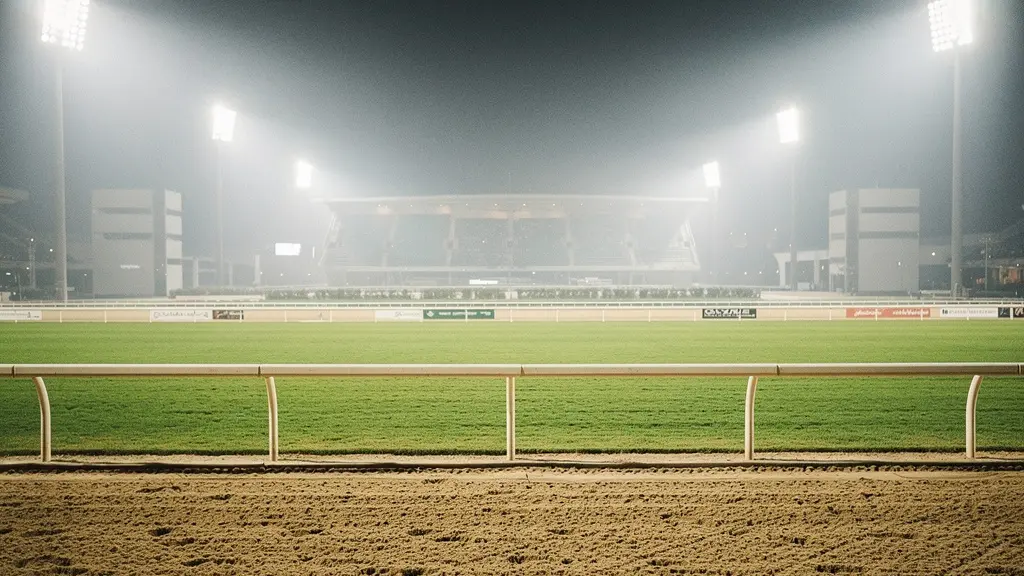
The dirt track at Meydan is known for being a fast and consistent surface. It produces thrilling, high-speed contests, epitomized by the Dubai World Cup itself. A look at the records shows just how fast these races are run; for instance, a winning time of around 2 minutes and 3 seconds is common for the 2000-meter (approximately 1 1/4 miles) feature. Horses that thrive on this surface are typically powerful, durable athletes, often bred and trained in North America where dirt racing is the standard.
In contrast, the lush, wide turf course is seen as a more “European” style of track. It’s home to major races like the Dubai Sheema Classic, a turf championship that attracts the world’s best grass specialists. Turf racing is often more tactical, with the pace sometimes being slower in the early stages before building to a dramatic crescendo. The forgiving nature of grass allows horses with a blistering turn of foot to conserve energy and unleash it in the final stretch. The two surfaces thus create two distinct, equally prestigious, championships within the same venue.
The Credential Mistake That Gets You Kicked Out of the Parade Ring
For any racing fan, getting access to the parade ring—the area where horses are saddled and paraded before a race—is a special privilege. It’s a chance to see these magnificent athletes up close. However, at Meydan, this area is strictly controlled, and a simple mistake with your credentials or behavior can lead to being politely but firmly turned away. The most common error visitors make is failing to understand the strict access protocols and the cultural importance of privacy.

Unlike some Western courses where access can be more relaxed, the parade ring at Meydan is reserved for owners, trainers, jockeys, and credentialed media or VIPs. Attempting to enter without the correct color-coded lanyard or pass will result in an immediate refusal. Furthermore, behavior within these privileged areas is closely monitored. Photography, in particular, is a sensitive issue. In the UAE, photographing people without their consent can be a serious offense. As local legal guidance highlights, privacy-related violations can carry steep penalties, including significant fines.
This doesn’t mean you can’t take photos, but it requires discretion. Pointing long lenses at private guests or connections is strongly discouraged. The golden rule is to be respectful and mindful that you are a guest in a high-status environment. If a staff member redirects you, comply immediately and without argument. Adhering to the dress code and behaving with decorum is essential to enjoying these exclusive areas.
Your Parade Ring Etiquette Checklist
- Dress for the venue level: Avoid shorts, jeans, and flip-flops if you plan to be in the Grandstand areas.
- Plan a ‘dress-up buffer’: Bring a light layer or shawl so you can quickly shift from casual outdoor zones to stricter hospitality/VIP spaces.
- Treat photography as permission-based: Avoid aiming long lenses at private guests; if people are clearly identifiable, assume consent is required.
- Keep accessories functional: Choose a secure hat or fascinator style that stays put in wind and crowds and won’t need constant adjustment.
- If staff redirect you, comply immediately: Parade ring access is managed tightly, and rules are enforced at the gate.
Meydan Season: Why Are Thursday Night Races Better for Casual Viewing?
The Dubai World Cup in late March is the dazzling finale of the racing season, an event of global significance with an electric atmosphere. However, for a casual visitor or someone new to horse racing, the sheer scale and intensity of the big night can be overwhelming. This is why the regular “Dubai Racing Carnival” meetings, often held on Thursday or Friday nights from January through March, offer a far better and more relaxed introduction to the sport.
These weekly meetings are the backbone of the Dubai season. While still featuring high-quality racing with international participation, the atmosphere is distinctly more laid-back. The crowds are smaller, making it easier to navigate the grandstand, find a good viewing spot, and soak in the ambiance without feeling rushed. This provides an excellent opportunity to learn the rhythm of a race day: watching the horses in the parade ring, studying the form in the racecard, and finding a position by the rail to feel the thunder of hooves as the field goes by.
From a practical standpoint, access and ticketing are simpler. It’s a chance to experience the world-class facilities of Meydan at a more human scale. For families or those wanting a social evening out, the Thursday night fixtures often have a festive, community feel. It’s the perfect environment to ask questions, understand the logistics, and appreciate the sporting spectacle without the high-stakes pressure of the World Cup. Think of it as the dress rehearsal that is often more enjoyable and instructive than the main performance itself.
When Does the President’s Cup for Falconry Take Place?
The prestigious President’s Cup for Falconry is typically held annually in late January or early February. As a cornerstone of the UAE’s winter heritage sports calendar, the event draws the best falconers and their prized birds from across the region to compete in a series of highly specialized speed and hunting trials. This isn’t just a sporting competition; it is a vibrant celebration of a tradition deeply woven into the cultural fabric of the nation.
Held in Abu Dhabi, the championship is a multi-day event that showcases the deep bond between a falconer and their bird. The competitions, known as *Telwah*, involve falcons chasing a lure over a fixed distance against the clock. The speeds are breathtaking, and the precision required from both the bird and its handler is immense. The event is divided into categories based on the species and age of the falcons, ensuring a level playing field for these elite avian athletes.
For a visitor, attending the President’s Cup offers a fascinating window into a world far removed from the modern cityscape of the UAE. It is a display of Bedouin heritage, skill, and a profound respect for nature. The event is steeped in tradition, and the prize money and prestige associated with winning are significant, reinforcing falconry’s status as a sport of kings, much like its equestrian counterpart. It represents a living link to the country’s past, celebrated with modern-day passion and professionalism.
Apron Views or Sky Bubble: Which Ticket Offers the Best Party Vibe?
Choosing the right ticket at Meydan Racecourse can completely shape your experience, especially if you’re looking for a specific atmosphere. For those seeking a vibrant, social, and energetic “party vibe,” the choice is clear: Apron Views. This area is located at ground level, running alongside the home straight of the track. It’s the heart of the action, combining close-up views of the racing with a lively, garden-party-style environment.
Apron Views is where you’ll find a more relaxed dress code, pop-up food and beverage stalls, live music or DJs between races, and a diverse, energetic crowd. It’s an outdoor experience where you can feel the buzz of the race day, mingle easily, and stand right by the rail as the horses thunder past the finish line. This proximity to the track creates an unmatched sensory experience. It’s less about formal dining and more about enjoying the social spectacle of racing in a dynamic setting. During the Dubai World Cup, this area hosts the “Style Stakes” fashion competition, further cementing its status as the social hub.
In stark contrast, the Sky Bubble offers an entirely different kind of experience. Located high up in the grandstand, this is a premium, climate-controlled hospitality area with panoramic, 360-degree views of the track and the Dubai skyline. The vibe here is far more exclusive, sophisticated, and subdued. It’s an all-inclusive package with gourmet food and premium beverages, geared towards corporate hosting or those seeking a luxurious, comfortable race day. While the views are spectacular, it is physically removed from the trackside energy, offering a more serene and observational experience rather than a party atmosphere.
Key Takeaways
- Dubai’s horse racing is funded by a “prestige economy” of patronage and sponsorship, not by a public betting market.
- Success is measured by global breeding influence and sporting excellence, making it a test of long-term strategy, not just a single race win.
- Cultural etiquette, particularly regarding dress codes and privacy in exclusive areas like the parade ring, is paramount and strictly enforced.
Understanding Falconry: Why Is It So Expensive and Prestigious in the UAE?
Falconry in the UAE is far more than a hobby; it is a profound cultural institution and a living symbol of national heritage. Its prestige is rooted in its deep connection to Bedouin history, where these magnificent birds were essential partners for hunting in the harsh desert environment. Today, that legacy has evolved into a highly sophisticated and professionalized sport, but the core values of skill, patience, and the deep bond between man and bird remain. This is why falconry commands such deep respect and status.
The expense associated with modern falconry stems from the same principles that drive elite horse racing: breeding, training, and welfare. The most prized falcons are elite athletes, often coming from meticulously managed breeding programs. Their value can reach astronomical figures, reflecting their pedigree and potential. Their care involves specialized veterinary attention, bespoke diets, and state-of-the-art training facilities. The investment is not just financial but also one of time and expertise, as a falconer dedicates years to developing a winning partnership with their bird.
The prestige is therefore a direct reflection of this immense commitment. Owning a champion falcon is a significant status symbol, signifying not just wealth but also a dedication to preserving a vital piece of Emirati culture. Competitions like the President’s Cup are the ultimate showcase of this dedication, where the “purse” is as much about honor and reputation as it is about the monetary prize. In this, falconry perfectly mirrors the prestige economy of horse racing, where the true reward is recognition and the continuation of a proud legacy.
Armed with this understanding of the culture, rules, and traditions, you are now equipped to experience and appreciate the rich tapestry of the UAE’s heritage sports not as a confused tourist, but as an informed observer.