
The UAE’s pre-oil wealth was built on the immense value of natural pearls, but this glittering industry was a paradox, sustained by a brutal economic system of systemic debt.
- Beneath the romantic image of daring divers lay a harsh reality of indentured servitude, where most workers were trapped in a lifelong cycle of advance loans they could never repay.
- The industry’s collapse in the early 20th century was triggered not just by the discovery of oil, but more immediately by the market disruption from Japanese cultured pearls.
Recommendation: To truly understand this foundational period of UAE history, one must look beyond the beautiful artifacts to the complex and often unforgiving economic machine that produced them.
Before the towering skyscrapers of Dubai and Abu Dhabi pierced the clouds, the economy of the Trucial States, the precursor to the modern UAE, was tethered not to oil derricks, but to the humble wooden dhow. For centuries, the rhythm of life along the Gulf coast was dictated by the pearling season. This industry was the undisputed engine of the region, a source of wealth that connected the small coastal communities to global luxury markets in London, Paris, and Mumbai. The common narrative presents a simple story: a difficult but noble life of diving, abruptly ended by the discovery of oil. But this view barely scratches the surface.
The real story of the pre-oil economy is far more complex and fascinating. It’s an economic paradox. How could an industry generating immense wealth leave its most vital workers—the divers themselves—in a state of perpetual poverty? The key lies not just in the dangers of the deep, but in the sophisticated financial structures on land. To understand how pearling truly shaped the UAE, we must look beyond the romanticized image of the lone diver and investigate the intricate, and often brutal, system of venture capital, debt, and international trade that defined an entire era. This is the story of how a nation’s identity was forged in the crucible of a high-risk, high-reward industry long before the first barrel of oil was exported.
This article will deconstruct the economic engine of the pearling era, from the systems that trapped its workers to the global forces that led to its decline. By exploring the museums and experiences available today, we can gain a richer understanding of this foundational period.
Contents: The Economic Legacy of UAE’s Pearl Trade
- Why Were Pearl Divers Often in Debt Despite the High Value of Pearls?
- How to Try Traditional Pearl Diving with a Weighted Rope?
- Natural or Cultured: Which Pearl Holds More Historical Value in the Gulf?
- The Shopping Mistake of Buying ‘Local’ Pearls That Are Actually Imported
- When to Visit the Pearl Museum to Get a Guided Story Tour?
- Why Are Traditional Fishing Techniques Disappearing from the Northern Coast?
- How to Navigate the Pearl Diving Dioramas at Dubai Museum effectively?
- Which Maritime Museum Offers the Best Interactive Experience for Kids?
Why Were Pearl Divers Often in Debt Despite the High Value of Pearls?
The central paradox of the Gulf’s pearling economy was the disconnect between the high value of the pearls and the chronic indebtedness of the divers. The system was engineered to keep labor cheap and controlled through a sophisticated, one-sided financial structure. While on paper up to 80% of an expedition’s profits were designated for the workers, the reality was starkly different. The entire system was predicated on debt. At the start of each four-month season (the *ghaus al-kabir*), divers and crew would receive an advance loan from their captain (*nukhada*) to support their families on land. This loan covered basic necessities but came at a high, unwritten cost.
This structure, sometimes known as the Takam system, functioned like a form of pre-modern venture capital where all the risk was borne by the labor. Wealthy merchants financed the captains, who in turn “owned” their crew through these advance loans. All pearls found were turned over to the captain, who sold them to the financiers. After the financier and captain took their shares, the remaining profit was tallied against the diver’s initial loan. Poor seasons, low-quality finds, or disputed valuations meant the debt was rarely cleared. Instead, it rolled over to the next season, growing larger and ensuring the diver was legally bound to the same captain year after year. This was not merely a social contract; it was legally enforced, as noted by historian Karim Aqil, who points out that the “Treaty of 1879 provided extradition among the sheikhdoms of runaway divers who were chronically in debt.” This created a cycle of indentured servitude from which escape was nearly impossible.
How to Try Traditional Pearl Diving with a Weighted Rope?
While the economic system was oppressive, the physical act of pearl diving was a feat of extraordinary human endurance and skill, relying on simple but effective tools. Modern experiences offer a glimpse into this world, but understanding the traditional equipment reveals the true nature of the work. Divers descended without any breathing apparatus, relying on a set of specialized gear and immense lung capacity to perform dozens of dives a day, each lasting up to two or three minutes.
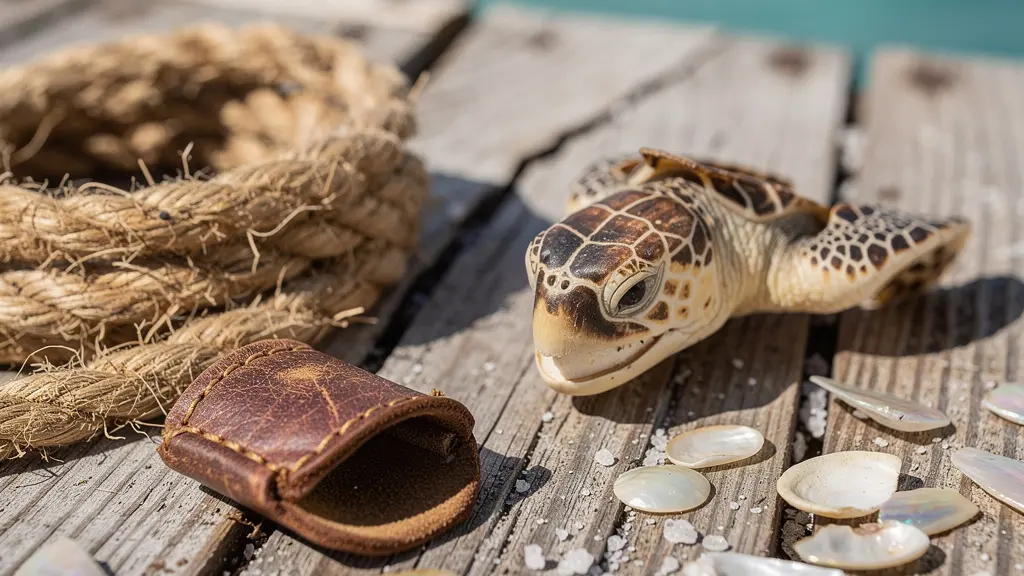
As the image above details, the tools were extensions of the diver’s own body. The primary equipment included the ftam, a nose clip carved from turtle shell or bone; a di’in, a woven bag worn around the neck to collect the oysters; and leather finger protectors to shield against sharp rocks and shells. For a rapid descent to depths of up to 25 meters, the diver used a zubail, a rope attached to a heavy stone (around 5kg) tied to their leg. A second rope, the yada, served as a lifeline, held by a tender on the dhow called the *saib*. A hard tug on this rope was the signal to be hauled back to the surface, gasping for air before the next plunge. This grueling routine was repeated from sunrise to sunset for the entire four-month season.
Action Plan: Understanding a Diver’s Day
- Equip yourself: Start by identifying the core tools: the ftam (nose clip) for breathing control, the di’in (neck basket) for collection, and the zubail (weighted rope) for descent.
- Master the technique: Understand the process. A diver would hyperventilate at the surface, then use the weighted zubail to plunge quickly to the sea floor.
- Feel the pressure: Imagine performing this up to 50 times a day, with each dive lasting 2-3 minutes, all while holding your breath and scanning for oysters.
- Trust your lifeline: Recognize the crucial role of the yada (safety rope) and the saib (rope-puller) on the boat, your only connection to the world above.
- Calculate the toll: Consider the physical strain of this routine over a 12-14 hour day, repeated for four months straight, to appreciate the immense human cost.
Natural or Cultured: Which Pearl Holds More Historical Value in the Gulf?
In the context of the Gulf’s history, the distinction between a natural and a cultured pearl is absolute. For centuries, the only pearls available were natural ones, formed spontaneously when an irritant lodged itself inside an oyster. These were considered a “gift from God” (*danat*) and their rarity dictated their immense value. This is the pearl upon which the entire pre-oil economy was built. The arrival of cultured pearls from Japan, however, marked the beginning of the end for this traditional industry. By the 1920s, Kokichi Mikimoto’s patented technique for inducing pearl formation in oysters flooded the global market with cheaper, more uniform, and readily available alternatives.
This technological disruption was devastating for the Gulf’s economy. While oil is often cited as the sole reason for the pearling industry’s demise, the collapse of the pearl trade began in the 1930s, well before oil revenues became significant. The global market, reeling from the Great Depression, could no longer sustain the high prices of natural pearls when a near-identical product was available for a fraction of the cost. The historical and cultural value of a natural Gulf pearl remains unparalleled, but its commercial viability was irrevocably destroyed.
| Aspect | Natural Gulf Pearls | Cultured Pearls |
|---|---|---|
| Formation | Spontaneous, ‘gift from God’ (danat) | Human-induced irritant insertion |
| Production Time | 7+ years natural growth | 2-5 years controlled cultivation |
| Historical Value | Extremely high, museum-quality | Commercial value only |
| Market Share Today | Less than 1% | Over 99% |
| Certification Required | Yes, gemological lab mandatory | Optional |
The Shopping Mistake of Buying ‘Local’ Pearls That Are Actually Imported
For the modern traveler exploring the vibrant souks of Dubai, the allure of purchasing a piece of local history is strong. However, this is where a critical misunderstanding often occurs. The term “local pearls” in a commercial setting today almost never refers to the natural Gulf pearls of historical significance. The natural oyster beds have been severely depleted or are located within modern oil fields, and commercial harvesting is no longer economically viable. The chance of finding a gem-quality natural pearl is so low that the cost of an expedition would far outweigh any potential return.
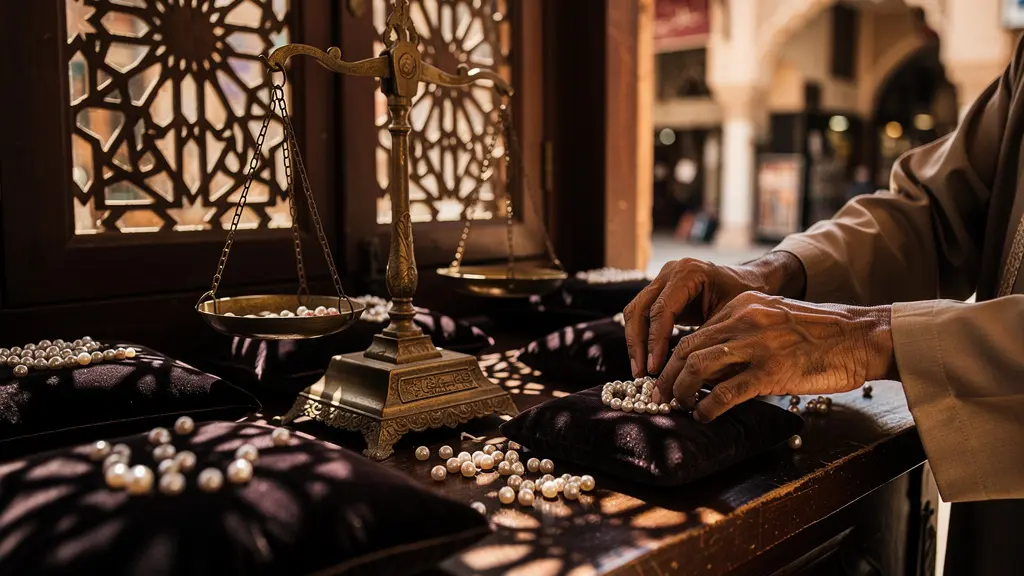
Consequently, the vast majority of pearls sold in the UAE today are cultured pearls imported from major production centers like China, Japan, and Australia. The “local” aspect refers to the fact that they are often assembled into jewelry within the UAE. While beautiful, these pearls do not carry the same historical weight or rarity as their natural counterparts. A discerning buyer looking for an authentic piece of history must be vigilant. The only way to guarantee the authenticity of a natural Gulf pearl is through a certificate from a recognized gemological laboratory. Without this documentation, it is safe to assume the pearl is cultured.
When to Visit the Pearl Museum to Get a Guided Story Tour?
To truly connect with the legacy of pearling, one must go beyond the souks and visit the institutions dedicated to preserving this history. The Dubai Pearl Museum, located in the National Bank of Dubai headquarters, offers one of the most significant collections in the world. It features the private collection of Sultan Bin Ali Al Owais, a descendant of pearl divers, whose family was deeply entwined with the industry. A visit here is a journey through the tools, the techniques, and the breathtaking beauty of the pearls themselves. Access is typically by appointment, so planning ahead is essential to ensure a guided tour is available to bring the exhibits to life.
For a more personal and narrative-driven experience, one must look to Ras Al Khaimah. Here, Abdulla Rashed Al Suwaidi, another descendant of a pearling family, has created a living history experience at Suwaidi Pearls. This is not a static museum but an active pearl farm that keeps the tradition alive. As described in a recent account:
Abdulla Rashed Al Suwaidi, founder of Suwaidi Pearls and descendant of traditional pearl divers, offers guided tours at the House of Pearls in Ras Al Khaimah. The experience includes live oyster opening demonstrations and storytelling about the ‘gift from God’ that shaped the UAE’s identity before oil.
– Sotheby’s Realty, The Journal
This experience offers a direct link to the past, told by those whose identities are still shaped by it. Visiting these sites provides a narrative context that transforms the pearls from simple gems into powerful symbols of a nation’s economic and cultural heritage.
Why Are Traditional Fishing Techniques Disappearing from the Northern Coast?
The pearling industry, a specialized form of maritime harvesting akin to fishing, did not fade away gently; it collapsed. This collapse had a catastrophic impact on the coastal communities of the northern emirates. At its zenith in the early 20th century, historical employment records show that 80,000 people—a significant portion of the male population—were employed in the pearl industry. When the market disintegrated due to the combined pressures of the Great Depression and the rise of cultured pearls, it triggered mass unemployment and economic devastation. This, more than anything, explains why the traditional techniques vanished so quickly. The profession was abandoned not out of choice, but out of necessity.
Furthermore, the romantic notion of pearling as a noble tradition is a modern construct. For the men who lived it, it was a life of extreme hardship with little reward. Professor Rob Carter, an expert on the region’s archaeology, shatters this myth with a stark dose of reality. As he stated in an interview with The National:
There was no sentimentality; they gave it up as soon as they could. For most pearl divers, you’d be stuck on a boat for basically four months, eating the lowest grades of foods that could be tolerated.
– Professor Rob Carter, The National
The disappearance of these techniques was not a loss of a beloved craft; it was an escape from a life of grueling labor and systemic exploitation. The arrival of opportunities in the nascent oil industry was not a replacement, but a deliverance.
How to Navigate the Pearl Diving Dioramas at Dubai Museum effectively?
The Dubai Museum, located in the Al Fahidi Fort, offers one of the most immersive introductions to the pearling era through its life-size dioramas. These exhibits are more than just static displays; they are carefully curated narratives designed to transport the visitor back in time. However, to extract their full meaning, one must approach them with the eye of a historian. Rather than a quick glance, a systematic viewing strategy can reveal the deep story of the industry. In 1905, revenue from pearl sales in Dubai was a staggering one million Rupees, and these dioramas show the human engine that generated such wealth.
Start by focusing on the individual artifacts. Examine the display of tools to understand their function before seeing them in context. Then, move to the large diorama of the dhow. Note the cramped conditions and the sheer number of men required to operate the vessel. Imagine the scene at the height of the industry, with nearly 300 dhows and 7,000 sailors operating out of Dubai Creek alone. Finally, study the underwater diorama of the diver. Pay attention to his expression, the simple tools, and the solitude of his task. To complete the experience, close your eyes and listen to the ambient soundscape—the creaking wood, the lapping waves, the calls of the crew—which adds a powerful layer of immersion. This mindful approach transforms a simple viewing into a historical investigation.
Checklist for a Curatorial Reading of the Pearl Diving Exhibit
- Isolate the tools: Start with the individual diving tools display to understand the specific functions of the ftam, di’in, and zubail before seeing them in use.
- Assess the scale: Move to the dhow model. Count the different crew positions and try to visualize 7,000 sailors on 300 similar dhows setting sail from Dubai Creek.
- Empathize with the diver: Study the diver diorama closely. Notice the cramped space, the simple equipment, and the facial expressions depicting the strain of up to 50 dives per day.
- Engage aurally: Take a moment to just listen to the ambient sounds with your eyes closed. The creaking wood and crew calls are designed to create a powerful mental immersion.
- Complete the economic loop: Find the pearl merchant’s chest display elsewhere in the museum, with its tiny, precise scales, to understand the final stage of the trade and complete the story.
Key Takeaways
- The pre-oil pearling economy was a paradox: an industry of immense wealth built on the systemic debt and indentured servitude of its divers.
- The industry’s collapse was a two-stage process: first, the market disruption by Japanese cultured pearls in the 1930s, followed by the rise of the oil economy.
- Understanding this history requires looking beyond romanticized artifacts to analyze the brutal but sophisticated economic systems that were in place.
Which Maritime Museum Offers the Best Interactive Experience for Kids?
Introducing younger generations to this complex history requires an engaging and interactive approach. While the Dubai Museum provides an excellent foundation for all ages with its atmospheric dioramas, several other institutions across the UAE specialize in making maritime history accessible and exciting for families and children. The key is to match the museum’s offerings to the age and interests of the child, whether they are fascinated by legends, technology, or hands-on experiences. For example, a trip to the Al Shindagha historic district might include storytelling sessions about Sinbad and pearling legends, perfect for younger children, while older kids might be captivated by virtual reality journeys or even the chance to dive for their own pearl.
A particularly noteworthy experience is the Abu Dhabi Pearl Journey, which combines a boat trip with historical storytelling. This 90-minute tour on a traditional dhow provides a tangible connection to the past, complete with Arabic coffee and tales from Emirati guides. It also provides context for incredible archaeological finds, such as the discovery in Abu Dhabi of the world’s oldest-known natural pearl, dating back 8,000 years. The choice of museum can transform a simple history lesson into a memorable adventure.
| Museum | Interactive Features | Best For Ages |
|---|---|---|
| Sharjah Maritime Museum | Virtual reality dhow journey, traditional boat models | 8-14 years |
| Abu Dhabi Pearl Journey | 90-minute traditional dhow experience, live demonstrations | 10+ years |
| Yas Waterworld Pearl Experience | Underwater tank diving for real pearls (keep what you find) | 12+ years |
| Dubai Museum | Life-size dioramas, ambient soundscapes, tactile displays | All ages |
| Al Shindagha Historic District | Storytelling sessions about Sinbad and pearling legends | 5-12 years |
To truly grasp the foundations of the modern UAE, the next logical step is to explore these museums and heritage sites not just as tourist attractions, but as archives of a complex economic and human story. Engaging with these exhibits with a critical eye is the best way to honor the legacy of those who built the nation’s first economy.
Frequently Asked Questions About the UAE’s Pearl History
Is this a natural or cultured pearl?
Natural Gulf pearls are extremely rare today. Most ‘local’ pearls in Dubai souks are cultured pearls imported from China, Japan, or Australia, then assembled locally into jewelry.
Can you provide a gemological certificate?
Authentic natural Gulf pearls must have certification from recognized gemological laboratories. Without this documentation, assume the pearl is cultured or imported.
Why aren’t natural Gulf pearls commercially harvested anymore?
Oyster beds are severely depleted, most historic diving sites are now within oil fields, and the economics don’t work – a diving expedition costs far more than the low probability of finding gem-quality pearls justifies.