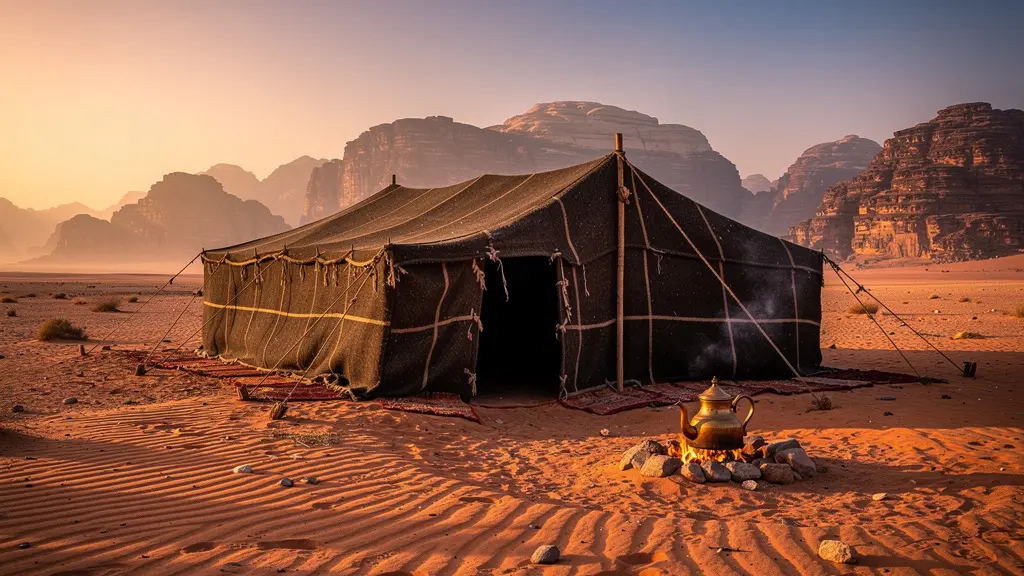
The key to an authentic Bedouin experience is not found in luxury camps, but in understanding the sophisticated systems that underpin their culture.
- Genuine hospitality, like the coffee ritual, is a complex social contract, not just a friendly gesture.
- Choosing small, family-run operations over mega-camps directly supports a living culture rather than a staged performance.
Recommendation: Seek experiences that allow you to learn a skill or share a story, as this is where true cultural exchange happens.
The image of the Bedouin is etched in the Western imagination: a solitary figure crossing a dune, the epitome of a simple, noble life. This romantic notion fuels a thriving tourism industry, promising travelers a night under the stars in a “traditional” desert camp. Yet, many return feeling they’ve witnessed a performance rather than a culture, a carefully curated show of camel rides and buffet dinners that lacks the very authenticity they sought. The frustration is palpable: how does one connect with a rich heritage without being funneled into a commercialized caricature?
The common advice—to “respect the culture” or “eat the local food”—is well-intentioned but falls short. It doesn’t equip you to discern a living tradition from a historical reenactment. The real answer lies not in finding a more rustic-looking tent, but in shifting your perspective entirely. It requires moving beyond the surface aesthetics of desert life and beginning to grasp the complex, resilient, and sophisticated systems that have allowed the Bedouin to thrive in one of the world’s harshest environments for centuries. This guide is built on that premise: to find authenticity, you must first learn what to look for.
This article moves past the romanticized facade to explore the core pillars of Bedouin life. We will examine the deep knowledge behind their survival skills, the intricate social codes embedded in their hospitality, and the economic realities that shape their present and future. By understanding these systems, you will be better equipped to identify and support experiences that honor a living culture, not just sell a fantasy of it.
Summary: How to Experience Authentic Bedouin Life Without Falling for Tourist Traps?
- Why Was Water Sourcing the Single Most Important Skill for Bedouins?
- How to Accept Arabic Coffee (Gahwa) Without Insulting Your Host?
- Private Farm Visit or Mega-Camp: Which Offers Real Insight into Bedouin History?
- The Myth of the “Simple Life” That Ignores the Bedouin Struggle
- When to Visit Heritage Festivals to Hear Nabati Poetry Recitals?
- Why Were Hatta Houses Built Using Stones Instead of Coral Blocks?
- Why Is Satellite Communication Essential in the Empty Quarter?
- How Pearl Diving Shaped the UAE Economy Before the Oil Boom?
Why Was Water Sourcing the Single Most Important Skill for Bedouins?
Before any discussion of hospitality or culture, one must start with the absolute foundation of desert life: water. The ability to find, manage, and defend water sources was not merely a skill for the Bedouins; it was the central organizing principle of their society. This intimate knowledge of the land, passed down through generations, involved reading subtle signs in the terrain, understanding seasonal rain patterns, and maintaining ancient wells. This is the bedrock of sophisticated survival, a deep ecological wisdom that far transcends the notion of a “simple” life.
This historical reliance on environmental knowledge has been violently confronted by modernity. The skill of finding water is rendered tragically moot when political lines are drawn in the sand. For example, in many parts of the Palestinian territories, the struggle for survival is defined by water access. A report on the plight of local Bedouins highlights a cruel irony: “Water pipelines run directly under many Bedouin homes, but Israel prohibits residents from using them. Instead, Bedouins must buy their water from a vendor and store it in tanks, often spending more than they can afford.” This modern reality underscores that water is, and always has been, about power and sovereignty, not just survival.
Understanding this deep history is the first step toward authentic engagement. It transforms your view of the desert from an empty landscape to a complex map of resources, historical rights, and modern-day struggles. It contextualizes the immense value placed on every drop and provides a profound respect for the resilience of a people whose most fundamental skill is now challenged by forces beyond their control.
How to Accept Arabic Coffee (Gahwa) Without Insulting Your Host?
If water is the basis of physical survival, Arabic coffee (Gahwa) is the lifeblood of social survival. To the uninformed visitor, the serving of tiny, bitter cups of coffee may seem like a simple gesture of welcome. To the ethnographer, it is a complex and highly codified ritual that reveals the Bedouin economy of obligation. This isn’t just about being friendly; it’s about enacting an ancient social contract. Accepting the first cup is to accept the host’s protection, and in turn, you are obligated to respect their home and customs.
The symbolism is rich and carries significant weight. As one cultural expert explains, the ritual has layers of meaning that a tourist might easily miss. A guest’s hesitation can signal a serious issue, turning a welcome into a negotiation. According to a guide on Bedouin culture, “If a guest doesn’t drink that cup right away, it becomes the ‘cup of the sword.’ This means this guest has come with a matter of urgencies, such as marriage or warfare, and they won’t drink the coffee until the request is met.” This single detail elevates the act from mere politeness to a pivotal moment of communication.
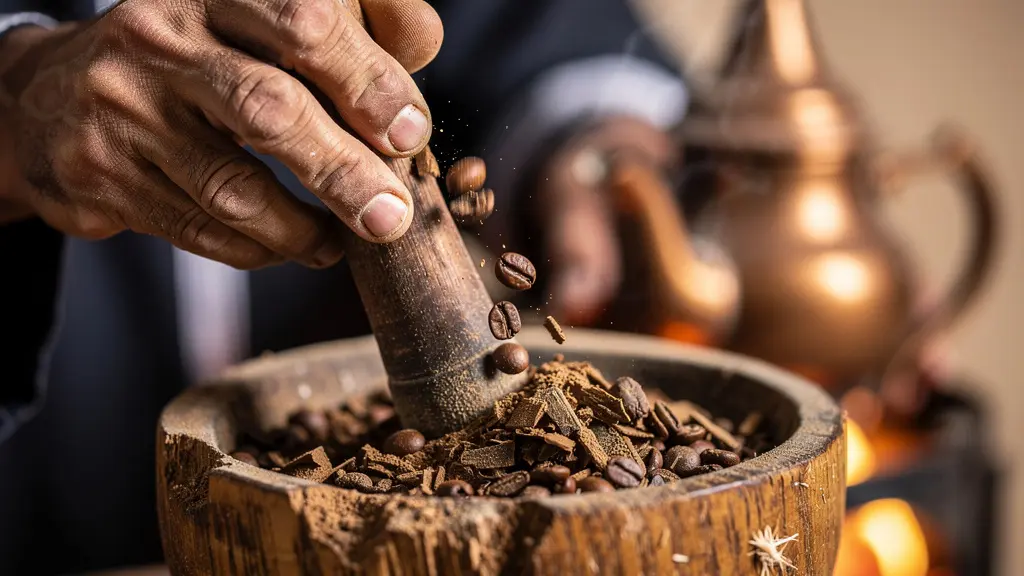
The ceremony is a performance of respect, with every element from the grinding of the beans to the way the cup is held carrying meaning. Understanding the basics is crucial to being a good guest. It shows you recognize you are participating in a tradition, not just consuming a beverage. The key is to observe, accept gracefully, and understand the non-verbal cues that signal you are finished.
Your Action Plan: The Coffee Cup Protocol
- Accept the first cup (findżan al thaif): This is the “guest cup.” Always accept it with your right hand to acknowledge the hospitality offered.
- Understand the second cup (findżan al saif): This “sword cup” symbolizes a bond of mutual protection between guest and host.
- Enjoy the third cup (findżan al kaif): The “pleasure cup” is for enjoyment and conversation. It is acceptable to stop after the first or third cup.
- Signal you are finished: When you’ve had enough, gently jiggle your empty cup from side to side when returning it to your host. This is the universal sign to stop pouring.
- Never refuse the first cup: Declining the initial offering without a very serious reason can be seen as a grave insult, suggesting you reject the host’s protection and goodwill.
Private Farm Visit or Mega-Camp: Which Offers Real Insight into Bedouin History?
Here lies the central dilemma for the conscientious traveler. The mega-camp, with its air-conditioned tents, scheduled belly-dancing shows, and sprawling buffets, offers comfort and entertainment. A private visit to a family-run farm or small camp offers something far more valuable but less predictable: reality. The distinction is one of performative vs. lived culture. One is a product designed for mass consumption; the other is an invitation, however brief, into a genuine way of life.
The economic model is often the clearest indicator. Many large-scale desert camps are owned by outside investors, with profits leaving the local community. The “Bedouins” you meet may be employees following a script. In contrast, smaller, family-run operations put money directly into the hands of the people whose culture is being shared. This is not charity; it is a fair exchange that empowers communities to preserve their heritage on their own terms. As a case study from Wadi Rum illustrates, visitors staying with a local family gained profound insights through “home-cooked meals prepared by family members and stories about the connection between traditional and modern life.” This is the essence of authentic exchange.
To make an informed choice, one must compare the underlying values of each experience. The mega-camp sells a fantasy of the past; the family visit shares the reality of the present, which is always a negotiation between tradition and modernity.
This table breaks down the fundamental differences, drawn from an analysis of different tourism models in the region.
| Aspect | Family-Run Operations | Commercial Mega-Camps |
|---|---|---|
| Economic Impact | Direct income to local families | Often owned by outside investors |
| Cultural Exchange | Genuine interaction with Bedouin hosts | Staged performances for tourists |
| Accommodation | Simple traditional tents | Climate-controlled luxury pods |
| Activities | Skill transmission (tracking, weaving) | Entertainment shows |
| Authenticity | Living culture and adaptation | Historical reenactment |
The Myth of the “Simple Life” That Ignores the Bedouin Struggle
The most pervasive and damaging tourist-facing myth is that of the “simple life.” This romantic notion paints a picture of a carefree existence, free from the stresses of the modern world. It is an orientalist fantasy that completely erases the harsh realities and immense pressures faced by Bedouin communities today. From an ethnographic standpoint, it’s crucial to dismantle this idea and replace it with an appreciation for cultural resilience in the face of profound struggle.
The reality is that pastoral nomadism is an economically precarious existence in the 21st century. Political borders have restricted traditional grazing routes, climate change has made rainfall less predictable, and integration into the cash economy has created new dependencies. Far from being a simple life, it is one of constant economic calculation and hardship. For instance, detailed studies reveal that only 30.1% of Bedouin sheep keepers can actually cover their household expenses from their herds alone. This single statistic shatters the image of the self-sufficient nomad.
This economic pressure is a primary driver for entering the tourism industry. For many, it’s not a choice but a necessity. In Jordan’s iconic Wadi Rum, for example, a survey revealed that a staggering 76% of the local Bedouins rely on tourism as their sole source of income. Understanding this context changes everything. It reframes your visit not as a retreat into a simpler time, but as participation in a modern economic ecosystem. It encourages you to ask more critical questions: Who profits from my visit? Does this experience contribute to the community’s well-being or simply perpetuate a myth?
When to Visit Heritage Festivals to Hear Nabati Poetry Recitals?
Beyond survival and social codes lies the realm of high art, and for the Bedouin, its ultimate expression is Nabati poetry. This rich oral tradition, often called “the people’s poetry,” is the primary vehicle for history, philosophy, and social commentary. It is a living art form, not a relic. To hear it recited is to gain access to the soul of the culture. But you are unlikely to stumble upon it during a standard desert tour. Engaging with it requires intentionality.
The value of this poetry is not lost on scholars. The work of researchers like Marcel Kurpershoek, who spent years in the desert documenting oral traditions, has been crucial in preserving and showcasing this heritage. His journey, featured in an Arabic TV series, saw him living with tribes and learning not just the poems but the dialect and context, demonstrating that “he speaks the Bedouin dialect and recites Bedouin poetry, demonstrating how this art form preserves cultural heritage.” This academic interest highlights the depth and complexity of what might otherwise be dismissed as folk songs.
For the traveler, accessing this art form has become easier in the modern era, thanks to the very “urbanized” Bedouins who are determined to keep it alive. Major heritage festivals, such as the Al Dhafra Festival in Abu Dhabi or the Janadriyah Festival in Saudi Arabia, are prime venues. These events, typically held in the cooler winter months (October to March), are organized spectacles but are created by and for the culture itself. They are not primarily for foreign tourists, which is precisely what makes them authentic. Here, you can witness poetry competitions, hear recitals, and see the art form celebrated with passion.
For those unable to attend festivals, technology provides another avenue, demonstrating the culture’s incredible adaptability:
- Watch televised competitions like ‘Million’s Poet’, a hugely popular show often dubbed the “American Idol of Arabic poetry.”
- Search for Bedouin YouTube channels where contemporary poets share their work.
- Attend cultural centers in cities like Abu Dhabi or Doha, which often offer classes and recitals.
- Join WhatsApp groups, a primary vector for the viral spread of new and classic Nabati poetry within the community.
Why Were Hatta Houses Built Using Stones Instead of Coral Blocks?
Architecture is a physical manifestation of a culture’s relationship with its environment. Along the Arabian Gulf coast, traditional buildings were often constructed from coral stone, a material readily available from the sea. Yet, a short drive inland to the Hajar Mountains, in places like Hatta, the architecture shifts dramatically. Here, the homes are built from rough-hewn mountain stone. The reason is a masterclass in passive climate design and using what the land provides.
The choice of stone over coral was not an aesthetic one; it was a matter of thermal dynamics. Stone has a high thermal mass, meaning it absorbs heat slowly during the day and releases it slowly at night. In a mountain climate with cooler nights than the humid coast, this was a brilliant adaptation. The thick stone walls would soak up the intense daytime sun, keeping the interior cool. As the temperature dropped after sunset, the stones would gradually radiate that stored heat back into the house, providing warmth during the chilly mountain night. This created a naturally regulated living space, a form of pre-modern air conditioning.
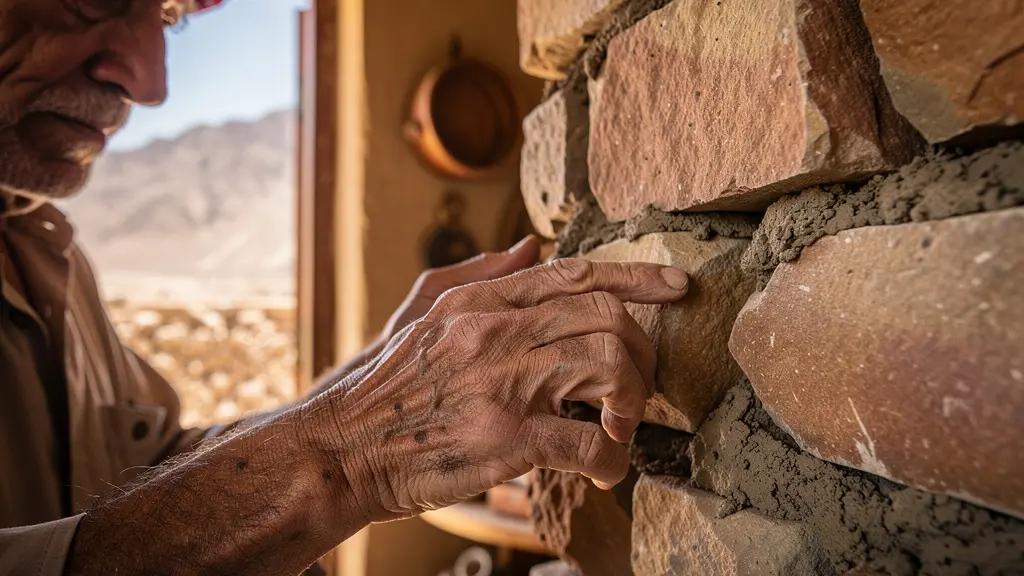
Furthermore, the construction method itself was part of this sophisticated system. The stones were typically bound with a mud and straw mortar, and the roofs were made from palm fronds (barasti) and wood. This use of local, sustainable materials demonstrates a zero-waste, deeply ecological building philosophy. Visiting restored heritage areas like the Hatta Heritage Village allows you to walk through these structures and feel the difference in temperature, gaining a tactile understanding of this architectural wisdom. It’s a powerful reminder that “primitive” and “sophisticated” are not opposites; here, they are one and the same.
Why Is Satellite Communication Essential in the Empty Quarter?
The final frontier of the romantic Bedouin image is that of isolation. But this, too, is a misunderstanding. Bedouin society was never truly isolated; it was a network. Survival in the vastness of a place like the Rub’ al Khali (the Empty Quarter) depended not on rugged individualism, but on a robust social safety net. Knowing which clans were where, where water could be found, and who could offer aid was critical. The challenge was one of communication across vast distances.
Enter modern technology. Far from destroying the culture, new tools are often adopted to reinforce ancient social structures. The pickup truck replaced the camel as a more efficient way to move between family groups, but the visitation schedule remained. And today, the satellite phone has become an indispensable tool. It is the modern-day talking drum, a way to activate the social network instantly across hundreds of kilometers of empty desert. In this context, a satellite phone is not a luxury or a sign of westernization; it is a critical piece of survival equipment that serves a deeply traditional purpose.
Case Study: Modern Tools, Traditional Networks
The adoption of technology is not a sign of cultural dilution but of adaptation. “Roads have decreased Bedouin isolation and increased contacts with outsiders. Radios and television have brought new ideas… Today, many Bedouins in Oman commute between their desert camps and their jobs in the oil fields in pick-up trucks and SUVs.” This demonstrates a fluid identity, where one can be both a desert dweller and an oil field worker, using modern tools to maintain a connection to traditional homelands and family networks.
As one desert survival expert astutely noted in an analysis of modern Bedouin communication systems, the device is a modern expression of an age-old need. The expert states, “The satellite phone is the modern tool to activate this age-old social safety net instantly across hundreds of kilometers.” This concept of cultural resilience—using the new to preserve the old—is perhaps the most important and least understood aspect of contemporary Bedouin life. It is the opposite of the static, unchanging image sold to tourists.
Key takeaways
- Authenticity is found in understanding the ‘why’ behind traditions, not just observing them.
- Economic reality, not romanticism, drives much of the Bedouin tourism industry; choose to support communities directly.
- Bedouin culture is not a static relic but a dynamic, resilient force that creatively adapts to modernity.
How Pearl Diving Shaped the UAE Economy Before the Oil Boom?
Long before the first tourist camp was pitched or the first barrel of oil was exported, the economy of the Arabian Gulf coast was driven by a different, perilous harvest: pearls. For centuries, the entire social and economic fabric of the coastal tribes, many of whom had Bedouin roots and maintained ties to the interior, was organized around the pearling season. This history is crucial because it dispels the myth of a people isolated from the world until the 20th century. In reality, they were key players in a global luxury trade for generations.
The pearling industry was a feat of incredible hardship, skill, and organization. It involved a complex system of boat captains (nakhudas), divers (ghawasin), and financiers. It fostered deep knowledge of the sea, incredible physical endurance, and a sophisticated system of credit and trade that connected the small coastal villages to markets in India and beyond. This era instilled a culture of risk-taking, international commerce, and resilience—qualities that would prove invaluable in the subsequent oil boom.
The collapse of the pearling industry in the 1930s, due to the invention of cultured pearls in Japan and the Great Depression, was a catastrophic economic shock. It plunged the region into poverty but also forged a generation hardened by adversity. When oil was discovered, the societal framework for rapid adaptation was already in place. The established merchant families had experience with international trade, and the population understood the nature of boom-and-bust cycles. To ignore the pearling era is to miss the first chapter of the UAE’s modern economic story, incorrectly assuming everything began with oil. It shows a long history of adaptation, not a sudden leap from desert to metropolis.
Ultimately, the search for authentic Bedouin life is a search for meaning. It’s the rejection of a passive, consumerist model of travel in favor of an active, engaged one. It means choosing the discomfort of a real conversation over the comfort of an air-conditioned pod. By seeking to understand the sophisticated systems of survival, the economy of social obligation, and the resilient spirit of adaptation, you cease to be a mere tourist. You become a witness, and perhaps even a small patron, of a living, breathing culture. That is an experience no tourist trap can ever hope to replicate.