
Planning a multi-country Middle East trip feels complex, but the secret isn’t the destination list—it’s the logistical strategy you use from the start.
- Treating the UAE (Dubai or Abu Dhabi) as a strategic “hub” rather than just a first stop unlocks major cost savings through airline stopover programs.
- Logistical sequencing is key: planning your route around climate patterns and major holidays prevents budget blowouts and ensures a comfortable journey.
Recommendation: Start by choosing your UAE entry “hub” (DXB or AUH) and booking a multi-day stopover. This single decision will anchor your entire 14-day itinerary and simplify all subsequent planning.
The vision of a 14-day journey through the Middle East is intoxicating: gleaming skyscrapers in Dubai, ancient forts in Oman, and vast desert landscapes in between. Yet for many international travelers, this dream quickly collides with a logistical nightmare of complex visa rules, punishing flight costs, and the daunting prospect of navigating extreme climates. Standard advice often boils down to generic tips like “check visa requirements” or “book in advance,” which fail to address the interconnected nature of a multi-country itinerary. This superficial approach is what leads to stressful, expensive, and ultimately disappointing trips.
But what if the key to a seamless Middle East adventure wasn’t about micromanaging each destination, but about a single strategic decision made before you even book a flight? The secret lies in shifting your perspective: stop seeing Dubai as just a destination and start treating it as a logistical hub. By leveraging the UAE’s world-class airports and airline programs, you can build an itinerary that is not only more affordable but also free from the common friction points of border crossings and scheduling errors. This isn’t just about saving money; it’s about smart logistical sequencing.
This guide moves beyond generic advice to provide an expert framework for your journey. We will dissect how to use stopover programs to your advantage, navigate multi-entry visa rules with confidence, and sequence your travel between the UAE and neighboring countries like Oman to optimize for both weather and budget. Prepare to transform a complex puzzle into a clear, actionable plan.
To help you structure your planning, this article breaks down the essential logistical pillars for building your trip. The following sections will guide you through each strategic choice, from optimizing your flights to balancing your itinerary between modern marvels and ancient traditions.
Summary: A Strategic Guide for Your Middle East Journey
- Why Does Booking a Stopover in Dubai Save You Up to 30% on Long-Haul Flights?
- How to Navigate UAE Multi-Entry Visa Rules for Cruise Passengers?
- Dubai DXB or Abu Dhabi AUH: Which Airport Is Better for a First-Time Arrival?
- The Scheduling Mistake That Ruins 50% of Tourist Trips During Ramadan
- When to Visit the UAE and Oman: The Ideal Sequence to Avoid Extreme Heat
- The Booking Mistake That Triples Your Flight Cost During National Day
- The Budget Error That Costs Winter Travelers an Extra $500 per Person
- 10 Days in the UAE: How to Balance Modern City Life and Traditional Culture?
Why Does Booking a Stopover in Dubai Save You Up to 30% on Long-Haul Flights?
The most significant strategic advantage of starting your Middle East journey in the UAE lies in leveraging airline stopover programs. Instead of booking separate, expensive flights (e.g., Europe to Dubai, then Dubai to Muscat), a stopover allows you to add a multi-day stay in Dubai or Abu Dhabi to a long-haul ticket for little to no extra airfare. This effectively gives you two destinations for the price of one flight. The savings are not just theoretical; a recent analysis shows that combining stopover programs with flexible dates can dramatically reduce total trip costs.
Airlines like Emirates (Dubai) and Etihad (Abu Dhabi) have built their business models around this concept, turning their hub cities into compelling destinations. They incentivize travelers with packages that often include complimentary hotel nights, airport transfers, and even meals. For a 14-day trip, this means you can allocate the first 2-3 days to exploring your arrival city at a fraction of the normal cost, preserving your budget for onward travel to Oman or Saudi Arabia. This approach transforms a simple layover into a valuable, cost-effective part of your itinerary. It’s the foundational move that makes a complex multi-country trip financially viable.
Choosing the right program depends on your travel style. Emirates’ “Dubai Connect” is excellent for convenience, while Etihad’s “Stopover” program in Abu Dhabi often provides more luxurious hotel options and longer complimentary stays. This table breaks down the key differences:
| Feature | Emirates (Dubai) | Etihad (Abu Dhabi) |
|---|---|---|
| Free Hotel Nights | 1 night for 8-26 hour layovers (economy) | Up to 2 nights complimentary |
| Minimum Layover | 6 hours (Business), 8 hours (Economy) | No minimum specified |
| Additional Perks | Dubai Connect includes meals & transfers | 15% off attractions, free SIM with 10GB data |
| Hotel Quality | 4-star properties | Select 5-star hotels including Grand Hyatt |
| Check-in Flexibility | Standard hotel hours | 24/7 check-in and check-out |
Ultimately, by starting with a stopover, you are not just booking a flight; you are establishing a logistical and financial anchor for your entire 14-day Middle East exploration.
How to Navigate UAE Multi-Entry Visa Rules for Cruise Passengers?
While the title mentions cruise passengers, the core challenge applies to any traveler planning side trips from the UAE—especially by land to Oman. The fear of being denied re-entry can paralyze planning. However, for many nationalities, navigating these rules is far simpler than it appears. The UAE offers a free 30-day visa on arrival for citizens of the UK, US, EU, Canada, and Australia, among others. This visa is typically sufficient for a 14-day trip that includes an overland excursion to Oman and back, as the initial validity covers your return.
The key is to confirm your eligibility for the visa on arrival *before* you travel. If you qualify, the process is seamless: your passport is stamped upon arrival at the airport, and no pre-application is needed. For trips extending beyond 30 days or for nationalities not on the visa-on-arrival list, a pre-arranged visa is necessary. Furthermore, historical concerns about Israeli passport stamps are no longer an issue for entry into the UAE, removing a significant barrier for many travelers. For those planning multiple exits and entries, a multi-entry visa can be arranged, but for a simple land trip to Oman and back within 30 days, the standard visa on arrival is usually adequate.
To ensure a frictionless border experience, follow a clear verification process. This checklist outlines the essential steps to take before and during your trip to manage your visa status effectively.
Your UAE Visa Navigation Checklist: Key Steps for Multi-Entry Travel
- Confirm Eligibility: Check if your nationality qualifies for the free 30-day visa on arrival before booking any travel.
- Plan for Extensions: If staying beyond 30 days, locate the Directorate of Residency and Foreigners Affairs (DNRD) near Al Jafiliya metro station for visa extensions.
- Budget for Extensions: Be aware that an extension costs approximately 620 AED and grants an additional 30 days of stay.
- Verify Border Crossing Validity: For land trips to Oman, ensure your initial 30-day visa validity period covers your planned date of return to the UAE.
- Disregard Old Stamp Issues: Note that Israeli passport stamps are no longer a barrier to entry into the UAE, simplifying regional travel plans.
This structured approach demystifies the process, transforming visa anxiety into a simple, manageable part of your travel logistics.
Dubai DXB or Abu Dhabi AUH: Which Airport Is Better for a First-Time Arrival?
Choosing between Dubai International Airport (DXB) and Abu Dhabi International Airport (AUH) is a critical strategic decision that impacts your budget, time, and initial travel experience. DXB is the busiest stopover airport in the world, offering unparalleled global connectivity. However, its sheer scale and the city’s notorious traffic can be overwhelming for a first-time visitor. In contrast, Abu Dhabi’s AUH is more modern, streamlined, and generally offers a calmer arrival experience, though it’s further from its city center.
The “better” airport depends entirely on your itinerary’s priorities. If your plan is heavily focused on Dubai’s attractions and you value direct public transport, DXB’s direct Metro connection is a major advantage. If you prioritize a smoother arrival, are flying Etihad, or plan to spend significant time exploring Abu Dhabi’s cultural sites like the Grand Mosque and Louvre, then AUH is the superior choice. This decision also ties back to stopover programs; your choice of airline (Emirates for DXB, Etihad for AUH) will often dictate your arrival airport.
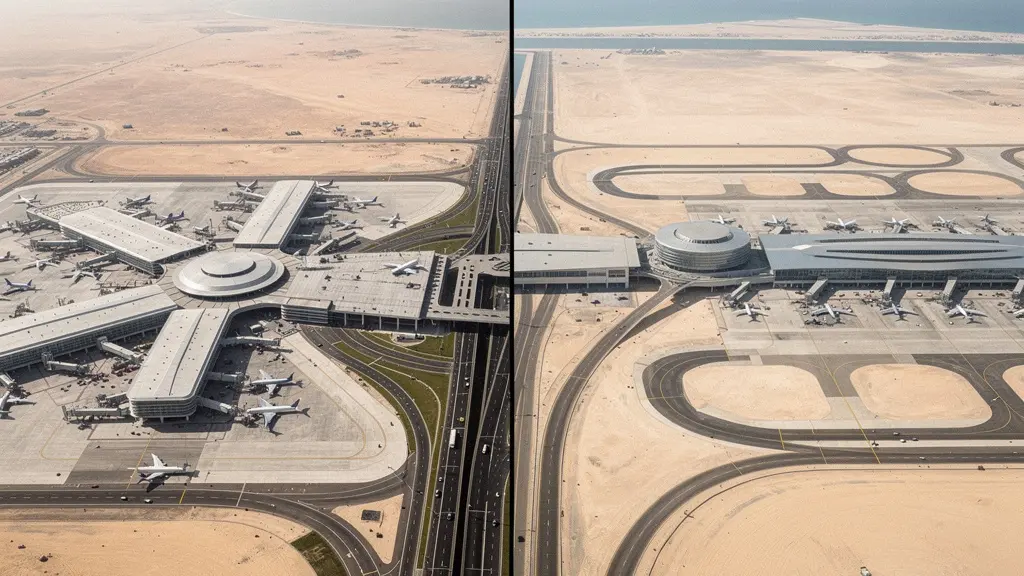
As the image suggests, both airports are sophisticated hubs with extensive connections, but their characters differ. Your choice should be a deliberate one based on a trade-off between convenience, cost, and your overall travel philosophy—plunging into the vibrant chaos of Dubai or opting for the more measured pace of Abu Dhabi.
This comparative table highlights the practical differences that will influence your decision:
| Feature | Dubai (DXB) | Abu Dhabi (AUH) |
|---|---|---|
| Distance to City Center | 10km/7mi from city center | 30km/19mi from city center |
| Direct US Flights | Boston, Chicago, Dallas, LA, San Francisco | New York, Chicago, Washington DC |
| Public Transport | Direct Metro connection to city | Bus service only |
| Traffic Considerations | Heavy traffic can make it seem further away | Generally smoother traffic flow |
| Free Stopover Hotel | Dubai Connect program available | Etihad stopover with 2 free nights |
Ultimately, there is no wrong answer, only a more or less strategic one depending on your 14-day plan.
The Scheduling Mistake That Ruins 50% of Tourist Trips During Ramadan
One of the biggest scheduling mistakes travelers make is planning a trip during Ramadan based on outdated information. For years, the prevailing wisdom was to avoid the Holy Month entirely due to widespread restaurant closures and activity restrictions during daylight hours. This led to countless disappointing trips where tourists found themselves confined to their hotels for meals. However, this is no longer the reality in Dubai, and failing to understand the new dynamic can ruin an itinerary.
A significant policy shift has changed the tourist experience. Since a circular issued in April 2021, restaurants and dining establishments in Dubai are no longer required to screen off their dining areas during fasting hours. This means that non-fasting tourists can now eat and drink normally in most restaurants throughout the day. While it remains socially unacceptable to eat or drink while walking on the street, the logistical challenge of finding food has been eliminated. Major attractions like the Dubai Mall even maintain extended hours until midnight or 1:00 AM during Ramadan, offering more time for shopping and entertainment in the evenings.
The mistake is not visiting during Ramadan, but visiting *unprepared*. The rhythm of the city changes. Many attractions shift their hours, opening later in the afternoon (e.g., 3 PM) and staying open late into the night. Live music is often replaced with more subdued entertainment. To have a successful trip, you must adapt your schedule to this new tempo.
- Verify operating hours in advance, as many attractions open later.
- Book restaurants ahead for Iftar (the sunset meal), as they become extremely busy.
- Dress modestly with shoulders and knees covered as a sign of respect.
- Plan outdoor activities for the late afternoon or evening to align with the local rhythm and cooler temperatures.
- Be aware that live entertainment is often limited during this period.
By planning for this unique cultural rhythm instead of avoiding it, you can experience a more profound and less crowded version of the UAE.
When to Visit the UAE and Oman: The Ideal Sequence to Avoid Extreme Heat
The single most important factor for a successful UAE and Oman itinerary is timing your visit to avoid the punishing summer heat. Planning outdoor activities or desert excursions between May and September is not just uncomfortable; it can be dangerous, with temperatures soaring into the high-30s to mid-40s°C. The optimal window for a comfortable trip is during the cooler months. For most Western travelers, the period from October through April is the most popular and pleasant time to visit, with January being the coldest month at an average of 19°C.
However, a strategic itinerary involves more than just picking the right months; it requires “thermal management” by sequencing your locations correctly. For a 14-day trip, a smart approach is to start on the UAE coast (Dubai/Abu Dhabi) during the shoulder months (October-November or March-April), then move to the cooler, higher altitudes of Oman’s Hajar Mountains as the coastal heat begins to build. This sequence allows you to enjoy beach and city life in pleasant weather before retreating to the mountains for hiking and exploring forts in a more temperate climate.

This panoramic view illustrates the different climate zones you’ll encounter. A well-planned trip works with these environmental gradients, not against them. You start where it’s pleasant and move towards cooler regions as your trip progresses, maximizing your ability to enjoy outdoor activities throughout your journey.
This table provides a clear guide to monthly temperatures and corresponding travel recommendations to help you build your ideal sequence:
| Month | Average Temperature | Travel Recommendation |
|---|---|---|
| January | 19°C (coldest month) | Perfect for all activities |
| March-April | 25-30°C | Ideal for beach and city exploration |
| May-September | High-30s to mid-40s°C | Extreme heat – indoor activities only |
| October-November | 25-35°C | Good for desert and outdoor activities |
| December | 20-25°C | Peak season – book early |
By aligning your travel dates and route with the climate, you guarantee a comfortable and enjoyable experience from the coast to the mountains.
The Booking Mistake That Triples Your Flight Cost During National Day
One of the most painful and avoidable financial errors is failing to account for local holidays and peak seasons when booking flights and accommodation. While traveling during the cooler winter months is ideal, this period is also the UAE’s peak tourist season, punctuated by major events that cause prices to skyrocket. The most significant of these is UAE National Day on December 2nd, which often coincides with a long public holiday weekend. Travelers who unknowingly plan their arrival or departure around this date can see flight and hotel costs triple almost overnight.
The key to avoiding this budget-destroying mistake is proactive planning. Dynamic pricing models used by airlines and hotels are extremely sensitive to demand, and prices can surge as early as 6-8 weeks before a major event. This isn’t limited to National Day; other periods to watch include New Year’s, Eid holidays (whose dates change annually based on the lunar calendar), and international school holidays. A successful booking strategy involves mapping out these dates well in advance and securing your core travel components—flights and hotels—before the demand-driven price hikes begin.
Furthermore, this proactive approach extends to attractions. During peak season, tickets for iconic sites like the Burj Khalifa and the Museum of the Future can sell out weeks in advance. Waiting until you arrive to book these experiences will likely lead to disappointment. Even securing stopover benefits requires foresight; for example, you must book your Emirates Dubai Connect benefits at least 24 hours before your flight to be eligible. A last-minute approach is a recipe for financial pain and missed opportunities.
Ultimately, a few hours of calendar research and booking 6-8 weeks ahead can save you thousands of dollars and ensure you experience the best of the UAE without the stress of peak-season pricing.
The Budget Error That Costs Winter Travelers an Extra $500 per Person
Beyond flights, the single largest budget variable is accommodation. A common and costly error for winter travelers is defaulting to hotels in prime tourist hotspots like Dubai Marina or The Palm. While these areas offer stunning views and proximity to glamorous attractions, their room rates can easily add an extra $500 or more to a week’s stay, especially during the peak October-to-April season. The strategic alternative is to look beyond these glittering hubs to more traditional, yet highly accessible, neighborhoods.
This approach isn’t about sacrificing quality or convenience; it’s about smart location arbitrage. Areas like Old Dubai (Deira and Bur Dubai) offer a wealth of comfortable, well-regarded hotels at a fraction of the price, while still providing excellent connectivity to the rest of the city via the Dubai Metro. By staying near a metro station in Old Dubai, you can reach the Burj Khalifa or Dubai Marina in under 30 minutes, all while saving a significant portion of your budget and immersing yourself in a more authentic part of the city.
Case Study: Strategic Hotel Location Savings in Dubai
Budget-conscious travelers can achieve significant savings by choosing hotels in Old Dubai near the airport instead of tourist-centric areas like Dubai Marina. For instance, staying at a property like the Copthorne Hotel in Deira places you just a ten-minute drive from the airport and a few minutes’ walk from a metro station. This provides both affordability and direct, easy access to all major attractions via public transport, proving that a lower hotel cost does not have to mean a loss of convenience.
This strategy is a core component of a financially sound itinerary. The money saved on a week’s accommodation can be reallocated to unique experiences like a high-quality desert safari, a day trip to the Musandam Peninsula in Oman, or fine dining experiences that would have otherwise been out of reach. It’s a simple switch in mindset from paying for a location to paying for an experience, using the city’s excellent infrastructure to your advantage.
By choosing your hotel location strategically, you unlock funds that can transform a good trip into an extraordinary one.
Key Takeaways
- The Hub Strategy is Key: Using Dubai or Abu Dhabi as a strategic hub via stopover programs is the most effective way to reduce flight costs and simplify logistics for a multi-country trip.
- Sequencing is Non-Negotiable: Planning your itinerary around the climate (October-April) and major holidays (like National Day) is crucial to avoid extreme heat and budget-breaking price surges.
- Modern Policies Simplify Travel: Outdated fears about travel during Ramadan are no longer relevant in Dubai, where revised policies allow for a more accessible and culturally rich tourist experience.
10 Days in the UAE: How to Balance Modern City Life and Traditional Culture?
A truly memorable 14-day Middle East trip, with a focus on the UAE, is one that finds the delicate balance between its futuristic vision and its deep-rooted Bedouin heritage. It’s easy to be mesmerized by the record-breaking skyscrapers and lavish malls, but the soul of the Emirates is found in its bustling souks, tranquil mosques, and the timeless expanse of the desert. A successful itinerary is not an “either/or” choice but a “both/and” fusion. Dubai itself is a distinct fusion of its Bedouin heritage and an ultra-modern culture, and your plan should reflect this duality.
The key is to structure your days to deliberately alternate between these two worlds. For example, spend a morning exploring the futuristic Museum of the Future and the afternoon wandering through the historic Al Fahidi district, followed by a traditional ‘Abra’ boat ride across Dubai Creek at sunset. This contrast enriches your experience, providing context to the nation’s rapid development. Your culinary choices can also reflect this balance, mixing meals from celebrity chef restaurants with authentic Emirati, South Asian, and Middle Eastern cuisine found in the vibrant neighborhoods of Deira and Bur Dubai.

This itinerary framework for 10 days within the UAE is designed to achieve that balance, offering a template that can be adapted to your interests. It treats the UAE not as a single entity, but as a collection of diverse emirates, each with its own character.
- Days 1-2 (Old Dubai): Explore the Spice and Gold Souks, cross Dubai Creek on an abra, and visit the Dubai Museum to understand the city’s origins.
- Day 3 (Modern Dubai): Ascend the Burj Khalifa, explore the vast Dubai Mall, and watch the spectacular Dubai Fountain show.
- Days 4-5 (Cultural Immersion): Engage in a cultural lunch at the Sheikh Mohammed Centre for Cultural Understanding and get lost in the alleyways of the Al Fahidi historical district.
- Day 6 (Desert Experience): Embark on a desert safari that includes a traditional Bedouin camp experience with local cuisine under the stars.
- Days 7-8 (Abu Dhabi’s Icons): Take a day trip or stay overnight to visit the breathtaking Sheikh Zayed Grand Mosque and the architectural marvel of the Louvre Abu Dhabi.
- Day 9 (Sharjah’s Heritage): Visit the “cultural capital of the UAE” to explore its renowned traditional markets and art museums.
- Day 10 (Coastal Relaxation): Head to Fujairah or Ras Al Khaimah to see mountain forts and enjoy less-crowded beaches.
Now that you have the strategic framework, the next logical step is to start mapping your own itinerary. Begin by exploring the flight and stopover options that best suit your travel dates and turn this plan into a reality.