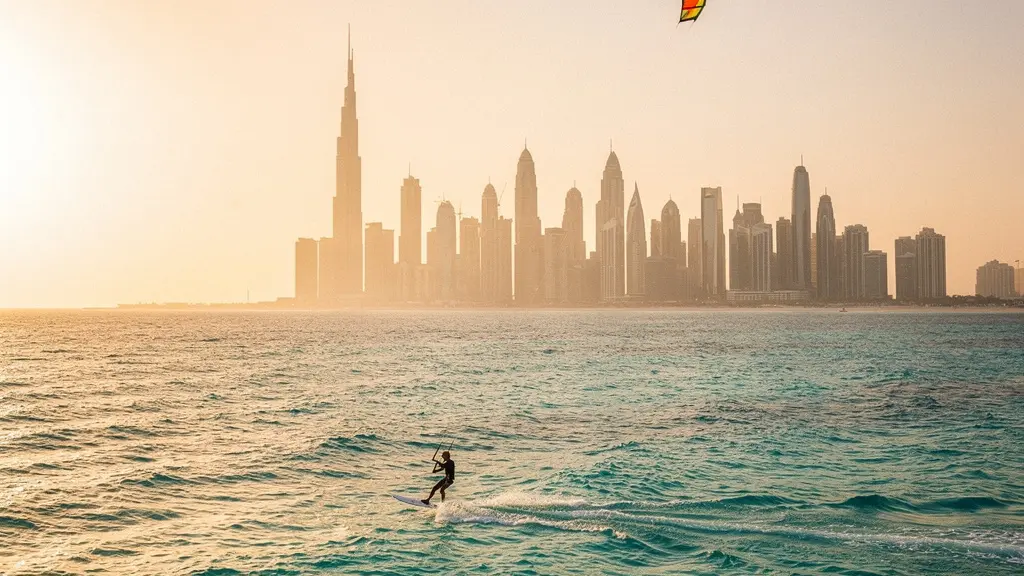
The secret to consistent winter kitesurfing in Dubai isn’t luck; it’s understanding the predictable science behind its local winds.
- The reliable 2 PM wind is a thermal sea breeze, predictable with the right temperature and atmospheric data.
- Urban spots like JBR are poor for learning due to “wind shadows,” while open bays like Nessnass offer safer, cleaner conditions.
Recommendation: Stop chasing forecasts and start analyzing the interplay between temperature, geography, and urban structures to guarantee your time on the water.
Every local rider knows the feeling: a perfect blue-sky day in Dubai, but the palm trees are stubbornly still. The frustrating search for reliable winter wind can feel like a lottery, especially for visitors with limited time. Most guides will point you to the famous Kite Beach and tell you to hope for an afternoon breeze. But this approach is based on observation, not analysis. It leaves you at the mercy of conditions rather than in control of them.
The truth is, Dubai’s wind patterns, particularly during the peak season from October to April, are not random. They are governed by predictable meteorological phenomena. The key to maximizing your sessions isn’t about finding a secret spot; it’s about understanding the ‘why’ behind the wind. Why does it consistently appear at 2 PM? Why is one beach glassy while another is a turbulent mess? This is where a data-driven approach transforms the kiting experience in the UAE.
This guide moves beyond the generic advice. We will dissect the science of Dubai’s thermal sea breeze, provide a framework for gear selection based on specific conditions, and analyze the microclimates of key locations. By understanding these dynamics, you can shift from a hopeful observer to a calculated analyst, ensuring you’re on the water when the wind is truly on.
To navigate this analysis, we will explore the fundamental meteorological patterns, compare the safety and conditions of primary kite spots, and address the critical logistics that make or break a kitesurfing trip in the Emirates. This structured approach will equip you with the knowledge to read the environment and make informed decisions.
Summary: A Wind Analyst’s Guide to Kitesurfing in Dubai
- Why Does the Wind Pick Up at 2 PM on Kite Beach?
- 12m or 9m: Which Kite Size Is Essential for a Dubai Quiver?
- Nessnass Beach or Yas Island: Which Is Safer for Independent Riders?
- The Right-of-Way Mistake That Gets Kitesurfers Banned from Public Beaches
- Where to Store Your Gear Near the Beach to Avoid Transport Hassle?
- Why Does Ras Al Khaimah Have More Rainfall and Greenery Than Dubai?
- JBR Beach or Palm Jumeirah: Which Spot Has Calmer Water for Learning?
- Boating in the Arabian Gulf: How to Rent a Yacht Without a Captain?
Why Does the Wind Pick Up at 2 PM on Kite Beach?
The classic “2 PM” wind on Dubai’s coast isn’t a coincidence; it’s a textbook example of a thermal sea breeze. This phenomenon is the engine of Dubai’s most reliable kiting conditions. During the day, the desert land heats up much faster than the cooler waters of the Arabian Gulf. This creates a significant temperature and pressure differential. Hot air over the land rises, creating a low-pressure area, which in turn pulls the cooler, denser air from over the sea towards the shore. This onshore flow is the wind every kitesurfer is waiting for.
This process takes time to build, which is why the wind is often light or offshore in the morning and only begins to fill in after midday, typically peaking between 2 PM and 4 PM. During these peak hours, the wind can build to a steady 13-20 knots, according to local kite school wind analysis, providing perfect conditions for freeriding. Understanding this cycle is the first step to planning your day. A calm morning isn’t a bad sign; it’s often a prerequisite for a strong thermal afternoon.
Instead of passively waiting, you can actively predict the strength of the sea breeze. Certain preconditions drastically increase the likelihood of a strong thermal wind day. By becoming an amateur meteorologist, you can anticipate the best sessions with a high degree of accuracy.
Action Plan: How to Predict Thermal Wind Conditions
- Check for clear skies: Cloudless conditions the night before and during the morning allow for maximum solar radiation to heat the land, creating a larger temperature differential.
- Monitor morning wind direction: A light offshore (land-to-sea) wind in the early morning is a classic indicator of a strong developing thermal pattern.
- Look for a significant temperature range: A cool night (below 20°C) followed by a hot day creates the pressure gradient needed to drive a strong sea breeze.
- Track wind direction consistency: For Dubai’s coastline, a northerly or north-westerly (NW) wind direction is the most stable and reliable for kitesurfing.
- Use specialized forecasts: Tools like Windguru provide detailed forecasts for specific beaches, with color-coding (like red) to indicate stronger predicted wind speeds.
12m or 9m: Which Kite Size Is Essential for a Dubai Quiver?
The most common question from visiting kiters is about gear. While the dream is to ride a 9m kite all day, the reality of Dubai’s thermal winds requires a more strategic approach to your quiver. The answer isn’t a single kite size but rather a combination that covers the typical wind range. For most intermediate riders on a twintip, a 12m kite is the undeniable workhorse of a Dubai quiver. It covers the sweet spot of the afternoon sea breeze, from the lighter beginnings around 12-14 knots to the solid 18-knot peak.
However, relying solely on a 12m means missing out on the lighter morning sessions or the stronger days when a Shamal wind blows through. A 9m becomes essential on those less frequent but more exhilarating days with over 20 knots. Furthermore, the rise of hydrofoiling has completely changed the gear equation. A foiler can have an excellent session on a 7m or 9m kite when twintip riders are still waiting on the beach. Therefore, the “essential” kite size is deeply personal, depending on your weight, board choice, and tolerance for light wind.
The following matrix provides a data-driven starting point for optimizing your gear selection based on rider profile and specific wind conditions you’re likely to encounter in Dubai, as analyzed from data on guides for kitesurfers in Dubai.
| Rider Type | Board Type | Light Wind (8-12 knots) | Moderate Wind (13-18 knots) | Strong Shamal (20+ knots) |
|---|---|---|---|---|
| Beginner (60-75kg) | Twintip | 14-17m | 12m | 9m |
| Intermediate (60-75kg) | Twintip | 12-14m | 10m | 7-9m |
| Advanced (60-75kg) | Hydrofoil | 9-10m | 7m | 5m |
| Heavy Rider (85kg+) | Twintip | 17m+ | 14m | 10-12m |
Nessnass Beach or Yas Island: Which Is Safer for Independent Riders?
For independent riders, spot selection goes beyond wind strength; it’s about safety, space, and predictable conditions. While both Nessnass Beach in Dubai and Yas Island in Abu Dhabi are popular, they offer vastly different experiences. For overall safety and versatility, Nessnass Beach is the superior choice for most independent riders. Its wide, curved bay provides a natural safety net, making it forgiving for all wind directions except a direct offshore wind. The water is relatively shallow near the shore, allowing riders to recover easily, while more advanced kiters can head further out to find open space and small waves.
Yas Island, on the other hand, presents more challenges despite its appeal. While it can offer beautifully flat water, its conditions are highly dependent on the tide. As local operator Kite N’ Surf Dubai warns, the experience can change drastically with water levels.
The shallow water area is affected by tides, so during low tide, you can only kitesurf in the deepwater area; that is if you want to keep your fins!
– Kite N’ Surf Dubai, Kitesurfing location guide
This tidal dependency means a great spot at high tide can become an unrideable, fin-destroying minefield a few hours later. While Yas Island reports a solid 13 knots average afternoon wind, the logistical complexity of timing your session with the tides makes it less reliable for a hassle-free day. Nessnass, with its consistent depth and geography, provides a much more predictable and therefore safer environment for riders who want to launch and ride without constant monitoring of tide charts.
The Right-of-Way Mistake That Gets Kitesurfers Banned from Public Beaches
On a crowded day at Kite Beach, navigating traffic is as much a skill as landing a jump. While there are several international rules of the water, there is one that is fundamentally misunderstood by many and is the primary cause of accidents and conflicts: the starboard tack rule. Simply put, the rider on a starboard tack (right hand and right foot forward in their direction of travel) has the right of way. The rider on a port tack (left hand and left foot forward) must give way, either by changing course to pass downwind or, if necessary, by looping their kite high to slow down or stop.
The common mistake is assuming the upwind or faster rider has priority, which is incorrect and dangerous. On a potential collision course, it is the responsibility of the port tack rider to avoid the starboard tack rider. This rule creates a clear, predictable system that prevents chaos. Ignoring it not only risks a dangerous kite tangle but also jeopardizes access to these public beaches. Dubai authorities are generally supportive of watersports, but repeated safety breaches can lead to stricter regulations or outright bans in certain areas.
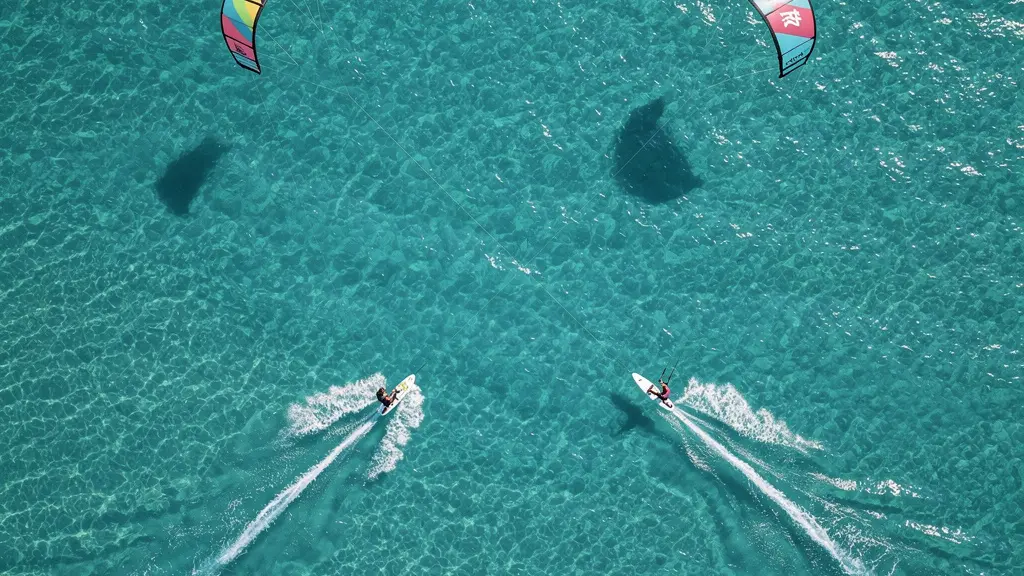
Mastering this single rule is the most important thing you can do to be a safe and responsible member of the local kitesurfing community. Before you even launch your kite, visualize it: see a rider coming towards you with their right hand forward, and know that it is your duty to give way. This simple protocol keeps everyone safe and ensures the beaches remain open for all to enjoy.
Where to Store Your Gear Near the Beach to Avoid Transport Hassle?
This is one of the most significant logistical challenges for kitesurfers in Dubai. The simple, and often frustrating, answer is that there are virtually no dedicated public storage facilities at the main kite spots like Kite Beach or Nessnass Beach. While these beaches have excellent amenities like showers and cafes, the infrastructure for personal gear storage is nonexistent. This leaves riders with two primary options: rent gear on-site or transport your own equipment for every session.
Renting is a convenient option, with several well-equipped schools operating directly on the beach. However, the cost can add up quickly. According to current beach operator rates, a single session can cost between 250-500 AED. For a week-long trip, this can easily exceed the cost of airline baggage fees for bringing your own gear. This is why many regular kiters choose to bring their own quiver for better performance and familiarity.
If you bring your own gear, a rental car becomes almost essential. The lack of storage means you’ll be hauling your kite bag from your hotel or apartment to the beach each day. Trying to manage this with taxis or ride-sharing services is cumbersome and impractical, especially with wet, sandy equipment. The consensus among visiting and local kiters is clear: if you are serious about kiting in Dubai with your own gear, factor the cost and convenience of a rental car into your budget. It’s the only effective solution to the storage problem.
Why Does Ras Al Khaimah Have More Rainfall and Greenery Than Dubai?
A short drive north of Dubai reveals a surprisingly different landscape. Ras Al Khaimah (RAK) is noticeably greener and receives more rainfall, a stark contrast to Dubai’s arid environment. This is not a random climate variation but a direct result of a meteorological effect called orographic lift, caused by the Hajar Mountains that dominate RAK’s geography. As moist air from the Arabian Gulf flows inland, it is forced to rise up and over this mountain range. As the air rises, it cools, and its ability to hold moisture decreases. This causes the water vapor to condense, forming clouds and, eventually, precipitation on the windward side of the mountains.
Dubai, being situated on a flat coastal plain far from this significant mountain range, does not benefit from this effect. The air masses move over Dubai without being forced to rise and cool, resulting in far less rainfall and a more arid landscape. This geographical difference also has implications for kitesurfing. The mountains in RAK can create their own localized wind patterns, sometimes generating stronger, gustier conditions than those found on Dubai’s open coast. Exploring RAK can be a rewarding adventure, but it requires a different approach, as the wind can be less predictable and more influenced by the complex mountain terrain than the steady thermal sea breeze of Dubai.
For kitesurfers looking to explore RAK, it’s crucial to connect with local kiting groups for up-to-date spot information and be prepared for conditions that may diverge significantly from the Dubai forecast on the same day. The mountains are both the source of RAK’s unique climate and its more complex wind patterns.
JBR Beach or Palm Jumeirah: Which Spot Has Calmer Water for Learning?
For a beginner, calm, steady wind is paramount. Looking at a map, the sheltered bays of the Palm Jumeirah or the wide expanse of JBR Beach might seem like ideal, calm locations for learning. However, this is a dangerous misconception. From a wind analysis perspective, both JBR and the Palm Jumeirah are among the worst places to learn kitesurfing in Dubai due to a phenomenon known as wind shadow.
The towering skyscrapers that line these coastlines create massive turbulence. As the prevailing onshore wind flows over and around these buildings, it becomes chaotic, rotational, and dangerously gusty. A wind that is a steady 15 knots out at sea can become a swirling mess of 5 to 25 knots by the time it reaches the water at JBR. This makes kite control nearly impossible for a learner. The kite can stall and fall from the sky in a lull, only to be ripped from your hands moments later in a violent gust. This unpredictable environment is not only frustrating but also poses a significant safety risk.
In contrast, spots like Nessnass Beach are situated on a relatively undeveloped stretch of coastline. The lack of tall structures allows the sea breeze to flow onto the beach with minimal disruption, providing the smooth, laminar wind that is essential for safe progression. While the water at JBR may look calm, the “invisible” turmoil in the air makes it a hazardous classroom. The fundamental rule for learning in Dubai is to avoid urban canyons and seek open coastline.
Key Takeaways
- Dubai’s most reliable winter wind is a predictable thermal sea breeze, not a random weather event.
- A 12m kite is the workhorse for most riders, but a full quiver or a hydrofoil unlocks more sessions.
- Spot safety is determined by clean wind and predictable geography; avoid urban “wind shadows” at all costs.
Boating in the Arabian Gulf: How to Rent a Yacht Without a Captain?
For the ultimate kitesurfing experience in Dubai, the solution is to leave the coast behind entirely. Renting a boat, or “yacht” as they are commonly called here, allows you to access the clean, undisturbed wind of the open Arabian Gulf, far from the crowds and coastal turbulence. This approach, often called a “kite safari,” unlocks pristine flat-water spots around The World Islands or other remote sandbars. The wind offshore is often stronger and significantly smoother than what is felt on the beach, a product of large-scale atmospheric patterns like the 1000-meter deep thermal circulation in the Gulf.
However, renting a boat “without a captain” (a bareboat charter) is extremely difficult in the UAE unless you hold a locally recognized marine license. For most visitors, the practical solution is to charter a boat with a captain and crew. The key is to communicate your intentions clearly. You are not booking a luxury cruise; you are booking a mobile launch platform for a watersport. You must confirm with the charter company that they are “kitesurf-friendly.”
Essential points to verify with the charter company include their policy on launching kites from the deck, the boat’s suitability (catamarans with low swim platforms are ideal), and the crew’s experience with watersports. A good crew will understand your need to position the boat correctly relative to the wind and will be able to assist with launch and recovery. While it is a more expensive option, a boat-based session provides an unparalleled sense of freedom and access to the best wind the region has to offer.
By shifting your mindset from a passive beachgoer to a proactive wind analyst, you can transform your kitesurfing experience in Dubai. Understanding the thermal dynamics, making data-driven gear choices, and analyzing the micro-geography of each spot are the tools that will lead you to consistent, high-quality sessions. Plan your attack, and you will never be left on the beach guessing again.