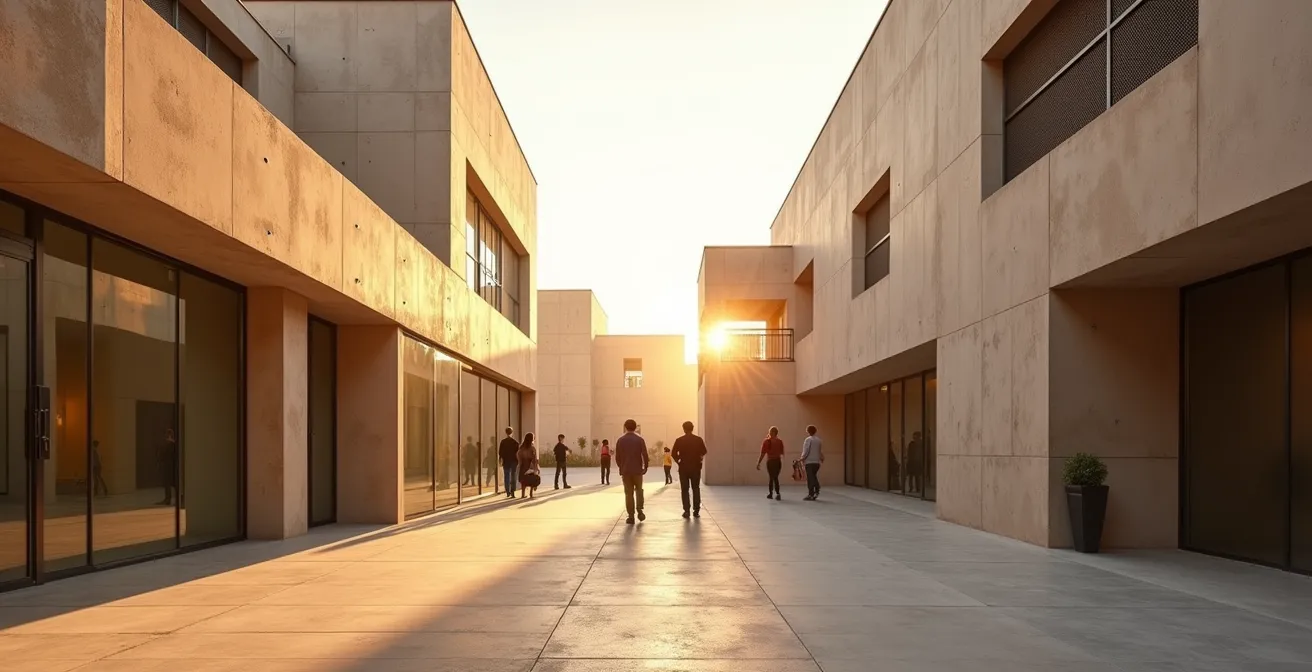
The true value in the UAE art market lies not in blue-chip names, but in understanding the conceptual dialogue between the region’s hyper-growth and its cultural identity.
- Collecting emerging art requires shifting focus from decorative appeal to an artist’s narrative and institutional validation.
- The most exciting discoveries are often found in repurposed industrial spaces like Alserkal Avenue, not just the polished galleries of DIFC.
Recommendation: Instead of asking “Is it beautiful?”, start asking “What conversation is this piece having with the UAE’s past, present, and future?”.
For the aspiring collector, the UAE art scene can seem like a paradox. On one hand, it’s a global hub of high-stakes auctions and dazzling international galleries. On the other, it’s a deeply nuanced ecosystem where local artists are forging a powerful, contemporary identity. Many guides will simply point you toward the biggest names or the most famous gallery districts. They might advise you to “buy what you love”—a well-meaning but ultimately unhelpful platitude when trying to build a collection with cultural and financial significance.
This approach often misses the most exciting part of the market: the emerging artists who are actively interpreting the region’s unprecedented transformation. The mistake is to treat art as a luxury commodity, like a watch or a car, chosen for its brand recognition. But what if the key to savvy collecting in the UAE wasn’t about acquiring established assets, but about identifying narrative value? The real opportunity lies in learning to read the cultural currents that shape the work of a new generation of talent.
This guide moves beyond the surface. We will explore the themes driving Emirati contemporary art, differentiate between fleeting decoration and long-term collectible assets, and provide a strategic framework for discovering artists on the cusp of international recognition. It’s time to stop being a tourist in the art world and start becoming a true connoisseur of the region’s unique creative voice.
This article provides a detailed roadmap for collectors and enthusiasts. We’ll examine the driving forces behind the local art scene, offer practical strategies for acquisition, and create itineraries to help you navigate the key creative hubs effectively.
Summary: A Collector’s Roadmap to the Emirates’ Art Scene
- Why Does So Much Contemporary UAE Art Focus on Rapid Urbanization?
- How to Buy Your First Piece of Middle Eastern Art on a Budget?
- DIFC Galleries or Warehouse Spaces: Which Scene Fits Your Taste?
- The Mistake of Confusing Decorative Art with Collectible Contemporary Art
- Art Night Route: How to Hit 5 Galleries in One Evening?
- The Misconception That Dubai Architecture Is Only About Height
- Why Is Short Film the Strongest Format in Gulf Cinema?
- A Day at Alserkal Avenue: How to Find the Best Indie Cafes and Art Spaces?
Why Does So Much Contemporary UAE Art Focus on Rapid Urbanization?
To understand contemporary art in the UAE is to understand its relationship with speed. The dizzying pace of development, the constant negotiation between heritage and hyper-modernity, and the shifting desert landscapes are not just backdrops; they are the central themes of the nation’s most compelling artistic output. Artists here are not merely documenting change; they are grappling with its psychological and cultural implications. This thematic richness is precisely what is drawing global attention, evidenced by a staggering 298% surge in Middle East art sales since 2020.
This is not a new phenomenon, but one that has reached a critical mass of international recognition. Consider Mohamed Ahmed Ibrahim, a pioneer from the first wave of Emirati conceptual artists. His representation of the UAE at the 2022 Venice Biennale showcased works created from materials found in both the desert and the urban sprawl of his native Khorfakkan. His success demonstrates how a deeply local, personal response to urbanization can translate into a universally understood artistic language. These are not just pictures of buildings; they are explorations of memory, displacement, and identity forged in the crucible of rapid growth.
This focus on local narratives is what gives the art its investment potential. The market is maturing beyond importing Western art and is now cultivating its own stars whose work offers a unique perspective unavailable elsewhere. As noted by The Art Newspaper, the art scene is experiencing a significant shift:
International curators and collectors are putting artists from the UAE in shows and buying their work, buoying an already busy art scene in the city.
– The Art Newspaper, Dubai market shifts towards emerging homegrown artists
For a collector, this means that a piece exploring the tension between a concrete tower and a ghaf tree is more than just an image; it is a piece of cultural commentary with growing historical importance. It is this “narrative value” that distinguishes a speculative purchase from a long-term cultural investment. The theme of urbanization provides a direct entry point into the most urgent and authentic conversations happening in Gulf art today.
How to Buy Your First Piece of Middle Eastern Art on a Budget?
Entering the art market doesn’t require a Sheikh’s fortune. The secret for new collectors is to focus on the right segment: emerging artists and limited editions. While the headlines are dominated by multi-million dollar sales, a vibrant and accessible market thrives just beneath the surface. In fact, a recent UBS Art Market Report indicates that 50% of transactions for smaller dealers involved first-time buyers, proving the entry points are plentiful for those who know where to look.
The key is to shift your focus from unique, large-scale paintings by mid-career artists to more accessible formats. A smart strategy includes several approaches. Start by exploring works by emerging artists represented by forward-thinking galleries like Tabari Artspace or Green Art Gallery, where prices can range from $1,000 to $18,000 depending on the medium. Events like the Sikka Art & Design Festival are also prime hunting grounds for accessible pieces directly from artists’ studios.
Perhaps the most strategic entry point is through limited edition prints. A signed, numbered print from a recognized artist offers a slice of their legacy and market without the price tag of a major original. It allows you to own a work by an artist with institutional validation and a solid exhibition history, which are key markers of long-term value. This is a far wiser investment than buying a minor, unrepresentative original painting.
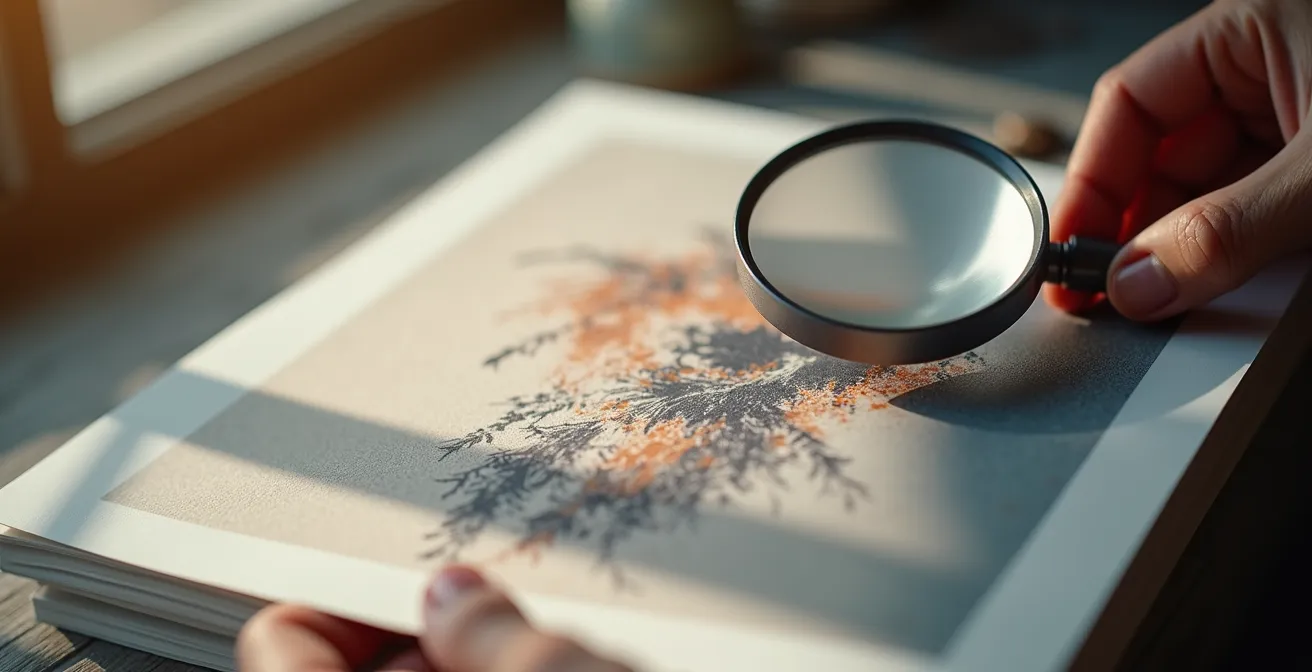
As the image suggests, the act of collecting at this level is about close examination and appreciation of detail. You are buying into the artist’s practice and concept. Furthermore, the rise of digital art and NFTs has opened another affordable avenue, allowing collectors to acquire work from cutting-edge artists experimenting with new media. The budget-conscious collector is not a lesser collector; they are a strategic one, focusing on potential and provenance over price.
DIFC Galleries or Warehouse Spaces: Which Scene Fits Your Taste?
Dubai’s art scene is not a monolith; it is a tale of two cities. On one side, you have the polished, blue-chip world of the Dubai International Financial Centre (DIFC). On the other, the raw, experimental energy of the converted warehouses in Alserkal Avenue. Choosing where to “scene-scout” depends entirely on your taste as a collector and what you are looking to discover. One is about consuming established culture; the other is about participating in its creation.
The Gate Village in DIFC is the realm of established international galleries and secondary market masterpieces. Here you will find names like Perrotin, showcasing artists who are already art-world luminaries. The atmosphere is corporate, quiet, and transactional. This is the destination for the serious, high-end collector looking to acquire a blue-chip asset with a proven auction record. The art is impeccably presented in pristine, climate-controlled environments, reflecting its status as a high-value commodity.
In stark contrast, Alserkal Avenue in the Al Quoz industrial district offers a completely different experience. What began as a single gallery in 2008 has organically grown into a sprawling 500,000-square-foot creative ecosystem with over 70 contemporary art spaces. This is the heart of Dubai’s grassroots contemporary scene, a place for discovery, community, and critical discourse. Here, you’ll find experimental installations, emerging artists pushing boundaries, and a palpable sense of community in the courtyards and cafes. It’s where you go not just to buy art, but to meet the artists, attend talks, and feel the pulse of the city’s creative class.
To make an informed choice, a direct comparison is essential. This data, drawn from an analysis of Dubai’s art districts, clarifies the distinction:
| District | Art Style | Price Range | Best For | Key Venues |
|---|---|---|---|---|
| DIFC (Gate Village) | Blue-chip, established artists | High-end | Serious collectors, corporate buyers | Perrotin, established international galleries |
| Alserkal Avenue | Contemporary, experimental | Mid to accessible | Emerging artist discovery, community engagement | 70+ galleries including Carbon 12, Grey Noise, Ayyam Gallery |
| Sharjah | Critically-driven, intellectual | Various | Academic discourse, biennials | Sharjah Art Foundation, Sharjah Biennial |
| Abu Dhabi (Saadiyat) | Museum-quality, institutional | Premium | Cultural tourism, major exhibitions | Guggenheim Abu Dhabi (2026), Zayed National Museum |
Ultimately, your choice defines your collecting journey. DIFC is for acquiring a trophy. Alserkal Avenue and Sharjah are for discovering a voice.
The Mistake of Confusing Decorative Art with Collectible Contemporary Art
One of the most significant hurdles for new collectors is learning to distinguish between art that decorates a space and art that defines a collection. Decorative art is about aesthetic pleasure; it is designed to be pleasant, unobtrusive, and to complement an interior. Collectible contemporary art, however, has a different job. Its purpose is to challenge, question, and contribute to a cultural or historical narrative. It has what we call conceptual threshold—it asks something of the viewer and possesses a depth that extends far beyond its visual appeal.
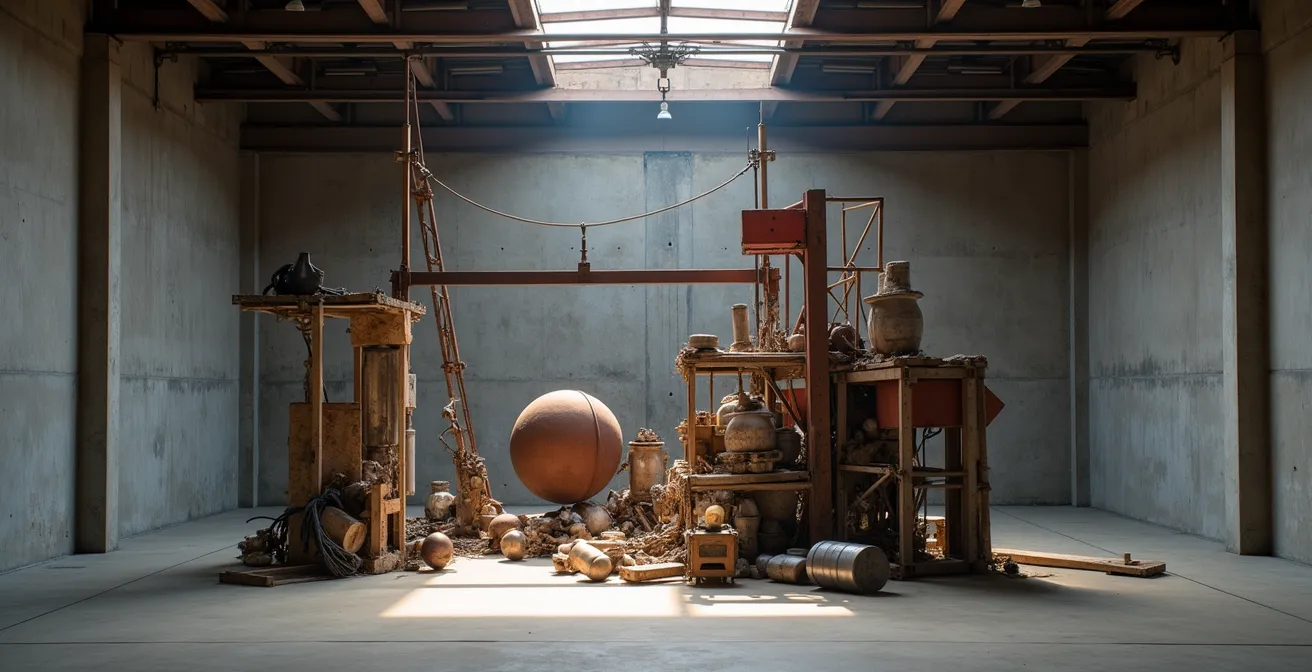
The image above illustrates this perfectly. A piece like this, found in a raw warehouse gallery, is not meant to match your sofa. It engages with its industrial materials and the space itself to create a dialogue. This is the kind of work that accrues value because it is part of a larger artistic conversation. A prominent UAE-based collector featured on Artsy articulates this mindset perfectly:
I try to collect not just based on personal preference, but with an eye toward what feels historically and culturally significant. I’m conscious of the broader narrative the collection might someday tell [about] Tanzania and the U.A.E. to wider audiences.
– UAE Collector, 10 Up-and-Coming U.A.E. Collectors on Why They Buy Art
This perspective is the collector’s essential tool. It moves the selection process from “Do I like it?” to “Is it significant?”. To cross the conceptual threshold from decorator to collector, you must train your eye to look for markers of significance beyond the purely aesthetic. An artist’s exhibition history, their inclusion in institutional collections, and the coherence of their conceptual statement are far more important indicators of long-term value than how “pretty” a piece is.
Your Checklist: Identifying Collectible Contemporary Art
- Provenance and Documentation: Does the work have a formal title and is it documented as part of a specific series or body of work?
- Conceptual Intent: Has the artist provided a written statement that explains the ideas and research behind the piece?
- Artist’s CV: Review the artist’s curriculum vitae. Does it show a history of exhibitions in reputable galleries, museums, or biennials?
- Institutional Validation: Is the artist represented by a respected gallery? Is their work held in any public or major corporate collections?
- Narrative Engagement: Does the artwork engage with significant cultural, social, or political narratives, moving beyond simple aesthetics?
By applying this framework, you begin to see art not as an object, but as an idea. You are no longer just buying a picture; you are investing in a point of view with enduring relevance.
Art Night Route: How to Hit 5 Galleries in One Evening?
The idea of a “gallery crawl” is appealing but often counterproductive. Rushing through five galleries in an evening usually results in a blur of images with no meaningful engagement. The savvy collector’s approach to an art night, especially in a dense area like Alserkal Avenue, is not about quantity but about creating a strategic, curatorial itinerary. The goal is to see less, but to experience more.
First, abandon the idea of a comprehensive tour. Instead, plan a thematic route. Before you go, check the galleries’ websites. Are several galleries showing photography? Is there a common thread of sculptural work or video installations exploring similar ideas? Grouping your visits thematically transforms a random walk into a focused study, allowing you to draw connections and deepen your understanding. The best time to start is around 2:00 PM, ensuring all spaces are open and operational, giving you ample time before evening events.
Second, build your evening around key events. Many galleries schedule artist talks or curator tours. These are invaluable opportunities for insight. Attending two or three galleries where you can hear directly from the creators is far more enriching than a fleeting glance at five. Prioritize quality engagement over sheer volume. During peak times like Art Week, Alserkal Avenue hosts a consolidated program with over 20 new exhibitions opening simultaneously, many with extended hours until 10 PM, providing the perfect concentrated opportunity for such a focused approach.
Finally, punctuate your gallery visits with “debrief stops.” Alserkal Avenue is dotted with excellent independent cafes like Nightjar Coffee Roasters. Scheduling a 30-minute break between gallery clusters allows you to process what you’ve seen, make notes, and discuss your impressions. This small ritual turns a passive viewing experience into an active process of analysis and reflection. A well-planned art night should feel less like a sprint and more like a thoughtfully paced intellectual journey.
The Misconception That Dubai Architecture Is Only About Height
The global image of Dubai’s architecture is dominated by the singular pursuit of verticality: the world’s tallest building, the most extravagant skyscrapers. While these structures are engineering marvels, they tell only one part of the story. To focus solely on height is to miss the more nuanced and arguably more influential architectural trend shaping the city’s cultural life: human-scale adaptive reuse.
The most potent example is Alserkal Avenue. Here, the architectural statement is not one of overwhelming scale but of thoughtful transformation. Rows of monotonous industrial warehouses have been preserved on the outside, maintaining the gritty character of the Al Quoz district. Inside, however, they have been converted into world-class, white-cube gallery spaces. This architectural juxtaposition—raw industrial shell versus pristine artistic interior—creates a dynamic tension that is at the very core of Dubai’s contemporary identity. It demonstrates a commitment to building community from the ground up, rather than imposing it from the sky down.
This focus on human-centric spaces fosters the exact environment where an art scene can thrive. It creates walkable districts, encourages spontaneous interaction, and provides flexible, affordable spaces for creative enterprises. It is an architecture of community, not just commerce. This philosophy is also beginning to inform the city’s larger institutional projects. While landmarks like the long-awaited Guggenheim Abu Dhabi, slated to open in 2026, and the Zayed National Museum are monumental in scale, their designs by star architects like Frank Gehry are focused on visitor experience and cultural narrative, not just breaking records. As reported by Art Basel, these projects signify a maturation of the region’s architectural ambitions towards creating lasting cultural legacies.
For the art collector, this is a crucial insight. The most interesting art is often found where the architecture is most interesting. Look for the spaces that value interaction over imposition, community over spectacle. It is in these repurposed, human-scaled environments that the true creative spirit of the UAE is being built.
Why Is Short Film the Strongest Format in Gulf Cinema?
While the region’s feature film industry is still developing its international footing, Gulf cinema has found its most powerful and authentic voice in the short film. This format has become the primary medium for artistic experimentation, allowing visual artists and filmmakers to explore complex narratives with an agility and directness that larger productions often lack. The short film is not merely a stepping stone to features; in the Gulf, it is a mature and respected art form in its own right.
The strength of the format lies in its deep integration with the visual arts scene. Many of the region’s most celebrated contemporary artists—whose work you might see at the Sharjah Biennial or in a gallery at Alserkal Avenue—also work with moving images. For them, a short film is an extension of their gallery practice, a “video art” piece that bridges the gap between the white cube and the black box. This synergy is nurtured by dedicated spaces like Cinema Akil, Dubai’s only independent cinema. Located within Alserkal Avenue, it regularly screens experimental works, documentaries, and foreign films that would never appear in commercial multiplexes, serving as a crucial platform for artist-filmmakers.
This ecosystem is further supported by a growing number of festivals dedicated to the format. As Dubai Culture highlights, key events like the Al Marmoom: Film in the Desert Festival and the Sikka Art and Design Festival are specifically designed to elevate the local film industry by celebrating emerging talent. These platforms provide visibility, funding, and a critical audience, creating a virtuous cycle where artists are encouraged to produce ambitious, conceptually-driven short works. The result is a body of cinema that is personal, politically aware, and formally inventive—a direct reflection of the rapid social and cultural shifts occurring across the region.
For a collector, this means that an artist’s filmography can be as important as their exhibition history. Acquiring a video work or even supporting a film’s production can be a way to engage with an artist’s practice at its most dynamic and immediate. In the Gulf, the future of cinema is being written in short, powerful sentences.
Key Takeaways
- The most valuable contemporary art from the UAE engages with the theme of rapid urbanization and cultural identity.
- Strategic collecting focuses on emerging artists and limited-edition prints, not just high-priced originals.
- The distinction between decorative art (for aesthetics) and collectible art (for narrative) is crucial for building a significant collection.
A Day at Alserkal Avenue: How to Find the Best Indie Cafes and Art Spaces?
Spending a day at Alserkal Avenue is an essential pilgrimage for any serious art enthusiast in Dubai. But with over 70 art spaces spread across its sprawling industrial grounds, a successful visit requires a plan. The best approach is to adopt a persona for the day, creating a curated itinerary that matches your specific interests as a collector or curious visitor. Forget trying to see everything; focus on a deeper, more personalized experience.
For “The Deep Collector,” the day is about targeted strikes. Start at a gallery known for its avant-garde program, like Grey Noise, which champions conceptually rigorous work. Then, move to a specialist in MENA art, such as Ayyam Gallery, to see established regional masters. The day’s schedule should be built around pre-planned artist talks or private viewings, maximizing direct access and in-depth understanding. This is a mission, not a stroll.
For “The Curious Grazer,” the experience is about serendipity and soaking up the atmosphere. This itinerary mixes gallery-hopping with hands-on activities. You might visit a few galleries, then drop into a workshop at KAVE Café or a pottery session at Al Kass Ceramic Studio. The day could end with catching an independent film at Cinema Akil. This path is about discovering the creative energy of the district as a whole, allowing for unexpected detours and pop-up discoveries.

For “The Design Lover,” the art is almost secondary to the architecture. This journey focuses on the details of the converted warehouses, the innovative interior designs of the galleries, and the interplay of industrial and minimalist aesthetics. Visits to concept stores and design studios are prioritized. For this persona, the coffee stop is as important as the art stop, pairing the industrial-chic vibe of Nightjar Coffee with the raw, experimental galleries nearby. The entire district becomes an exhibition of adaptive reuse and contemporary design.
Ultimately, navigating the UAE’s art scene is an intellectual endeavor. It requires you to look beyond the glittering surface and engage with the stories, ideas, and communities that give the art its power. The next step is to begin your own journey of discovery, applying this critical framework to every gallery you visit.