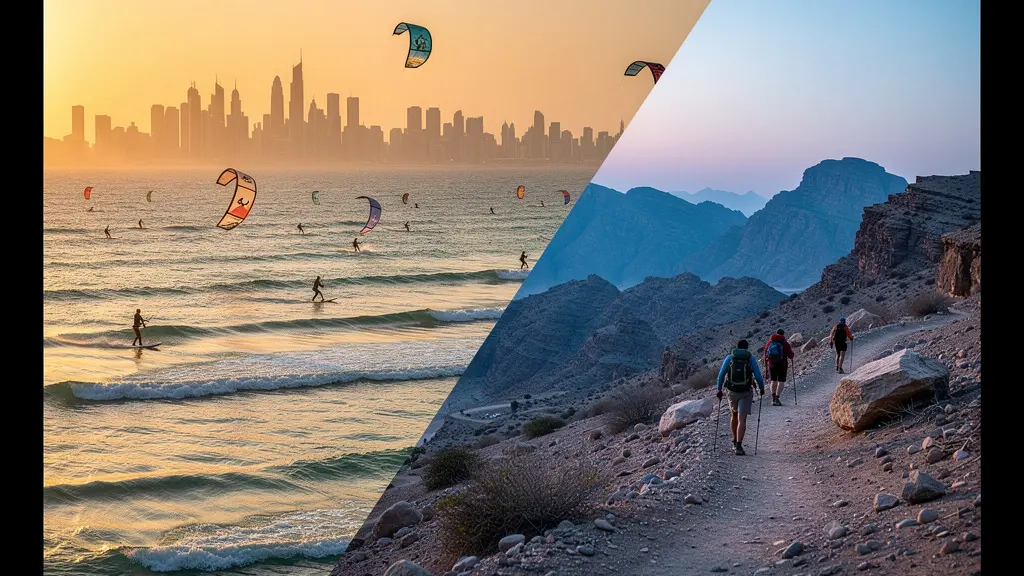
The best time for UAE sports isn’t a season, but a specific, data-driven schedule adapted to harsh environmental realities.
- Summer survival hinges on pre-dawn starts (5 AM), understanding humidity’s impact (WBGT), and using heat-proof gear that won’t fail.
- Winter offers all-day adventure but demands strategic planning based on trail conditions (Hatta vs. RAK) and specific wind cycles (Shamal winds for kitesurfing).
Recommendation: Shift your planning from asking “when?” to “how?” by using the detailed operational strategies in this guide to build a safe and thrilling UAE adventure year-round.
For the active traveler, the United Arab Emirates presents a stark duality. There’s the idyllic winter, with perfect blue skies and mild temperatures beckoning you outdoors. Then there’s the formidable summer, a season defined by a relentless sun and oppressive humidity. The common advice is simple: enjoy outdoor sports from November to March and retreat to air-conditioned malls from June to September. But for those with a true spirit of adventure, this binary guidance is insufficient. It ignores the nuances of the climate and the strategies that unlock possibilities even during the most challenging months.
The crucial error in planning is treating the thermometer as the only metric. A 35°C day in September feels vastly different—and is far more dangerous—than a 35°C day in February. The key to successfully navigating the UAE’s adventure landscape is not to simply avoid the summer but to adopt a mindset of a seasonal sports coordinator. This means moving beyond temperature and focusing on a more sophisticated set of environmental metrics, strategic time management, and critical gear adaptations.
This planner provides that strategic framework. It breaks down the critical factors that experienced local adventurers use to decide not *if* they can go out, but *how* and *when*. We will analyze the hidden dangers of the shoulder seasons, compare iconic destinations for specific skill levels, detail the gear failures that can ruin a trip, and provide a scientific basis for timing your sessions for both peak performance and survival. This is your operational guide to making the most of adventure in the UAE, regardless of the season.
This guide provides a comprehensive seasonal strategy, breaking down key considerations for a range of activities. Explore the detailed sections to build your perfect, year-round UAE adventure plan.
Summary: UAE Adventure Planner: A Seasonal Strategy for Outdoor Sports in Winter and Summer
- Why Is Hiking in September Still dangerous Despite Lower Temperatures?
- How to Package Archery and Axe Throwing for a Group Discount?
- Desert Fat Biking or Mountain Biking: Which Is Harder for Beginners?
- The Gear Mistake That Ruins Your Camping Trip (Gas Canisters)
- 5 AM Start: Why Is Early Morning the Only Viable Time for Summer Sports?
- RAK or Hatta: Which Destination Is Better for Hardcore Hiking?
- 20 Minutes or 1 Hour: What Is the Ideal Session Length for Stamina?
- Kitesurfing in Dubai: Where to Find Consistent Wind During Winter Months?
Why Is Hiking in September Still dangerous Despite Lower Temperatures?
September in the UAE often brings a deceptive drop in air temperature, leading many to believe the worst of the summer heat is over. This is a critical and dangerous misunderstanding. The primary threat isn’t just the number on the thermometer; it’s the combination of extreme humidity and retained ground heat. While the air might cool to 38°C, the “feels like” temperature, or heat index, can be lethally high. For instance, recent data from July 2024 shows a heat index of 62°C was recorded in Dubai. This extreme humidity prevents sweat from evaporating, effectively shutting down the body’s natural cooling mechanism.
Furthermore, the ground itself acts as a massive heat sink. After months of intense sun, rocks and sand in wadis and canyons radiate heat long after sunset and well into the morning. This means that even during a pre-dawn hike, the ambient temperature in a canyon can be significantly higher than the reported forecast. This retained heat creates a microclimate that can quickly lead to heat exhaustion or heatstroke.
Another overlooked danger in the shoulder seasons is the risk of flash floods. The transition period can bring unpredictable storms from the Indian Ocean. Wadis, the dry riverbeds that form popular hiking trails, can become deadly torrents of water with little to no warning. As seen in the record-breaking storm of April 2024, the UAE’s annual rainfall can occur in a single, catastrophic event, making it vital to check not just heat warnings but also meteorological bulletins for potential rainfall across the region, even if the sky above you is clear.
Therefore, treating September with the same caution as July and August is a non-negotiable rule for safe hiking. Relying on the Wet-Bulb Globe Temperature (WBGT), which accounts for humidity, wind, and solar radiation, is a far more reliable planning tool than air temperature alone.
How to Package Archery and Axe Throwing for a Group Discount?
When the summer heat makes outdoor activities untenable, even for the most dedicated, a strategic pivot to indoor adventure sports is the best approach. Activities like archery and axe throwing have become increasingly popular in Dubai and Abu Dhabi, offering a climate-controlled environment for groups to engage in skillful and competitive fun. The key to packaging these for a group discount lies in leveraging off-peak hours and multi-activity bundles.
Most dedicated indoor adventure venues are eager to fill slots during weekday afternoons or late evenings, which are typically their quietest periods. When contacting a venue, always start by proposing your event during one of these off-peak windows. A group of 8 or more is often the minimum threshold to unlock preferential rates. Frame your request not just as a booking, but as a potential partnership, especially if you represent a corporate group or a recurring social club.
The most effective strategy is to bundle activities. Instead of just booking the axe-throwing lanes, inquire about a package that combines an hour of archery with an hour of axe throwing. This increases your group’s total spend and gives the venue a more significant booking, making them far more likely to offer a per-person discount of 15-25%. Always ask if the package can include an instructor or a mini-tournament format, as this adds value beyond just the activity itself and makes the experience more memorable for the group.
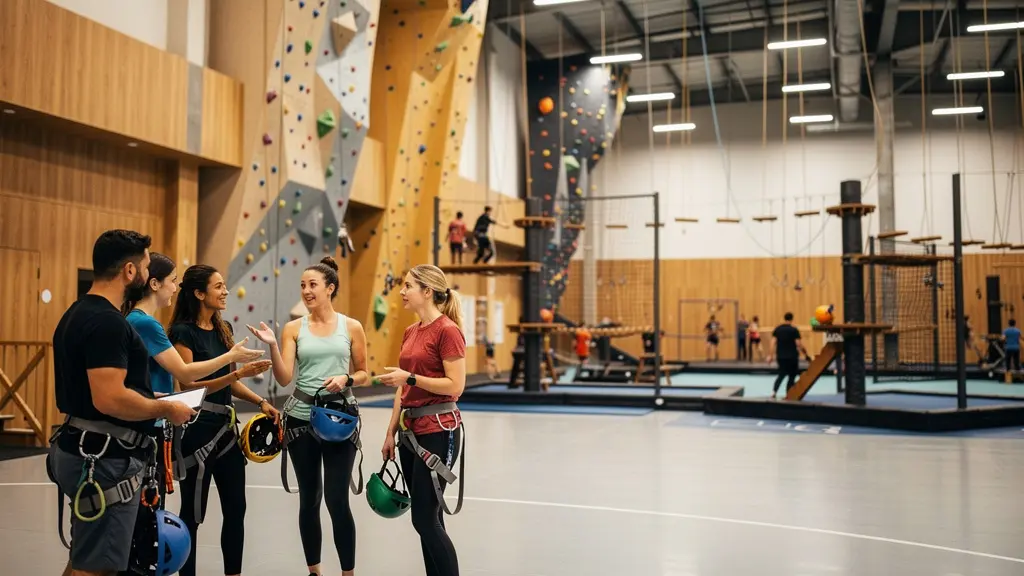
Finally, don’t forget to inquire about food and beverage packages. Many of these facilities have in-house cafes. By committing to a post-activity refreshment package, you further increase your value to the business, creating another leverage point for negotiating the overall price down. The goal is to present your group as a single, high-value, easy-to-manage booking that fills an otherwise quiet slot in their schedule.
This approach transforms a simple outing into a structured event, which is more appealing for both your group and the venue’s management, maximizing the chances of securing a favorable deal.
Desert Fat Biking or Mountain Biking: Which Is Harder for Beginners?
Choosing between desert fat biking at Al Qudra and mountain biking in Hatta is a common dilemma for newcomers to the UAE’s cycling scene. While both offer incredible experiences, their challenges are fundamentally different, and the “harder” option depends entirely on a beginner’s existing fitness and skills. It’s not about which is objectively more difficult, but which type of difficulty you are least prepared for.
Mountain biking in Hatta is a test of technical skill and nerve. The trails are well-marked but feature rocky sections, tight turns, and short, steep climbs. A beginner’s primary failure mode here is a technical mistake: choosing the wrong line, failing to shift weight correctly, or losing balance on an obstacle, often resulting in a fall. It demands constant mental focus and quick decision-making. The physical exertion comes in sharp bursts, requiring agility and power, but there are frequent opportunities to pause and recover.
In contrast, desert fat biking is a test of pure cardiovascular endurance. The main challenge is generating the sustained power output needed to “float” the wide tires over soft sand. The primary failure mode is not a crash, but getting bogged down and succumbing to rapid exhaustion. It demands a strong “engine” and a rhythmic, almost meditative, pedaling style. While navigation is easier due to open visibility, there is zero shade and the mental demand is one of monotony and enduring discomfort. The risk profile is less about traumatic falls and more about heat exposure and dehydration.
This comparative table breaks down the core differences for a beginner, with data sourced from an analysis of UAE adventure sports.
| Aspect | Desert Fat Biking (Al Qudra) | Mountain Biking (Hatta) |
|---|---|---|
| Primary Challenge | Cardiovascular endurance – sustained power output | Technical skill – line choice and balance |
| Beginner Failure Mode | Getting bogged in soft sand, rapid exhaustion | Falls on rocky features, technical mistakes |
| Mental Demand | Rhythmic, meditative but monotonous | Constant focus and decision-making |
| Risk Profile | Heat exposure, zero shade, hydration critical | Higher consequence falls, but marked trails |
| Physical Requirement | Strong ‘engine’ for sand flotation | Agility and quick reflexes |
| Navigation | Harder to get lost, open visibility | Clear trail markers, defined routes |
In short, if you have a strong endurance base from running or road cycling but lack off-road confidence, desert fat biking might feel more accessible. If you have good balance and bike-handling skills from other disciplines but a weaker endurance engine, Hatta’s trails could be a better starting point.
The Gear Mistake That Ruins Your Camping Trip (Gas Canisters)
A successful desert camping trip in the UAE is less about the brand of your tent and more about understanding how extreme heat causes catastrophic equipment failure. The single most common gear mistake that ruins a trip revolves around cooking: using the wrong type of gas canister. Standard screw-on butane/propane canisters, popular for their convenience, are not designed for the ambient temperatures of the UAE, especially when stored in a hot car.
Under extreme heat, the pressure inside these canisters can increase dangerously. This leads to two critical failure modes. The first is over-pressurization, causing the stove’s regulator to be overwhelmed, resulting in dangerous flare-ups and an uncontrollable flame. The second, and more common, is a complete shutdown. The stove’s safety valve may engage, or the fuel mixture may fail to vaporize correctly, leaving you with no way to cook or boil water. This can turn an inconvenience into a genuine emergency.
Experienced desert expeditions in the region universally avoid these canisters. The proven solution is to switch to a liquid-fuel stove, such as the MSR WhisperLite. These systems use a separate, manually-pressurized fuel bottle and burn white gas (like Coleman Fuel), which is stable under a much wider range of temperatures. This fuel is readily available at major hardware and outdoor stores like ACE Hardware and Adventure HQ in Dubai and Abu Dhabi.
This principle of heat-related failure extends beyond stoves. Other common mistakes include leaving sleeping pads in a hot car, which can cause the layers to delaminate and bubble, and relying on alkaline batteries, which deplete with astonishing speed in the heat. Shifting to lithium batteries for headlamps and GPS devices is another non-negotiable adaptation for desert travel.
Action Plan: Adapting Your Gear for Desert Conditions
- Replace upright butane canisters with a liquid-fuel stove system (e.g., MSR WhisperLite).
- Source white gas or Coleman Fuel from designated retailers like ACE Hardware or Adventure HQ in Dubai/Abu Dhabi before your trip.
- Never store sleeping pads, tents, or other sensitive gear in a vehicle during the day; keep them in a climate-controlled space.
- Use lithium batteries exclusively for all electronics; alkaline batteries are unreliable in extreme heat.
- Apply a UV protection spray to your tent’s fabric every few months, especially during summer storage, to prevent material degradation.
By anticipating these specific failure points, you move from being a casual camper to a prepared desert traveler, ensuring your trip is memorable for the right reasons.
5 AM Start: Why Is Early Morning the Only Viable Time for Summer Sports?
The golden rule for any summer outdoor activity in the UAE is brutally simple: if you’re not starting by 5 AM, you’re already too late. This isn’t a matter of preference but of safety, grounded in scientific climate data. The only viable window for strenuous exercise is between dawn and approximately 8 AM. This is because the most dangerous heat stress is not at midday, but often occurs in the late afternoon and evening due to accumulated humidity.
Scientific analysis confirms this. As leading experts point out in their research on humid heat in the region, the phenomenon is driven by specific atmospheric conditions. As they state:
Daily maxima of humid heat occur in the evening or nighttime hours in the coastal and inland-desert areas south of the Gulf. This phenomenon is driven by moisture anomalies, which are largest when the usual shallow sea-breeze circulation is intensified.
– Ivanovich, C., et al., Communications Earth & Environment
This means that waiting for the evening “cool down” is a fallacy; you are often exposing yourself to a more dangerous combination of heat and humidity. In contrast, the pre-dawn and early morning hours offer the lowest environmental stress. Specific research from Communications Earth & Environment confirms that the 4-7 AM window shows the lowest WBGT readings, making it the scientifically safest period for activity.
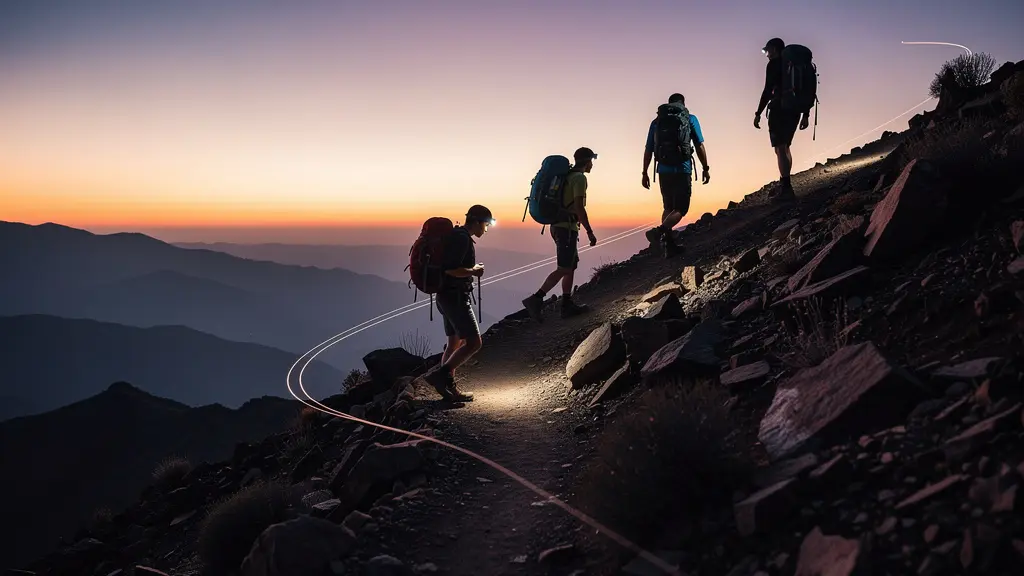
An early start also provides a critical buffer for safety and extraction. A hike or ride that begins at 5 AM can be completed by 8 or 9 AM, well before the heat becomes truly extreme. If something goes wrong—an injury, dehydration, or getting lost—you are still within a timeframe where emergency response is more feasible. Attempting the same activity in the afternoon leaves no margin for error, as conditions will only worsen as time passes.
Ultimately, the 5 AM start is not about “beating the heat” in a contest of toughness. It’s a strategic decision based on a scientific understanding of the UAE’s unique climate, designed to minimize risk and maximize the potential for a safe and enjoyable adventure.
RAK or Hatta: Which Destination Is Better for Hardcore Hiking?
For the serious hiker looking for a true challenge beyond marked tourist paths, the choice between Hatta and Ras Al Khaimah (RAK) is a critical one. While both offer mountainous terrain, they represent two fundamentally different philosophies of hiking. Hatta provides a curated and accessible adventure, whereas RAK offers raw, unforgiving wilderness. The “better” destination for hardcore hiking depends entirely on whether your definition of “hardcore” is about physical exertion on a safe route or the combined challenge of navigation, scrambling, and remoteness.
Hatta’s trail network is well-developed, with clear markers, designated start/end points, and nearby facilities. The challenge here is primarily physical. You can undertake long, strenuous hikes, including routes that extend along the border fence with Oman, but the risk of getting seriously lost is low. It’s an ideal location for pushing your endurance and enjoying the landscape within a controlled and managed environment. It’s “hardcore” in the sense of a demanding gym workout.
Ras Al Khaimah, particularly the area around Jebel Jais, is an entirely different proposition. This is the domain of true wilderness hiking. Trails are often unmarked, requiring advanced navigation skills with GPS and topographical maps. The terrain is defined by sharp, loose limestone and significant verticality and exposure. Routes like the infamous “Stairway to Heaven” are less about hiking and more about Class 3 or 4 scrambling, where a fall could have severe consequences. Accessibility is also a challenge, with many trailheads requiring a 4×4 vehicle. This is “hardcore” in the sense of a genuine expedition, where self-sufficiency and route-finding are as crucial as physical fitness.
The following table, based on information from local adventure guides, clarifies the distinction:
| Factor | Hatta | Ras Al Khaimah (Jebel Jais) |
|---|---|---|
| Trail Style | Well-marked, developed, curated adventure | Raw wilderness, unmarked routes |
| Signature Routes | Border fence trails, Oman extensions | ‘Stairway to Heaven’, ridge-line scrambles |
| Accessibility | Easy from Dubai, clear start/end points | Remote, often requires 4×4 |
| Terrain | Smoother paths, undulating wadis | Sharp limestone, verticality, exposure |
| Risk Level | Lower – facilities and marked paths | Higher – remoteness and route-finding |
| Skill Required | Moderate hiking experience | Advanced navigation and scrambling |
In conclusion, if your goal is a long, tough, but safe hike, Hatta is the superior choice. If you seek the ultimate test of mountain craft, navigation, and nerve, the raw and untamed trails of Ras Al Khaimah are where you will find your challenge.
20 Minutes or 1 Hour: What Is the Ideal Session Length for Stamina?
Determining the ideal training session length for building stamina in the UAE is not a one-size-fits-all answer; it is entirely dependent on the season. The physiological stresses of winter and summer are so vastly different that applying the same duration logic year-round is both ineffective and dangerous. The optimal strategy involves periodizing your training duration based on the environmental conditions.
During the winter season (November to March), conditions are perfect for building a strong endurance base. This is the time for longer, lower-intensity sessions. Aim for 60-90 minute outings in what is known as Zone 2—a conversational pace where you can comfortably hold a discussion. These longer sessions train your body to become more efficient at using fat for fuel, which is the cornerstone of long-distance stamina. The cool, dry air minimizes the thermoregulation cost, allowing your body to focus its energy on cardiovascular and muscular adaptation.
In the brutal summer season (June to September), this logic must be completely inverted. The goal is no longer to accumulate long hours but to achieve a high-quality stimulus in the shortest time possible before heat stress overwhelms the body. Short, high-intensity interval sessions of 20 to 30 minutes are far more effective. After about 30 minutes in extreme heat and humidity, the “Law of Diminishing Returns” kicks in: the physiological cost of thermoregulation (your body trying to cool itself) outweighs any training benefit. Your performance drops, injury risk skyrockets, and the recovery time needed from a 1-hour heat session can be over 48 hours, versus a 25-minute high-intensity session that allows for training the next day.
A critical rule, regardless of season, is that your session ends when your hydration runs low, not when your legs get tired. Especially in summer, your water supply is your time limit. Once you’re halfway through your water, you must turn back, no matter how good you feel.
In summary, build your endurance base with long, slow sessions in the winter. In the summer, maintain your fitness with short, sharp, and very early morning sessions to minimize heat stress and maximize recovery.
Key Takeaways
- Seasonal planning is non-negotiable: Summer demands pre-dawn starts and heat-proof gear, while winter opens up all-day adventures with different challenges.
- Go beyond temperature: Use metrics like the Wet-Bulb Globe Temperature (WBGT) and understand the danger of evening humidity to make safer decisions.
- Your equipment matters: Standard gear like butane gas canisters can fail in extreme heat. Adapt your kit with proven alternatives like liquid-fuel stoves.
Kitesurfing in Dubai: Where to Find Consistent Wind During Winter Months?
For kitesurfers, the UAE’s winter season is the prime time for wind. From late October to May, conditions become far more favorable, but the wind is not a constant. Success depends on understanding the two main wind types and knowing where and when to find them. The most powerful and consistent wind for kitesurfing in Dubai is the Shamal wind, a north-westerly that blows down from the Gulf.
The Shamal is not a daily phenomenon. It typically blows in cycles of 3 to 4 consecutive days, bringing strong and steady winds averaging between 15 to 20 knots. This is the ideal strength for most kitesurfers. The best spots to capitalize on the Shamal are the official kitesurfing beaches where the cross-onshore direction is safest. Nessnass Beach is arguably the top spot during a Shamal cycle, as it receives the full force of this wind. Jebel Ali Beach is another excellent option, often offering flatter water conditions due to its protected location.
The second type of wind is the local thermal sea breeze. This is a more regular, almost daily occurrence, but it is typically lighter, averaging 12-15 knots. This wind builds up as the land heats up faster than the sea, peaking between 2 PM and 5 PM. Kite Beach is famous for its reliable sea breeze, making it a perfect spot for afternoon sessions. However, its popularity means it can get very crowded.
To effectively plan your sessions, a combination of forecasting and real-time monitoring is essential. Use tools like Windfinder to check the forecast for Shamal systems and monitor the live readings from the station at Nessnass Beach. Joining local WhatsApp or Facebook groups for kitesurfers is also invaluable for getting real-time reports on which beach has the best conditions on any given day. For a change of scenery, consider a trip to Yas Island in Abu Dhabi, which has its own reliable afternoon thermal, or Umm Al Quwain for different coastal conditions.
With this seasonal plan, you’re now equipped to move beyond the calendar. Start by assessing your next trip’s environmental conditions and required gear adaptations to build a safe and thrilling UAE adventure at any time of year.