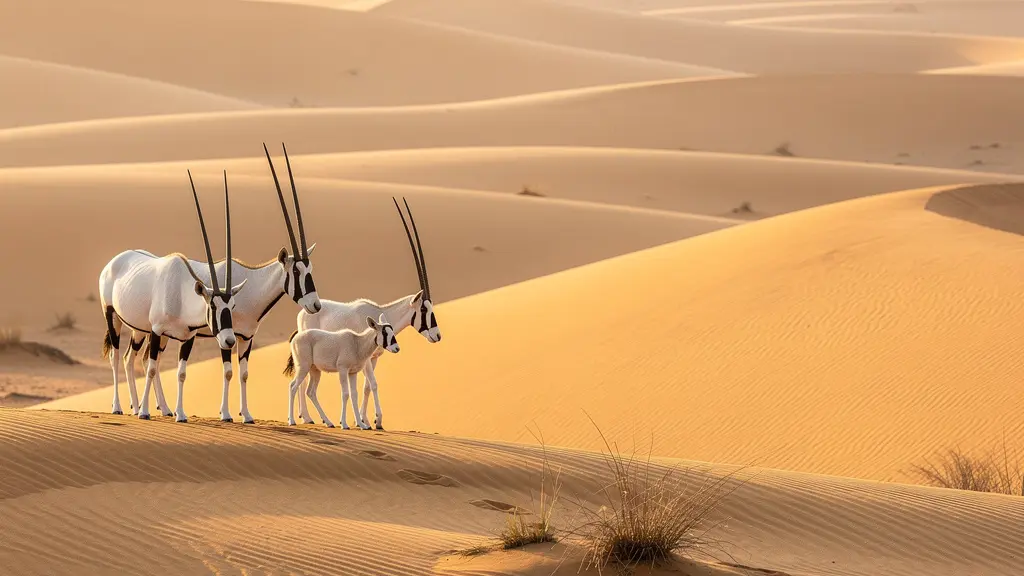
Many visitors hope to see the UAE’s national animal, the Arabian Oryx, but often end up on tours that only scratch the surface. The key isn’t just knowing where to go, but how to approach the desert with a guardian’s mindset. This guide reveals how you can independently and respectfully visit the Al Marmoom Desert Conservation Reserve, the primary sanctuary where these magnificent creatures roam free, by understanding the desert’s rhythm and the animals’ behavior for a truly wild encounter.
The first time you see it, it’s like a mirage. A flash of brilliant white against the endless ochre of the dunes. It’s not just an animal; it’s a symbol of survival, the Arabian Oryx, brought back from the brink. Many come to the UAE hoping for this very encounter, often booking a thrilling desert safari expecting wildlife to appear on cue between dune bashing and belly dancing. But this approach misses the soul of the experience. From a ranger’s perspective, the desert isn’t a playground; it’s a fragile, living sanctuary that demands respect.
The true magic of spotting an oryx in its natural habitat doesn’t come from a high-speed chase. It comes from quiet patience, from understanding the subtle language of the landscape, and from adopting a guardian’s gaze. It’s about knowing when to go, where to look, and how to move so that your presence is a whisper, not a shout. This is about more than just a photograph; it’s about bearing witness to one of conservation’s greatest success stories.
This guide is built on that principle. We will journey into the heart of the oryx’s recovery, learn the practical steps to visit their home without a guide, and understand the behaviors that allow for a respectful and rewarding observation, not just of the oryx, but of the entire desert ecosystem.
For those who prefer a visual summary, the following video offers a beautiful immersion into the world of the Arabian Oryx, perfectly complementing the detailed advice in this guide.
To help you navigate this journey, we have structured this guide to cover everything from the history of the oryx’s return to practical tips for wildlife photography in the desert. The following summary outlines the key areas we will explore.
Summary: A Ranger’s Field Guide to UAE Wildlife
- Why Has the Arabian Oryx Population Bounced Back from Extinction?
- How to Visit the Al Marmoom Desert Conservation Reserve Without a Guide?
- Ras Al Khor or Wasit Wetland: Which Is Better for Flamingo Photography?
- The Noise Mistake That Scares Gazelles Away Before You See Them
- When to Visit the Wetlands to See the Maximum Number of Migratory Species?
- Why Are Mangroves Critical for Protecting the UAE Coastline from Erosion?
- Lahbab (Red Dunes) or Conservation Reserve: Which Safari Is More Scenic?
- Morning vs Evening Desert Safari: Which One Offers the Best Photography Light?
Why Has the Arabian Oryx Population Bounced Back from Extinction?
The sight of an Arabian Oryx today is a living testament to a legacy of determined conservation. By the 1960s, the species was hunted to extinction in the wild. Its return is not an accident but the result of a visionary effort rooted in a deep respect for the region’s natural heritage. This comeback story is one of the world’s most successful reintroduction programs, driven by foresight and international cooperation.
The turning point came from a place of preservation. As the Environment Agency Abu Dhabi notes, the late Sheikh Zayed bin Sultan Al Nahyan, the founding father of the UAE, was instrumental. In a prescient move, he initiated the first conservation breeding program in Al Ain back in 1968, long before the species officially vanished from the wild.
Case Study: The “World Herd” at Phoenix Zoo
The global effort was just as critical. The “World Herd,” a foundational breeding group, was established at the Phoenix Zoo in 1963 from just nine individuals. This small, protected population became the genetic wellspring for the future. By 2002, the program had celebrated its 225th birth, and today, most wild Arabian Oryx trace their lineage back to this crucial initiative, showcasing the power of collaborative conservation.
These efforts have paid remarkable dividends. Today, the desert is alive again. A testament to this success, recent conservation data shows 8,016 Arabian Oryx in the UAE, with the majority thriving in Abu Dhabi’s protected areas. This isn’t just about numbers; it’s about restoring the balance of a fragile ecosystem and ensuring its keystone species can once again shape the landscape. The oryx’s survival is a powerful reminder that with commitment, even the most dire environmental stories can be rewritten.
How to Visit the Al Marmoom Desert Conservation Reserve Without a Guide?
The Al Marmoom Desert Conservation Reserve is the heart of Dubai’s wild landscape and your best opportunity to see the Arabian Oryx for free, in a truly natural setting. While many commercial tours operate here, a self-guided visit offers a more profound and personal connection to the environment. It requires preparation and respect, but the reward is an unfiltered experience of the desert’s rhythm.
The key to a successful independent trip is understanding the reserve’s layout. It is not a gated park with a single entrance but a vast, protected area with varying levels of accessibility. The most visitor-friendly zones are centered around the Al Qudra Lakes, which are open to the public 24/7 without permits or fees. This area is a haven for birdwatchers and cyclists, but it’s also where you have a good chance of spotting oryx and gazelles, especially during the cooler hours of early morning and late afternoon when they come to graze and drink.
Knowing the difference between accessible and restricted zones is crucial for both your safety and the protection of the habitat. The following breakdown clarifies where you can and cannot go on your own.
| Area Type | Access Level | Activities Allowed | Wildlife Density |
|---|---|---|---|
| Al Qudra Lakes | Open 24/7 | Cycling, birdwatching, photography | High (flamingos, 200+ bird species) |
| Love Lake Area | Open access | Picnicking, stargazing, camping | Moderate |
| Core Conservation Zone | Guided tours only | Wildlife drives with operators | Very high (oryx breeding areas) |
| Saruq Al Hadid Site | Limited access | Archaeological viewing | Low |
To make the most of your self-guided tour, careful planning is paramount. The desert is an unforgiving environment, and being prepared ensures a safe and successful visit. The following checklist covers the essential points for any independent explorer.
Your Checklist for a Self-Guided Al Marmoom Visit
- Access Points: Enter the reserve via the E66 (Dubai-Al Ain Rd) or E77 (Expo Rd). No permits or entry fees are required for general wildlife spotting in public areas.
- Vehicle & Parking: A standard car is sufficient for the paved roads around Al Qudra. Park only in designated areas, like near Last Exit, for supplies and facilities.
- Stay on Track: To protect fragile vegetation and animal habitats, always stay on established tracks. Off-roading is strictly prohibited and can result in significant fines.
- Optimal Timing: Plan your visit for the first two hours after sunrise or the last two hours before sunset. This is when wildlife is most active and the light is best.
- Essential Gear: Bring binoculars for distant viewing, plenty of water, and sun protection. There are no shops or facilities in the core viewing areas, so be self-sufficient.
Ras Al Khor or Wasit Wetland: Which Is Better for Flamingo Photography?
Beyond the desert dunes, the UAE’s coastal wetlands offer another spectacular wildlife experience, especially for bird photographers. The Greater Flamingos that flock here are an iconic sight, and two sanctuaries stand out: Ras Al Khor Wildlife Sanctuary in Dubai and Wasit Wetland Centre in Sharjah. Choosing between them depends entirely on the type of photograph you want to create. Each offers a dramatically different context for capturing these elegant birds.
Ras Al Khor is the more famous of the two, an urban oasis nestled shockingly close to the city. The main draw here is the incredible juxtaposition of nature and metropolis. From the viewing hides, you can frame hundreds of flamingos with the iconic Dubai skyline, including the Burj Khalifa, in the background. This creates a powerful, symbolic image that tells a story of co-existence. However, the viewing is from fixed, air-conditioned hides, which can limit your angles and creative freedom. The birds are often at a distance, requiring a telephoto lens (300mm or more) for frame-filling shots.
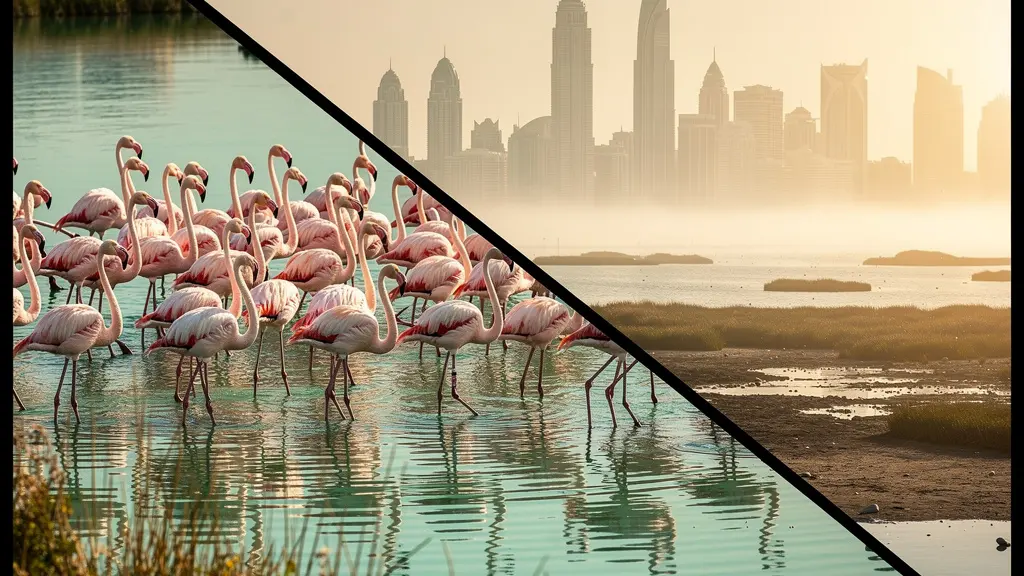
Wasit Wetland Centre, in contrast, offers a more naturalistic and immersive experience. The sanctuary is larger, and the environment feels more wild and secluded, with no skyscrapers dominating the horizon. The design allows for more varied perspectives, including open-air viewing areas and pathways that bring you closer to the water’s edge. This proximity can be an advantage for photographers who want clean, intimate portraits of the birds without the urban backdrop. It’s a place for capturing behavior—feeding, preening, interacting—in a setting that feels untouched by the city. It prioritizes the serenity of the ecosystem over the drama of the skyline.
Ultimately, the choice is artistic. For a photo that screams “Dubai,” with its unique blend of ambition and nature, Ras Al Khor is unbeatable. For a purer, more intimate wildlife photograph that could be taken anywhere in the natural world, Wasit Wetland provides the ideal canvas.
The Noise Mistake That Scares Gazelles Away Before You See Them
Spotting the slender Arabian Sand Gazelle (or ‘Reem’) is a subtle art. They are far more skittish than the oryx and possess an acute sense of hearing. I’ve seen it a hundred times: a car slows down, an excited visitor spots a distant shape, and in their haste, they make a simple mistake that sends the gazelle bounding away before a proper look or photograph can be taken. The mistake isn’t just making noise; it’s making the *wrong kind* of noise.
The first rule we follow in the reserve is to manage our sensory footprint. Wildlife in these areas is habituated to the low, constant rumble of a vehicle engine on a track. It’s a predictable sound that often doesn’t signal danger. The real triggers are sharp, high-pitched, and sudden noises. The most common culprit is a car door. The sharp “clack” of it opening, followed by the louder “slam” of it closing, is an acoustic red flag for a prey animal. It’s unnatural and signals an abrupt change in the environment.
Another common error is hushed, excited whispering. To a gazelle, a high-frequency whisper can sound surprisingly similar to the hiss of a predator. A low, calm, conversational tone is far less alarming. When you spot a gazelle, the best practice is to stop the vehicle slowly, turn off the engine, and wait. Don’t immediately open the door. Use your car as a hide. Lower the window slowly and watch from inside. If you must exit, do so with deliberate, slow movements, and avoid slamming the door at all costs. Let it click shut as gently as possible.
A Lesson from the Dubai Desert Conservation Reserve
This principle of minimal disturbance is a core tenet of wildlife management. Experts at the Dubai Desert Conservation Reserve consistently emphasize that allowing animals to maintain their natural behavior is paramount. By keeping a respectful distance and minimizing sudden disturbances, we not only increase our chances of a prolonged sighting but also act as responsible guardians of the ecosystem, ensuring the animals are not put under unnecessary stress.
So, the next time you see that flicker of movement on the horizon, remember to think about your sound profile. Kill the engine, stay in the car, and if you must speak, do so in a low, calm voice. The gazelle might just reward your quiet patience by continuing to graze peacefully, offering you a moment of genuine connection with the wild.
When to Visit the Wetlands to See the Maximum Number of Migratory Species?
While the oryx commands the desert, the UAE’s wetlands come alive with a completely different kind of spectacle during the winter months. The country sits at a crucial crossroads of the Asia-Africa migratory flyway, making it a vital stopover point for an astonishing diversity of birds. The scale is immense; monitoring by the Environment Agency Abu Dhabi shows that nearly 2 million migratory birds visit the UAE annually, turning its wetlands and deserts into a temporary, bustling metropolis of feathers.
Timing your visit is everything. The peak season for birdwatching is well-defined, offering a window of several months to witness this natural wonder. As Dr. Reza Khan, a renowned wildlife specialist at Dubai Safari Park, confirms, the main event unfolds in the cooler part of the year.
The migratory bird season in UAE begins in the winter, roughly beginning in November and continuing up to February.
– Dr. Reza Khan, Dubai Safari Park Wildlife Specialist
While November to February marks the core season, the migration is a flowing tide with distinct phases. Early arrivals and late departures extend the viewing opportunities. To maximize your chances of seeing the highest numbers and greatest diversity, including rare visitors like the Broad-billed Sandpiper, targeting the absolute peak of the season is key. The following calendar breaks down what to expect month by month.
| Month | Migration Status | Key Species | Best Viewing Conditions |
|---|---|---|---|
| October | Early arrivals begin | Warblers, flycatchers | Variable, still hot |
| November | Main migration starts | Waders, ducks, flamingos arrive | Cooling temperatures |
| December-January | Peak numbers | All species present including broad-billed sandpipers | Ideal – cool and clear |
| February | Stable populations | Breeding activity begins | Excellent visibility |
| March-April | Departure begins | Last chance for late migrants | Warming but good |
For any avid birdwatcher, planning a trip between December and January is the ultimate goal. During these months, the wetlands are at their most vibrant, teeming with life. The cooler weather also makes for more comfortable and longer observation sessions, allowing you to fully immerse yourself in one of nature’s most impressive journeys.
Why Are Mangroves Critical for Protecting the UAE Coastline from Erosion?
The UAE’s natural defenses are not only found in the vast, dry desert but also along its vibrant coastline. Here, the humble mangrove forest stands as a silent, powerful guardian. These unique ecosystems are more than just a haven for birds and marine life; they are a living, breathing barrier, a critical line of defense that protects the land from the sea. Their importance in a country with such an extensive coastline cannot be overstated.
The secret to their protective power lies beneath the water’s surface. The mangroves’ intricate and dense network of prop roots acts like a natural net, dissipating the energy of waves before they can strike the shore with full force. This slows down water flow, causing suspended sediments to settle and accumulate. Over time, this process not only prevents coastal erosion but can actually build up land, securing the coastline against the constant pressure of the sea and the growing threat of rising sea levels.
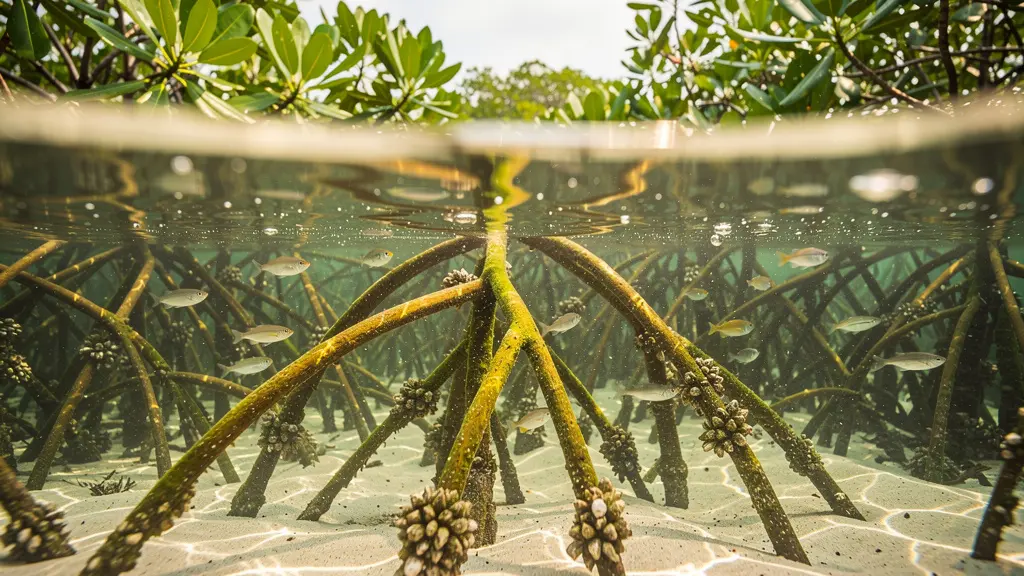
Beyond their role as a physical shield, these forests are a cornerstone of biodiversity. The calm, nutrient-rich waters trapped by the roots serve as a vital nursery for countless species of fish, crabs, and shrimp. This abundance of life, in turn, supports a vast array of bird species, making mangrove parks like those in Abu Dhabi and Dubai essential hubs for the region’s ecological health. They are a perfect example of nature-based solutions, where a healthy ecosystem provides essential services for both the environment and humanity.
The Jabal Ali Wildlife Sanctuary: A Living Example
The protective role of mangroves is clearly demonstrated at the Jabal Ali Wildlife Sanctuary. Here, pristine beaches are buffered by an expansive mangrove forest that forms a natural boundary between the terrestrial and marine environments. This sanctuary showcases how these coastal forests serve as a frontline defense, absorbing storm surges and stabilizing the shoreline, proving their immense value as a natural infrastructure asset.
Protecting and expanding these mangrove forests is therefore a critical strategy for the UAE’s long-term environmental security. They are not just beautiful landscapes but hardworking ecosystems that safeguard our shores, nurture marine life, and capture significant amounts of carbon, making them an invaluable ally in the face of a changing climate.
Lahbab (Red Dunes) or Conservation Reserve: Which Safari Is More Scenic?
The term “desert safari” can mean two very different things in the UAE, and the scenery you experience depends entirely on your choice. Do you go for the dramatic, fiery dunes of Lahbab, or the subtle, living landscape of a conservation reserve like Al Marmoom? The answer hinges on what you define as “scenic.” Is it the epic, monolithic beauty of pure sand, or the quiet, dynamic beauty of a functioning ecosystem?
Lahbab, often marketed as the “Red Dunes,” offers what most people imagine when they think of an Arabian desert. It’s a landscape of dramatic, monolithic beauty. The iron oxide in the sand gives the dunes a deep reddish hue that becomes breathtakingly vibrant during sunrise and sunset. This is the prime location for adrenaline-fueled activities like dune bashing and sandboarding. Photographically, it’s a paradise for epic, wide-angle landscape shots and classic silhouettes against a fiery sky. However, this is largely a sterile beauty; vegetation is minimal, and wildlife sightings are rare.
A conservation reserve, on the other hand, offers a subtle and living beauty. As the experts at Dubai City Tourism aptly put it, it’s about “the chance to see a gazelle against the sand.” The dunes here are often a paler, golden color, interspersed with life-giving Ghaf trees, hardy shrubs, and patches of green. The scenery is less about uniform grandeur and more about texture, contrast, and life. This is where you trade the adrenaline of dune bashing for the quiet thrill of spotting an oryx herd on the horizon. It’s a landscape that tells a story of survival and ecological balance.
The following table, based on information from the Al Marmoom Desert Reserve Guide, directly compares the two experiences:
| Aspect | Lahbab Red Dunes | Conservation Reserve |
|---|---|---|
| Primary Appeal | Dramatic monolithic red sand formations | Living desert ecosystem with wildlife |
| Best For | Adrenaline activities & Instagram shots | Wildlife photography & serenity |
| Landscape Features | Pure sand, minimal vegetation | Ghaf trees, shrubs, varied textures |
| Wildlife Viewing | Minimal | High – oryx, gazelles, birds |
| Crowd Level | High during peak times | Lower, more peaceful |
Ultimately, neither is “better,” they simply serve different purposes. If your goal is a thrilling ride and postcard-perfect pictures of vast, empty dunes, Lahbab is your destination. If you seek a more contemplative experience and the unique beauty of a desert teeming with life, then a conservation reserve is, without question, the more scenic and rewarding choice.
Key Takeaways
- The Al Marmoom Desert Conservation Reserve is the best place for a self-guided trip to see wild Arabian Oryx, especially around the publicly accessible Al Qudra Lakes.
- The oryx’s return from extinction is a major conservation success story, driven by the foresight of Sheikh Zayed and international breeding programs.
- Respectful observation is key to successful wildlife spotting. This means moving slowly, staying on tracks, and avoiding sudden, high-pitched noises like slamming car doors.
Morning vs Evening Desert Safari: Which One Offers the Best Photography Light?
For a photographer in the desert, light is everything. It sculpts the dunes, defines textures, and sets the mood. Both morning and evening safaris offer beautiful conditions, but they are not the same. Each has a distinct quality of light that lends itself to different types of images. Choosing between them depends on the specific photographic style you want to achieve. The key window in both cases is the “golden hour,” the period of soft, directional light just after sunrise and just before sunset.
Professional photographers confirm there are typically only 45-60 minutes of golden hour light to work with, so being prepared is crucial. Morning light, after sunrise, is often clearer and crisper. As the sun is low in the sky, it creates long, sharp shadows that beautifully emphasize the delicate ripples and textures on the surface of the dunes. This side-lighting is perfect for creating dramatic, high-contrast black and white images or detailed landscape shots. It’s also the time when wildlife is most active after a cool night, offering better chances to capture animals foraging in clean, morning light.
Evening light, leading up to sunset, tends to be warmer, softer, and more atmospheric. The dust and haze that have built up during the day diffuse the sunlight, creating a dreamy, golden glow. This light is ideal for creating dramatic silhouettes of camels or oryx against a vividly colored sky. It’s less about capturing fine detail and more about conveying emotion and mood. After the sun dips below the horizon, the “blue hour” offers another opportunity for unique, moody shots with deep blue skies, before the stars take over for stunning night photography, especially during the clear winter months.
To maximize your photographic success, apply techniques specific to the time of day:
- Morning Light: Use strong side-lighting to reveal the texture of dune ripples with crisp shadows. Capture wildlife when they are most active in the cooler temperatures.
- Evening Light: Position yourself to create dramatic silhouettes of subjects like oryx or camels on dune crests against the setting sun. Take advantage of the warm, diffused light for atmospheric, painterly shots.
- Blue Hour (Post-Sunset): Continue shooting after the sun has set to capture the landscape under a rich, deep blue sky for a unique and tranquil mood.
- Night: In a dark-sky area, use a tripod and long exposures (10-20 seconds) to capture the Milky Way, which is particularly visible in the winter.
Now that you are equipped with the knowledge of where, when, and how to observe the UAE’s incredible wildlife, the final step is to venture out with the right mindset. Approaching the desert as a quiet observer, a guardian of its tranquility, is the true secret to a rewarding experience. Go forth, and may your patience be rewarded with the unforgettable sight of a wild Arabian Oryx.