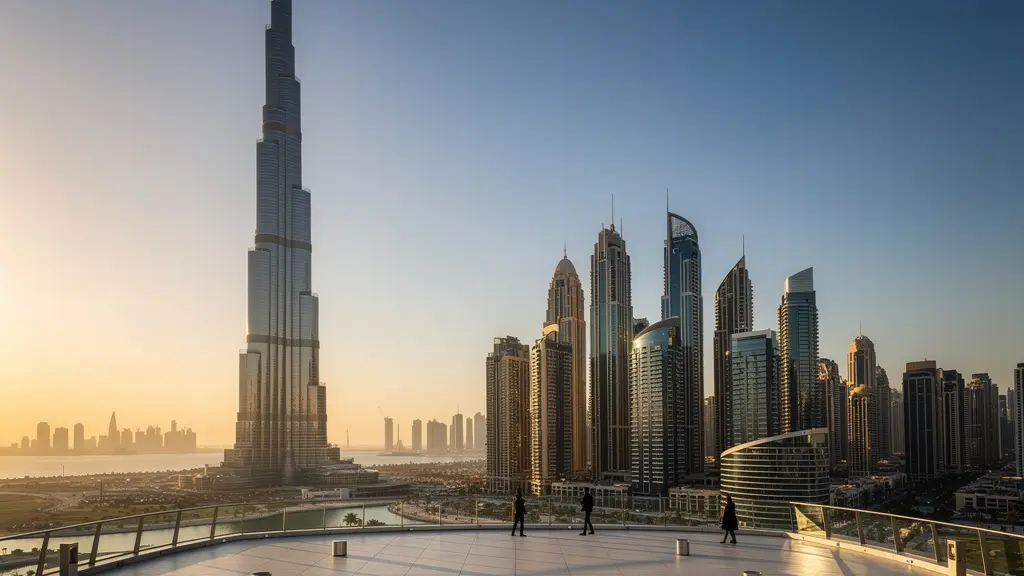
The most stunning Dubai skyline photos aren’t taken from the most crowded decks, but from the smartest, most strategic vantage points.
- Mastering timing and light—like chasing sunset on Sheikh Zayed Road or arriving at the fountains *after* a show—beats paying for premium access.
- Embrace atmospheric conditions like summer haze and use mobile vantage points such as the Dubai Metro for unique, dynamic compositions.
Recommendation: Ditch the typical tourist checklist. Start planning your shots like a photo expedition, focusing on one or two key locations per day to truly capture their essence.
For any photographer or discerning traveler, Dubai presents a paradox. You’re drawn to its futuristic skyline, a testament to human ambition sculpted from steel and glass, yet the quest for a clear, unobstructed view often leads to the same crowded observation decks and overpriced rooftop bars as everyone else. The classic postcard shot of the Burj Khalifa is easily found, but capturing the city’s soul—the interplay of light, shadow, and architectural geometry—requires a different approach. You’re left wondering if it’s possible to find a unique perspective without battling for a spot at the window.
Most guides will point you to the “At The Top” experience or the Dubai Frame, and while these are impressive feats of engineering, they offer a standardized, often sterile, view of the city. They are the starting point, not the destination. The real magic for a photographer happens at the margins, in the moments before dawn or during the blue hour, from angles that reveal the city’s scale and texture in unexpected ways. It’s about understanding the city’s rhythm, not just its geography.
But what if the key wasn’t simply finding a different location, but adopting a different mindset? This guide moves beyond a simple list of places. It’s a strategic manual for the urban explorer, focused on the art of light-chasing, compositional geometry, and crowd-flow hacking. We’ll treat the city not as a static backdrop, but as a dynamic subject. This is about transforming your visit from a sightseeing tour into a photographic expedition, equipping you with the insider knowledge to capture images that tell a story.
Throughout this article, we’ll deconstruct the best ways to photograph Dubai’s icons. We’ll analyze the strategic choices between different viewpoints, master the challenges of the desert climate, and uncover itineraries that follow the light. Get ready to see the city’s skyscrapers from an entirely new perspective.
Table of Contents: A Strategic Guide to Dubai’s Skyline
- Why Does Building Skyscrapers on Sand Require Technology That Costs Billions?
- How to Choose Between Level 124 and Level 148 at Burj Khalifa for Sunset?
- Dubai Marina or Downtown: Which Skyline View Is Better for Night Photography?
- The Weather Mistake That Ruins 40% of Skyline Photos in Summer
- When to Arrive at the Fountain Area to Secure a Front-Row Railing Spot?
- In Which Order Should You Visit Sheikh Zayed Road Towers for Sunset Light?
- Sea View or City View: Which Side Is Quieter at Night?
- How to Tour UAE Modern Architecture Highlights in 48 Hours?
Why Does Building Skyscrapers on Sand Require Technology That Costs Billions?
Before you even point your camera, understanding the ground beneath Dubai’s giants adds a profound layer to your appreciation. Photographing these structures isn’t just capturing height; it’s capturing ambition. The city’s foundation of loose sand and weak rock seems antithetical to building the world’s tallest towers, and overcoming this challenge is what makes the skyline so remarkable. The immense cost isn’t just for luxury finishes; it’s for the invisible engineering that allows these structures to exist at all.
Engineers had to develop pioneering solutions to anchor these megastructures securely. Instead of conventional foundations, they rely on a combination of deep friction piles and massive raft foundations. It’s a two-part strategy: hundreds of piles are drilled deep through the unstable sand to grip the stable bedrock far below, while a thick concrete raft at the base distributes the building’s colossal weight over a massive area, much like snowshoes prevent you from sinking into snow. This dual system provides the stability needed for photographers to take sharp, long-exposure shots even from the highest floors without perceptible sway.
This commitment to stability and comfort involves several key technologies that are fundamental to the existence of Dubai’s skyline:
- Deep friction piles that penetrate through sand layers to anchor into the stable bedrock.
- Massive raft foundations that distribute the immense weight across a larger surface area to prevent sinking.
- Tuned mass dampers, giant pendulums near the top of towers, that counteract wind-induced movement and reduce building sway, ensuring visitor comfort and photo stability.
- Advanced structural systems that allow for column-free panoramic glass surfaces, the dream of any skyline photographer.
- Specialized concrete mixtures designed to withstand the harsh temperatures and corrosive elements of the desert environment.
So, when you frame your shot, remember that the view is made possible by a hidden world of engineering. The billions spent below ground are what guarantee the breathtaking, stable, and clear views from above.
How to Choose Between Level 124 and Level 148 at Burj Khalifa for Sunset?
The Burj Khalifa is the obvious first stop, but for a photographer, the choice of observation deck is a critical strategic decision, not just a matter of budget. It’s a trade-off between access, crowd density, and the quality of your final image. Level 124/125 is the standard experience, bustling with tourists. Level 148, the SKY experience, is the premium option. While significantly more expensive, it can be the difference between a frustrating experience and a portfolio-worthy shot, especially during the coveted sunset window.
The primary advantage of Level 148 is twofold: fewer people and an outdoor terrace. The lower crowd density means more freedom to move and set up your shot without elbows in your frame. More importantly, the outdoor terrace allows you to shoot without the thick, often smudged, glass of the lower levels. This eliminates the frustrating glare and reflections that can ruin a sunset photo, giving you crisp, clear images. You are paying for space and clarity.

As the illustration shows, the experience at Level 148 is about quality over quantity. The ability to find a quiet corner on the terrace and patiently wait for the perfect light is a luxury that the crowded lower decks simply cannot offer. For a photographer chasing the perfect golden hour shot, this exclusive access is often worth the premium price.
For a photographer, the choice isn’t just about height, it’s about value and opportunity. A breakdown for photographers highlights these key differences:
| Feature | Level 124/125 | Level 148 SKY | The Lounge (152-154) |
|---|---|---|---|
| Height | 452m & 456m | 555m | 585m |
| Ticket Price (Adult) | From AED 149 | AED 379 | AED 600+ |
| Operating Hours | 8:30 AM – 11:00 PM | 12:00 PM – 10:00 PM | 9:30 AM – 11:00 PM |
| Queue Priority | Standard | Fast Track | VIP Access |
| Outdoor Access | Behind glass | Outdoor terrace | Premium lounge |
| Crowd Density | High | Moderate | Very Low |
| Photography Quality | Glass reflections | Clear outdoor shots | Exclusive angles |
Ultimately, the decision rests on your goal. If you want a quick snapshot and to “tick the box,” Level 124 is sufficient. If you are serious about capturing a spectacular, professional-quality sunset image, investing in Level 148 provides a significantly higher chance of success.
Dubai Marina or Downtown: Which Skyline View Is Better for Night Photography?
When the sun goes down, Dubai transforms into two distinct galaxies of light: the cool, dramatic blues and whites of Downtown, and the warm, vibrant glow of the Marina. For a night photographer, choosing between them is a matter of style and subject. Downtown offers iconic, monumental compositions, while the Marina provides dynamic, reflection-filled scenes. There is no single “better” view; there is only the right view for the shot you want to create.
Downtown Dubai is anchored by the Burj Khalifa and the choreographed spectacle of the Dubai Fountain. The lighting is theatrical and centralized. The challenge here is crowd density and tripod space. The prime spots along the waterfront are intensely competitive. Your best bet is to focus on capturing the sheer scale of the architecture, using the fountain shows as a burst of foreground interest. In contrast, the Dubai Marina is a 7km-long canyon of illuminated skyscrapers surrounding a man-made canal. The atmosphere is more ambient and decentralized. The key photographic element here is water reflections and light trails from the endless parade of yachts and dhows. The extended Marina Walk offers countless uncrowded spots where you can set up a tripod and experiment with long exposures undisturbed.
This table breaks down the key photographic considerations for each location, based on photographer-focused comparisons of the two areas:
| Aspect | Dubai Marina | Downtown Dubai |
|---|---|---|
| Walkway Length | 7km Marina Walk | 3.5km Boulevard |
| Light Quality | Warm ambient, dynamic | Cool LED, dramatic |
| Crowd Density | Distributed along 7km | Concentrated near fountains |
| Tripod Spots | Multiple uncrowded areas | Limited, highly contested |
| Key Features | Yacht light trails, reflections | Fountain shows, Burj Khalifa |
| Best Time | Blue hour to midnight | 30 min after fountain shows |
Your choice depends on your creative goal. For a classic, powerful shot of Dubai’s most famous icon, brave the crowds of Downtown. For more creative, serene, and reflection-based compositions, the sprawling expanse of the Marina is your canvas.
Action Plan: Your Dubai Night Photography Hit-List
- Start at Bluewaters Island to capture composite views that include both the Marina and the JBR skyline in a single frame.
- Move to the quieter sections of Marina Walk, particularly between Pier 7 and the Marina Mall, for unique angles and reflections.
- Visit The View at The Palm (240m elevation) for breathtaking 360-degree panoramic shots of the entire coastline at night.
- Consider an evening Dubai Ferry cruise for dynamic, water-level perspectives of the illuminated skyline that are impossible to get from land.
- End your tour at Dubai Creek Harbour for a unique, distant composition that captures the entire Downtown skyline in a single, sweeping vista.
The Weather Mistake That Ruins 40% of Skyline Photos in Summer
Many visitors arrive in Dubai expecting the crystal-clear, deep-blue skies they see in promotional photos, only to be met with a thick, milky haze that veils the skyline. This isn’t bad luck; it’s a predictable weather pattern. The critical mistake photographers make is treating this haze as a flaw to be avoided, rather than an atmospheric element to be mastered. From a photography standpoint, understanding and embracing the haze is key to creating unique and evocative images during the hotter months.
This phenomenon is most pronounced in the summer, as extreme atmospheric haze and humidity from June to September can dramatically reduce visibility. Instead of fighting it, think of it as a natural soft-focus filter. The haze creates beautiful, painterly layers, with distant buildings fading into soft silhouettes. This effect, known as atmospheric perspective, can add a tremendous sense of depth and scale to your images, making the skyline feel even more vast and mysterious. The trick is to shoot with this effect in mind, not against it.
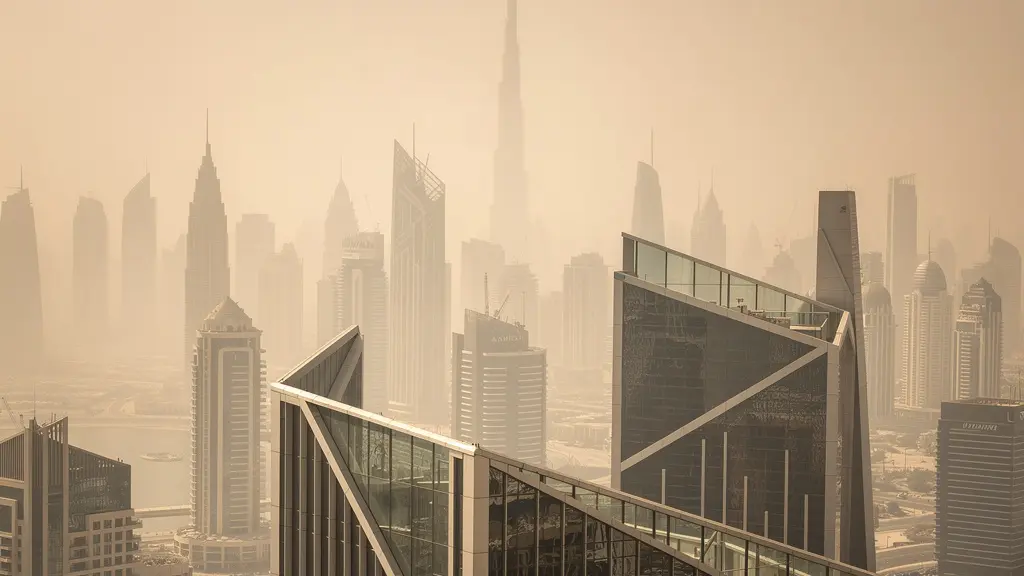
Rather than canceling a shoot, adapt your technique. Use the haze to create minimalist, ethereal compositions where the city’s geometry is simplified into elegant shapes and gradients. This requires a shift in technical approach, focusing on capturing the maximum amount of data to work with in post-processing.
Here are some technical solutions for turning hazy conditions into a creative advantage:
- Shoot exclusively in RAW format to capture the maximum dynamic range and color information, which is crucial for post-processing.
- Use a circular polarizing filter (CPL) to cut through some of the glare and increase contrast, making the layers more distinct.
- Apply a graduated neutral density (GND) filter to balance the bright, hazy sky with the darker foreground buildings.
- In post-processing, leverage Adobe Lightroom’s Dehaze tool judiciously (a setting of +30 to +50 is often effective for Dubai summer conditions) to restore contrast without making the image look unnatural.
- Schedule shoots for the very early morning (5:30-7:00 AM), when lower temperatures can mean slightly less humidity and clearer air.
Don’t let the weather forecast deter you. By treating the summer haze as a feature, not a bug, you can capture a side of Dubai’s skyline that most photographers miss.
When to Arrive at the Fountain Area to Secure a Front-Row Railing Spot?
The Dubai Fountain is a magnetic spectacle, and securing a front-row spot along the railing feels like winning a lottery. Most people assume the key is to arrive early and camp out, but this is an inefficient and often frustrating strategy. The real secret lies in understanding and exploiting the crowd’s natural ebb and flow. This is a classic case of “crowd-flow hacking,” where timing is more important than endurance.
The fountain performs shows every 30 minutes from 6 PM to 11 PM. The common mistake is to try and secure a spot 20-30 minutes *before* a show. The area becomes incredibly congested, and your view is likely to be blocked. The insider strategy is counter-intuitive: the best time to get a prime spot is 5 to 10 minutes *after* a show has ended. As the massive crowd from the previous show disperses, a window of opportunity opens up. The waterfront railing is briefly empty before the next wave of spectators begins to gather. By moving in during this lull, you can claim a front-row position with minimal effort and hold it for the next performance.
Beyond this timing trick, there are several alternative vantage points that offer superior and less crowded views. The elevated terrace of the Apple Store in Dubai Mall provides an excellent, slightly raised perspective over the heads of the ground-level crowd. This is arguably one of the best free viewpoints. For a classic, symmetrical composition with the Burj Khalifa, the Souk Al Bahar bridge is ideal, but be aware that it fills up very early, often 45 minutes before a show.
For the ultimate uncrowded experience that guarantees a front-row, dynamic view, consider booking an Abra boat ride on the lake itself. For a fee, these traditional boats cruise the lake during the shows, placing you directly on the water and offering unparalleled, moving perspectives of the fountains with the skyline as a backdrop. It completely removes the stress of finding a spot and provides a unique photographic opportunity.
In Which Order Should You Visit Sheikh Zayed Road Towers for Sunset Light?
Sheikh Zayed Road (SZR) is not a single viewpoint; it’s a 12-lane artery of light flanked by a canyon of architectural wonders. For a photographer, it’s a dynamic subject that changes dramatically with the light. Capturing its essence during sunset requires a mobile strategy—a “light-chasing” itinerary that uses pedestrian bridges and the city’s own infrastructure as moving vantage points. The goal is to follow the sun’s journey across the city, using its golden and blue hour light to sculpt the towers.
The key is to start on the east side of the road before sunset and finish on the west side after the sun has dipped below the horizon. This allows you to first capture the warm, golden light illuminating the west-facing facades of the towers, and then later, to shoot the towers as dramatic silhouettes against the colorful sunset sky, before finally capturing them illuminated against the deep blue of the twilight hour. This progression ensures you capture the full spectrum of the evening’s light.
A highly effective and unique way to execute this is by using the Dubai Metro. The driverless front and rear carriages of the elevated Gold Line offer unparalleled, climate-controlled, mobile viewing platforms. The track runs parallel to the highway, providing clear, sweeping views of the entire SZR skyline. While tripods are prohibited, the smooth ride allows for sharp handheld shots, especially as the journey from south to north during sunset captures the entire transformation from golden to blue hour.
Here is a precise sunset photography itinerary for Sheikh Zayed Road:
- 4:30 PM: Start at the Financial Centre Metro Station overpass (east side). This high vantage point is perfect for capturing the direct golden hour light hitting the west-facing facades of the towers.
- 5:15 PM: Move to the Business Bay Metro Station for elevated views of the unique architecture in this district, including the twisted Cayan Tower in the distance.
- 5:45 PM: Cross to the pedestrian bridges on the west side of SZR. From here, you can capture stunning silhouette shots of the skyscrapers against the vibrant orange and pink sunset sky.
- 6:15 PM: Board the Dubai Metro (Gold Line) in the front carriage, heading north. This provides a continuous, moving panoramic view of the skyline as the city lights begin to turn on.
- 6:45 PM: Exit at the DIFC station. This area is perfect for blue hour photography, capturing the fully illuminated towers against the last deep blue light of the day.
Sea View or City View: Which Side Is Quieter at Night?
For a photographer staying in Dubai, the choice of hotel room view—sea or city—is more than an aesthetic preference; it’s a practical decision that impacts both sleep and photographic opportunities. The “quieter” side depends entirely on your sensitivity to different types of noise and light. There is no universally quiet option, only a better choice for your specific needs.
A City View, especially overlooking Sheikh Zayed Road or Downtown, offers a mesmerizing, non-stop light show. It’s a dynamic, ever-changing photographic subject right outside your window. However, it comes with two main drawbacks: constant, low-frequency traffic hum and significant light pollution. The traffic noise acts like a form of white noise, which some people find soothing, but the ambient light can bleed into the room, potentially disrupting sleep for those sensitive to light. A Sea View, typically facing the Arabian Gulf from areas like JBR or the Palm, provides a darker, more natural environment. The soundscape is characterized by the intermittent, high-frequency sounds of beach clubs, distant traffic, and people, which can be more jarring than a constant hum. The primary benefit is the significantly lower light pollution, allowing for darker rooms and better sleep quality.
For those looking for a compromise, hotels in areas like Jumeirah Lakes Towers (JLT) or parts of Business Bay offer a smart hybrid solution. These locations are set back from the main highways and beachfronts, offering dual-aspect views from corner rooms. They provide skyline visibility while experiencing significantly less direct traffic noise, creating a more balanced acoustic environment.
This table helps compare the sensory experience of each view to help you make the best choice for your stay:
| Factor | Sea View (JBR/Marina) | City View (SZR) |
|---|---|---|
| Noise Type | Intermittent, high-frequency | Constant, low-frequency hum |
| Noise Sources | Beach clubs, vehicles, people | Traffic white noise |
| Peak Noise Hours | 8 PM – 2 AM (weekends) | 7-9 AM, 5-7 PM (weekdays) |
| Light Pollution | Minimal, darker rooms | High, ambient room light |
| Sleep Quality | Better for light-sensitive | Better for noise-sensitive |
| View Appeal | Natural, calming water | Dynamic light show |
Your decision should be based on a personal calculation. If you prioritize a dark room for sleeping, choose the sea view. If you can sleep through anything and want a 24/7 light show to photograph from your room, the city view is your dynamic canvas.
Key Takeaways
- Prioritize vantage points based on light and composition, not just height. Overlooked spots often yield the most unique shots.
- Master timing and crowd-flow to find quiet moments. Arriving after a peak event, like a fountain show, is often smarter than arriving before.
- Use weather and mobile platforms as creative tools. Atmospheric haze and views from the Metro can lead to dynamic, unconventional photos.
How to Tour UAE Modern Architecture Highlights in 48 Hours?
Touring Dubai’s modern architectural highlights in just 48 hours is an ambitious goal that requires ruthless prioritization. A photographer’s approach shouldn’t be about seeing everything, but about experiencing the most iconic structures in the best possible light. This means structuring your itinerary not by geographic proximity, but by the sun’s daily arc. It’s about being in the right place at the right time, turning a frantic tour into a deliberate, two-day photo expedition.
A successful 48-hour plan involves dedicating one day to the “old” new Dubai (Downtown/SZR) and the second day to the “new” new Dubai (Marina/Palm Jumeirah), with a quick trip to Abu Dhabi if time and ambition permit. For an even more compressed overview, especially if your time is extremely limited, an aerial tour is an incredibly efficient option. For instance, helicopter tours starting at AED 646 for a 12-minute flight can provide a stunning architectural overview that would take days to achieve on the ground.
Here is a sample 48-hour itinerary designed for a photographer:
- Day 1: Downtown & The Spine of Dubai.
- Morning: Explore the architectural details of the Museum of the Future and the DIFC area.
- Afternoon/Sunset: Execute the Sheikh Zayed Road light-chasing itinerary from the previous section, ending with blue hour shots of the illuminated towers.
- Evening: Use the crowd-hacking trick to get a front-row spot for the Dubai Fountain show, capturing it with the Burj Khalifa as a backdrop.
- Day 2: Coastal Marvels & The Future.
- Sunrise: Capture the soft morning light at Dubai Marina, focusing on reflections and the twisted form of Cayan Tower.
- Mid-day: Visit The View at The Palm for a 360-degree daytime panoramic of the Palm Jumeirah and the coastline.
- Afternoon/Evening: Travel to Abu Dhabi (approx. 90 mins) to photograph the stunning Sheikh Zayed Grand Mosque during the golden hour and blue hour—a must for any architectural photographer in the UAE.
This condensed schedule is intense but ensures you capture a diverse range of Dubai’s most compelling architectural subjects. It prioritizes quality of light over quantity of locations, which is the essence of great architectural photography.
Now that you’re armed with these insider strategies, the next step is to move from planning to action. Start outlining your own photo expedition, choosing the locations and times that align with the specific images you want to create and transform your trip into a portfolio-building experience.