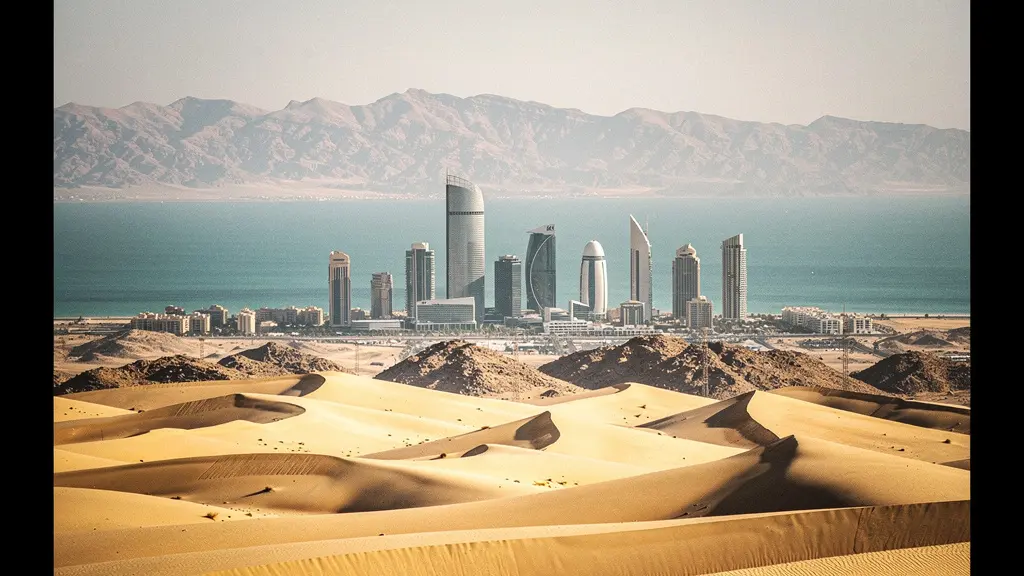
The biggest mistake travelers make is treating the UAE’s seven emirates as a checklist instead of a spectrum of unique personalities.
- Beyond Dubai’s glitz and Abu Dhabi’s grandeur, each emirate offers a distinct “travel DNA”—from Ras Al Khaimah’s rugged adventure to Sharjah’s cultural soul.
- Ignoring the Northern Emirates means missing out on authentic heritage districts, natural greenery, and serene beach retreats that stand in stark contrast to the mega-cities.
Recommendation: Instead of asking “what is there to do?”, ask “which emirate’s personality matches my own?” to plan a truly memorable trip.
For most of the world, the United Arab Emirates is a tale of two cities: the futuristic glamour of Dubai and the stately culture of Abu Dhabi. This narrow view, while understandable, causes travelers to miss the rich tapestry that makes up the rest of the country. The question isn’t whether the other five emirates are “worth your time,” but rather which of their distinct personalities resonates with your own travel style. They aren’t just smaller versions of Dubai; they are entirely different worlds operating on different rhythms, with unique laws, landscapes, and experiences.
Thinking of the UAE as a monolith is the first mistake. This is a federation of seven unique members, each with its own character. Imagine a family of seven siblings: one is a high-achieving city slicker, another a wise cultural guardian, a third an adventurous mountain-dweller, and a fourth a quiet, traditional soul who loves the sea. You wouldn’t treat them all the same, so why would you travel through their homes that way? True exploration of the UAE begins when you stop chasing a checklist and start searching for a connection. This guide is built on that very principle: matchmaking your travel DNA with the perfect emirate.
We’ll move beyond the tired platitudes to reveal the nuances that define each emirate. We will explore the stark legal differences, compare the authenticity of heritage sites, and uncover the geographic quirks that give one emirate lush greenery while its neighbor remains a sun-baked desert. By the end, you won’t just have a list of places to see; you’ll have a roadmap to finding the part of the UAE that speaks directly to you.
To help you navigate these diverse personalities, this guide breaks down the key questions and comparisons that reveal the true character of each emirate. Discover which landscape, pace, and culture best fits the journey you’re looking for.
Contents: Discover Your Perfect Emirate Match
- Why Is Alcohol Regulation Completely Different in Sharjah Compared to Dubai?
- How to Drive Through All Seven Emirates in 24 Hours Without Exhaustion?
- Ajman or Umm Al Quwain: Which Quiet Emirate Offers the Best Beach Retreat?
- The Mistake of Ignoring the Northern Emirates for a “Dubai-Only” Trip
- In What Order Should You Visit the Emirates to Trace the History of the Union?
- Why Does Ras Al Khaimah Have More Rainfall and Greenery Than Dubai?
- Heart of Sharjah or Al Fahidi: Which Heritage District Feels More Authentic?
- Exploring UAE Coastal Villages: How to Find Authentic Local Life?
Why Is Alcohol Regulation Completely Different in Sharjah Compared to Dubai?
Nothing shatters the illusion of a monolithic UAE faster than crossing the invisible border from Dubai into Sharjah. While Dubai is known for its glamorous rooftop bars and licensed restaurants, its immediate neighbor, Sharjah, operates under a completely different legal and cultural framework. This isn’t a minor difference; it’s a fundamental aspect of Sharjah’s identity as the nation’s cultural capital. The emirate enforces a policy of 100% prohibition on the sale and public consumption of alcohol, a rule that extends even to international hotels.
This zero-tolerance policy is rooted in a commitment to preserving a more traditional and conservative Islamic environment, which has earned it the title of “Cultural Capital of the Arab World” from UNESCO. It shapes the entire social fabric, fostering a family-friendly atmosphere focused on museums, arts, and heritage. For the traveler, this means your evenings will be spent in elegant tea houses, vibrant souqs, and world-class cultural institutions rather than bars. It’s a different kind of nightlife, one that is quieter and more reflective.
The “Border-Hopping” Phenomenon: A Tale of Two Emirates
The stark difference in laws created a unique dynamic for residents and visitors. For years, the nearby emirate of Ajman, with its more liberal alcohol laws, became a destination for Dubai residents looking to purchase alcohol for home consumption. However, this created a legal gray area, as it was strictly forbidden to transport alcohol through Sharjah to get back to Dubai. This case study, noted by travel safety experts at World Nomads, perfectly illustrates the practical reality of the UAE’s federal system: you are crossing invisible lines with very real legal consequences, making it crucial to understand the local rules of each emirate you enter.
Understanding this legal landscape is the first step in seeing the emirates not as a single entity, but as a federation of distinct states, each with a carefully guarded identity.
How to Drive Through All Seven Emirates in 24 Hours Without Exhaustion?
While a “seven-emirates-in-a-day” trip sounds like a frantic race, it can be an incredible way to witness the dramatic shifts in landscape and culture if planned strategically. The key isn’t speed, but timing and route optimization. An ill-planned attempt will leave you stuck in the infamous Dubai-Sharjah traffic, whereas a smart itinerary transforms the drive into a flowing narrative of the UAE’s development. The entire journey, from Dubai to Ras Al Khaimah and back down the east coast, can be done in under 10 hours of driving, leaving ample time for short, meaningful stops.
The secret is to move against the traffic. Start your day very early from Dubai to clear Sharjah before the morning rush hour begins. This allows you to cruise through the smaller coastal emirates of Ajman and Umm Al Quwain when the roads are clear and the morning light is beautiful. The journey then takes you inland towards the dramatic Hajar mountains of Ras Al Khaimah, a perfect midday destination. From there, you cross the mountainous spine of the country to the east coast emirate of Fujairah, experiencing a complete change of scenery. The final leg, a smooth highway drive from Fujairah back to the major hubs of Dubai or Abu Dhabi, is best done in the evening when traffic has subsided.
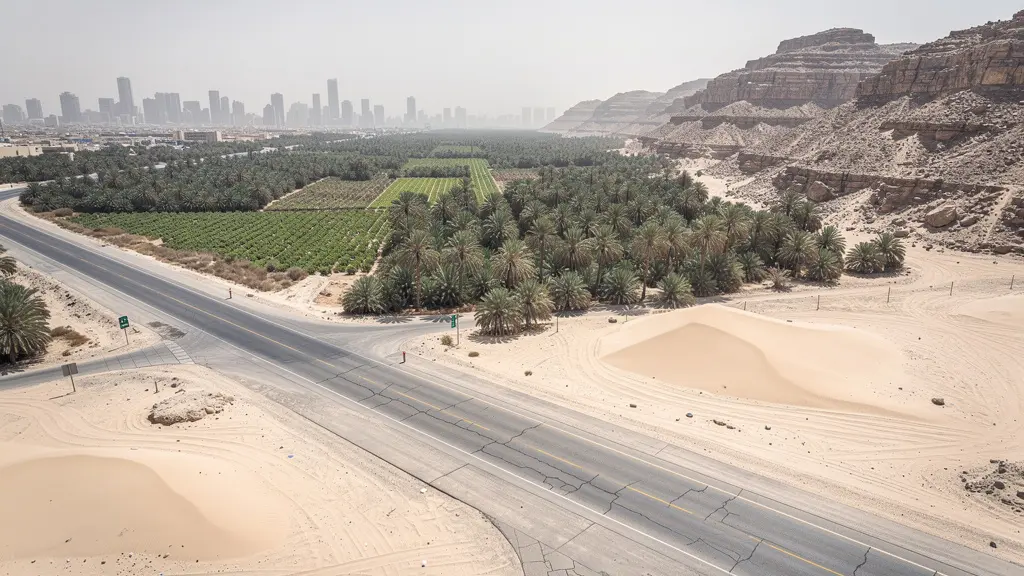
This road trip is more than a logistical challenge; it’s a visual lesson in the UAE’s diversity. You’ll see skylines give way to mangrove forests, which in turn are replaced by towering rock faces and then serene coastlines. This journey is safe and straightforward, as all emirates are part of one country, requiring no visas or border checks (unless you take a detour into Musandam, which is part of Oman). The primary challenge is not border control, but traffic avoidance and strategic timing.
Ultimately, this drive proves that the “other” emirates are not distant, inaccessible lands but are right next door, waiting to show you a different side of the UAE.
Ajman or Umm Al Quwain: Which Quiet Emirate Offers the Best Beach Retreat?
For the traveler whose DNA craves serenity over spectacle, the quiet coastal emirates of Ajman and Umm Al Quwain (UAQ) present a compelling alternative to Dubai’s bustling beachfronts. They both offer a peaceful escape, but they cater to slightly different types of retreat-seekers. Ajman provides “accessible serenity,” combining high-end luxury with quiet beaches, while UAQ offers “rugged solitude,” a more rustic and undeveloped coastal experience for the independent traveler.
Ajman, though the smallest emirate, has a polished feel. Its corniche is well-maintained, and it’s home to luxury resorts like the Oberoi Al Zorah, which offers a refined, tranquil experience. It’s the perfect choice for someone seeking a five-star escape without the crowds of Dubai. In contrast, UAQ is the UAE’s least populous emirate and feels like a step back in time. Its beaches are more natural and windswept, and its hospitality options are more budget-friendly. It’s the place for adventure travelers interested in kitesurfing, exploring mangrove forests, and seeing traditional dhow-building yards up close.
As the travel guide “Road is Calling” aptly puts it when describing the quieter emirate:
UAQ is probably the quietest and less developed emirate… However here you can find the original traditions of Arab people and their way of life
– Road is Calling Travel Guide, Guide to 7 Emirates of UAE
This comparison table breaks down the core differences for the beach-bound traveler:
| Aspect | Ajman | Umm Al Quwain |
|---|---|---|
| Beach Type | Manicured corniche, resort-oriented | Windswept, natural, less developed |
| Accommodation | High-end resorts like Oberoi Al Zorah | Limited 4-5 star hotels, budget-friendly |
| Activities | Al Zorah Nature Reserve kayaking | Kitesurfing, dhow-building yards, mangrove exploration |
| Atmosphere | Accessible serenity, social beaches | Rugged solitude, authentic local life |
| Best For | Luxury seekers, families | Adventure travelers, budget-conscious visitors |
Ultimately, Ajman is for those who want luxury with their peace and quiet, while UAQ is for those who want authenticity and a touch of wildness with their solitude.
The Mistake of Ignoring the Northern Emirates for a “Dubai-Only” Trip
The magnetic pull of Dubai is undeniable. Tourism statistics confirm this focus; in 2024 alone, a staggering 18.72 million tourists visited Dubai, with many never venturing beyond the city limits. This creates a travel bubble, leading to the biggest mistake a visitor can make: assuming Dubai represents the entire UAE. Ignoring the Northern Emirates—Sharjah, Ajman, Umm Al Quwain, and Ras Al Khaimah—is like visiting a vast national park and never leaving the visitor center. You see the polished exhibit but miss the living ecosystem.
The Northern Emirates are the antidote to the “seen-one-skyscraper-seen-them-all” fatigue. They offer a powerful contrast and a deeper, more varied travel experience. Within a 90-minute drive, you can trade Dubai’s urban jungle for the raw, natural beauty of Ras Al Khaimah’s mountains, the historical depth of Sharjah’s heritage districts, or the untouched coastlines of Fujairah. These aren’t just “day trips”; they are gateways to entirely different microclimates of experience. For the traveler feeling overwhelmed by Dubai’s scale, the north offers breathing room and a connection to nature and history that the metropolis cannot.
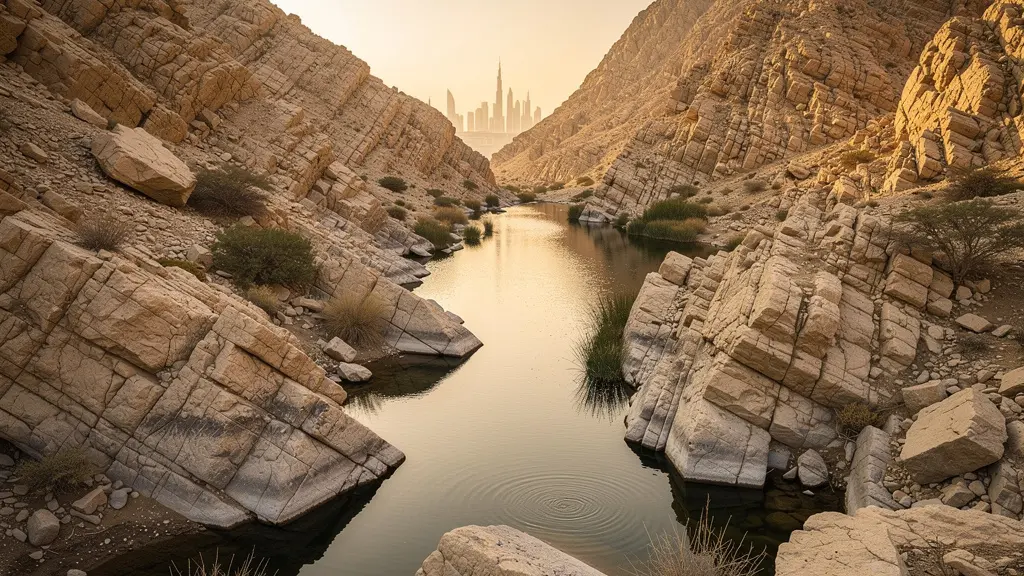
The best way to break out of the Dubai-only mindset is to dedicate a day to one of these “antidote itineraries”:
- The Mountain Escape: Drive to Jebel Jais in Ras Al Khaimah for stunning hikes and the world’s longest zipline.
- The Coastal Cleanse: Head east to Snoopy Island in Fujairah for excellent snorkeling and pristine beaches.
- The Heritage Hunt: Immerse yourself in Sharjah’s Museum of Islamic Civilization and the sprawling Heart of Sharjah restoration project.
- The Quiet Beach Day: Kayak through the serene mangroves of Al Zorah Nature Reserve in Ajman.
- The Adventure Circuit: Visit the exclave of Hatta for mountain biking and kayaking in the scenic dam reservoir.
Choosing to explore the north isn’t about rejecting Dubai; it’s about enriching your understanding of the UAE by experiencing its full, incredible spectrum.
In What Order Should You Visit the Emirates to Trace the History of the Union?
For the history-minded traveler, the UAE offers a fascinating puzzle. Instead of a random drive, visiting the emirates in a specific order can create a powerful narrative, tracing the story from its ancient pearling roots to the formation of the modern federation in 1971. This historical pilgrimage doesn’t start in the futuristic towers of Dubai, but in the coastal villages and desert forts that hold the keys to the nation’s past. A chronological journey reveals the “why” behind the union.
Start your journey on the coasts of Ras Al Khaimah and the smaller northern emirates. These areas were the heart of the pre-oil economy, built on pearling and trade. Sites like the Dhayah Fort in RAK, the site of a key 19th-century battle with the British, and the traditional pearling villages tell the story of a rugged, seafaring people. Next, move to Fujairah on the east coast to see Al Badiyah Mosque, the oldest known mosque in the UAE, which speaks to the deep Islamic roots that predate the federation. Your third stop should be Sharjah, which has long been the region’s cultural and intellectual hub, preserving the architectural and artistic soul of the area.
Uncovering Pre-Federation History
To truly understand the union’s origins, you must look beyond the official museums. Exploring sites like the ancient Al Badiyah Mosque in Fujairah or the Dhayah Fort in Ras Al Khaimah provides tangible links to a time before oil wealth. These locations, along with the rich pearling heritage found in coastal villages, represent the shared history of struggle, resilience, and trade that laid the groundwork for the seven emirates to eventually unite into a single, modern federation celebrated every December 2nd on National Day.
Only then should you visit Dubai and Abu Dhabi. Dubai showcases the meteoric rise fueled by trade and visionary leadership, while Abu Dhabi, as the political capital, tells the story of the union itself. With its vast oil reserves and sheer size—as the emirate covers 84% of the UAE’s total land area—Abu Dhabi was the steady anchor that brought the federation together. Concluding your journey here, at sites like the Etihad Museum (in Dubai) and Qasr Al Hosn (in Abu Dhabi), provides a powerful endcap to the historical narrative.
This route allows you to witness the UAE’s story as it unfolded, from scattered coastal settlements to a unified global powerhouse.
Why Does Ras Al Khaimah Have More Rainfall and Greenery Than Dubai?
Travelers arriving in Ras Al Khaimah (RAK) are often shocked by what they see: pockets of lush greenery, natural freshwater pools, and a haze that signals more humidity and cloud cover. It stands in stark contrast to the arid landscapes of Dubai and Abu Dhabi, and the reason is pure geography. While the entire country has a desert climate—as the nation receives less than 100mm average rainfall annually, making it one of the most water-scarce in the world—RAK has a unique geographical advantage that creates its own microclimate.
The secret lies in the combination of the Hajar mountain range and RAK’s position at the northernmost tip of the UAE. The emirate is home to Jebel Jais, the UAE’s tallest peak. This massive mountain range acts as a natural barrier. When moist air blows inland from the Arabian Gulf, it is forced to rise up and over the mountains. This process, known as orographic lift, causes the air to cool rapidly, its moisture condensing to form clouds and, subsequently, more frequent rainfall than its flat, coastal neighbors. It’s a classic rain shadow effect, but here, RAK is on the receiving end of the rain.
RAK’s Geographic Gift: The Making of a Microclimate
The unique geography of Ras Al Khaimah is directly responsible for its status as the “greenest” emirate. The orographic lift created by the Hajar mountains and Jebel Jais results in more precipitation. This rainfall collects in the mountains, feeding the natural freshwater pools known as wadis and sustaining the extensive date palm farms that are a signature feature of the emirate. This natural irrigation system is something you simply don’t find in the flatter, sandier terrain of Dubai, explaining why RAK has become the UAE’s premier destination for nature lovers and adventure seekers.
This increased precipitation is the lifeblood of the emirate’s natural beauty. It feeds the wadis (seasonal riverbeds) that become popular swimming spots after rain and supports the thriving date farms that carpet the foothills. For the traveler, this means RAK offers experiences simply not available elsewhere in the UAE: hiking through green oases, canyoning in flowing wadis, and enjoying cooler temperatures at higher altitudes. It’s the perfect emirate personality for the outdoor adventurer.
So when you feel that cool mountain breeze in RAK, you’re not just imagining it; you’re experiencing a unique microclimate, a gift of the mountains.
Heart of Sharjah or Al Fahidi: Which Heritage District Feels More Authentic?
For travelers seeking a glimpse into the UAE’s pre-oil past, Dubai’s Al Fahidi Historical Neighbourhood and the Heart of Sharjah project are the two premier destinations. Both offer beautifully preserved examples of traditional Gulf architecture, but they exude entirely different atmospheres. This difference comes down to their core purpose: Al Fahidi feels like a perfectly curated museum, while Heart of Sharjah feels like a living, breathing town. The question of which is “more authentic” depends on your definition of authenticity.
Al Fahidi is an easily digestible, “Instagrammable” taste of the past. It’s a small, concentrated quarter of restored courtyard houses, complete with iconic wind towers. Today, these houses are filled with charming cafes, art galleries, and small museums. It’s an excellent, tourist-friendly introduction to the region’s heritage that can be explored in two to three hours. A travel architecture analysis perfectly frames it as a “beautifully restored, ‘curated’ district”—a showcase designed for visitors.
Frame Al Fahidi (Dubai) as a beautifully restored, ‘curated’ district with cafes and galleries—an accessible, Instagrammable taste of the past
– Travel Architecture Analysis, Comparing UAE Heritage Sites
In contrast, Heart of Sharjah is a far more ambitious, multi-decade UNESCO-recognized restoration project. It’s not just a quarter; it’s an entire town center. The goal here is not just tourism but genuine cultural preservation and urban revitalization. You’ll find restored souqs that are still used by local families for shopping, functional government buildings, and a sprawling layout that connects museums, art spaces, and traditional homes. It feels less like a tourist attraction and more like a living community. It requires more time—at least half a day—but offers a deeper, more immersive experience.
This table highlights the differing philosophies behind each district:
| Aspect | Heart of Sharjah | Al Fahidi (Dubai) |
|---|---|---|
| Scale | Multi-decade UNESCO restoration project | Smaller, concentrated historic quarter |
| Management | Sharjah Investment Authority (Shurooq) | Dubai Culture & Arts Authority |
| Primary Purpose | Functional town center & cultural preservation | Tourism & cultural showcase |
| Atmosphere | Living community with local families shopping | Curated galleries, cafes, museums |
| Architecture | Coral-brick walls, connected souqs | Wind towers, restored courtyard houses |
| Best Visit Duration | Half to full day | 2-3 hours |
Choose Al Fahidi for a picturesque afternoon and a great cup of coffee in a historic setting. Choose Heart of Sharjah to lose yourself in the alleyways of a place where the past feels truly present.
Key Takeaways
- Your “Travel DNA” is the key: match your desire for adventure, culture, or relaxation to the corresponding emirate’s personality.
- The Northern Emirates are not lesser versions of Dubai; they are distinct destinations offering unique landscapes, from mountains to mangroves.
- Authenticity exists on a spectrum, from the curated history of Al Fahidi in Dubai to the living heritage of Sharjah and the coastal villages.
Exploring UAE Coastal Villages: How to Find Authentic Local Life?
For the traveler determined to get off the beaten path, the ultimate reward lies in the small coastal villages of emirates like Umm Al Quwain, Ajman, and Fujairah. This is where you can find glimpses of a life that revolves around the sea, a rhythm unchanged for generations. However, finding “authentic local life” is not about finding a tourist attraction; it’s about respectfully observing a community going about its day. This is made more complex by the UAE’s unique demographics, as an understanding of the multicultural makeup helps when exploring, given that 90% of UAE residents are foreign workers. True local interaction requires patience, respect, and knowing where to look.
The key is to seek out the hubs of the local economy and social life. Visiting a fish market in Umm Al Quwain at dawn is not a show; it’s the real deal. Here, you’ll see fishermen bringing in their catch and the community gathering for the day’s trade. Similarly, the dhow-building yards in Ajman are living workshops where you can see craftsmen practicing a trade passed down through centuries. The most authentic interactions happen when you show genuine interest and respect. This means dressing modestly (covering shoulders and knees), always asking for permission before taking photographs of people, and learning a few basic Arabic greetings like ‘Marhaba’ (hello) and ‘Shukran’ (thank you).
Instead of seeking out a manufactured “experience,” integrate yourself gently into the local flow. Frequent the small, local cafeterias for a cup of ‘karak’ tea, avoid visiting during the midday heat when streets are empty, and understand that the pace of life is slower here. By following this respectful approach, you move from being a tourist to being a welcome guest.
Your Action Plan: Etiquette for Authentic Village Interaction
- Visit fish markets at dawn in Umm Al Quwain or Ajman to witness the local economy in action.
- Learn basic Arabic greetings: ‘Marhaba’ (hello) and ‘Shukran’ (thank you) to show respect.
- Always ask permission before photographing people, especially women and in traditional areas.
- Frequent local cafeterias serving karak tea instead of hotel restaurants for genuine encounters.
- Dress modestly by covering shoulders and knees when walking through village areas.
By approaching these communities with curiosity and humility, you will be rewarded with the most valuable travel souvenir of all: a true, human connection.